
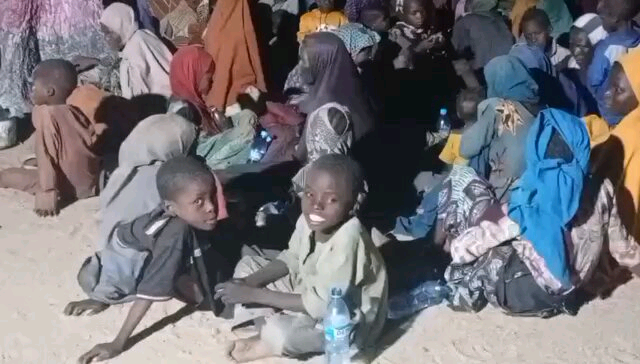
Troops of the Joint Task Force, Operation HADIN KAI, have rescued 360 kidnapped persons from a terrorist enclave hidden deep inside the Mandara Mountains in southern Borno State, in what military authorities described as one of the largest hostage rescue operations carried out in the North-East in recent years.
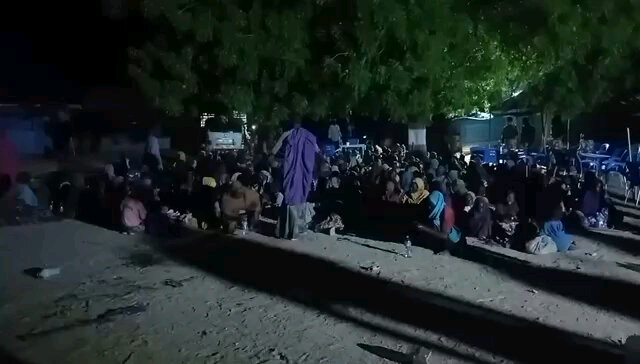
The rescued victims, made up of men, women and children, had been held captive by members of Jama’atu Ahlis Sunna Lidda’awati wal-Jihad (JAS), one of the factions linked to the Boko Haram insurgency. Many of the victims were reportedly abducted from communities around the Ngoshe axis and other parts of southern Borno.
According to military authorities, the operation was carried out by Special Forces and troops of Sector 1 under Operation HADIN KAI after weeks of intelligence gathering, surveillance and careful planning.
The military said the mission was conducted with the primary aim of rescuing the hostages without exposing them to unnecessary danger. The operation ended with the successful recovery of all 360 abductees, marking a major breakthrough in ongoing efforts to weaken terrorist groups operating in the region.
A statement on the operation said the rescue mission began after security agencies received credible intelligence from several sources about the location of the captives and the activities of insurgents operating from a heavily fortified camp in the Mandara Mountains.
Following the intelligence reports, military intelligence officers launched a detailed investigation to verify the information and develop a plan for the rescue mission.
According to the military, the operation involved the use of human intelligence, electronic intelligence and aerial surveillance. Unmanned aerial vehicles and long-range reconnaissance patrols were also deployed to monitor the area and gather information about the insurgents’ movements and defensive positions.
The intelligence operation enabled commanders to obtain a clear understanding of the terrain, the structure of the terrorist camp, the location of the hostages and the strength of the insurgents guarding them.
Military officials said the information gathered allowed troops to identify weaknesses within the terrorist network and significantly reduce the risk to the captives during the rescue mission.
One of the major successes of the operation was the penetration of the insurgents’ network through intelligence assets working under the supervision of military intelligence personnel.
These sources reportedly provided timely information about the exact location of the hostages, the activities of insurgent commanders and plans by the terrorists to relocate some of the captives.
The military also carried out information and psychological operations aimed at creating confusion within the insurgents’ ranks. Officials said these measures helped weaken trust among the terrorists and disrupted their command structure before troops launched the final phase of the operation.
The intelligence advantage gained by the military gave commanders what was described as an unprecedented level of situational awareness, allowing them to shape the battlefield before moving in to rescue the hostages.
For years, military operations in the North-East have focused not only on direct combat but also on gathering actionable intelligence to track insurgent leaders, identify camps and rescue civilians trapped in areas controlled by terrorists.
The Mandara Mountains, which stretch along the Nigeria-Cameroon border, have long served as hideouts for insurgent groups because of their rugged terrain, caves and difficult access routes. Terrorists have repeatedly used the area to evade military operations and launch attacks on nearby communities.
Many residents of communities around the mountains have suffered years of violence, including kidnappings, killings and displacement. Several villages in Borno State have been attacked by insurgents since the Boko Haram conflict began more than a decade ago.
The insurgency, which started in 2009, has claimed thousands of lives and displaced millions of people across Borno, Adamawa and Yobe states. The conflict has also spread into neighbouring countries, including Cameroon, Chad and Niger.
Over the years, Nigerian troops and their regional partners have conducted numerous operations aimed at dismantling terrorist camps and restoring normal life to affected communities.
The latest rescue operation is expected to bring relief to families who had spent months or even years searching for missing relatives believed to have been abducted by insurgents.
Military authorities said arrangements were being made to provide medical attention, psychological support and other forms of assistance to the rescued victims.
Many former captives rescued from terrorist camps often require rehabilitation due to the physical and emotional trauma they experience during captivity. Government agencies and humanitarian organisations are expected to assist in helping the victims return to normal life.
The successful operation is also likely to boost confidence among residents of communities still threatened by insurgent activities in parts of Borno State.
Although significant progress has been made in recent years, insurgent groups continue to launch occasional attacks and carry out abductions in remote areas.
However, the rescue of 360 captives from one of the most difficult terrains in the region represents a major operational success for Operation HADIN KAI and highlights the military’s determination to protect civilians and deny terrorists safe havens.
For many of the rescued victims and their families, the operation marks the end of a painful chapter and offers renewed hope after years of uncertainty and suffering.