
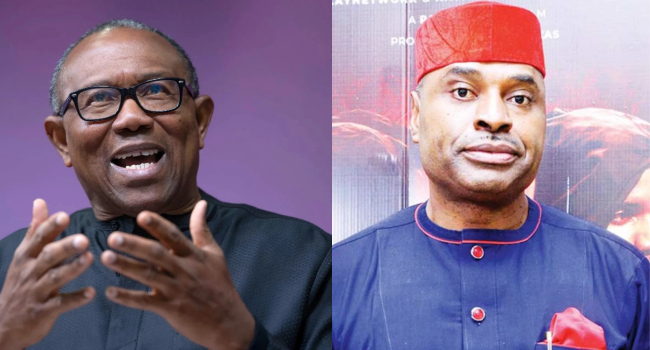
A fresh controversy has emerged in the opposition political space after a chieftain of the African Democratic Congress (ADC), Kenneth Okonkwo, released what he described as evidence to support allegations of bribery involving former presidential candidate Peter Obi.
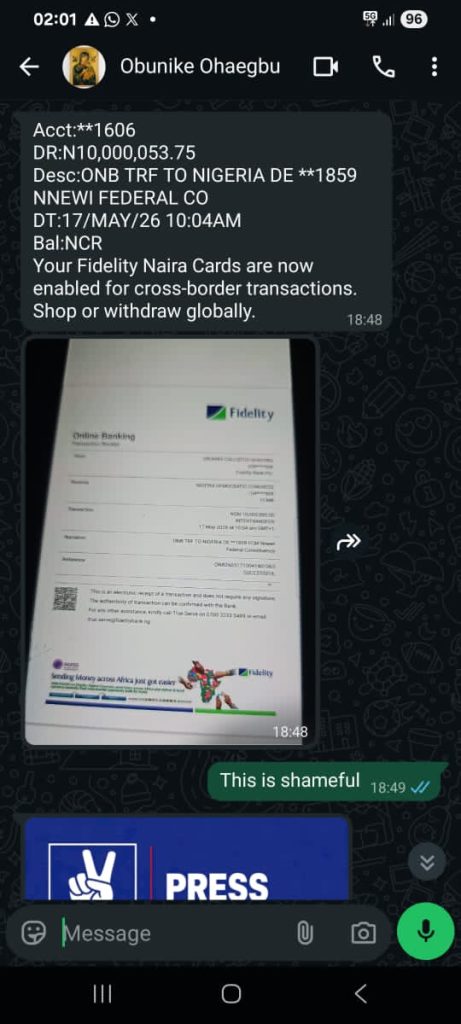
Okonkwo, an actor-turned-politician and former ally of Obi, had earlier alleged that Obi and some political leaders in the South-East collected money from aspirants seeking tickets to contest elections into the National Assembly.
The allegations, which surfaced earlier this week, have generated widespread debate and attracted legal action from Obi’s camp, which has strongly denied the claims.
On Wednesday, Okonkwo took to his X account to publish screenshots of alleged WhatsApp conversations between himself and a political aspirant identified as Obunike Ohaegbu. According to him, the chats support his claim that money was collected from aspirants during party primary processes.
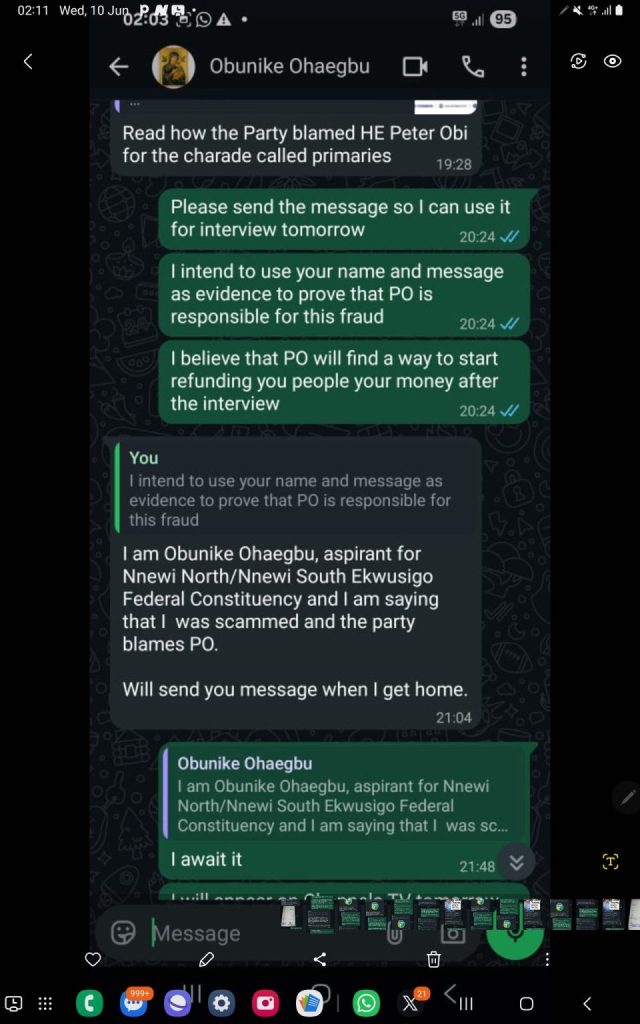
Okonkwo alleged that House of Representatives aspirants were made to pay N10 million, while senatorial aspirants allegedly paid N20 million.
According to him, Ohaegbu had earlier informed him about the payments and also provided a receipt as evidence of the transaction.
In his post, Okonkwo claimed that when he sought clarification from Ohaegbu on whether Obi was directly linked to the alleged payments, the aspirant reportedly said party officials had identified Obi and other caucus leaders as those who approved the arrangement.
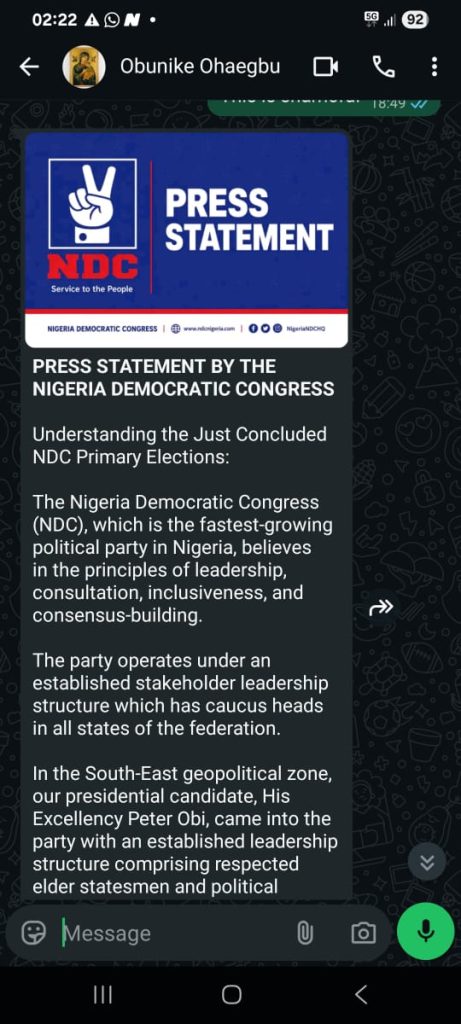
“Obunike Ohaegbu, when I questioned him to prove that Peter Obi was responsible for demanding the N10 million from him and other House of Representatives aspirants and N20 million from Senate aspirants, he made it clear that when he confronted the party on who authorised the payment, the party named Peter Obi and the caucus leaders who were assembled by Peter Obi,” Okonkwo wrote.
The publication of the alleged chats has further intensified the dispute between both politicians, who were once close political associates.
Okonkwo was one of Obi’s prominent supporters during the 2023 presidential election campaign and frequently appeared on television and political platforms to defend the former Anambra State governor. However, their relationship later deteriorated following disagreements over the direction of opposition politics and internal party issues.
The latest accusations mark another chapter in the growing political feud between the two men.
While Okonkwo insists that he is exposing wrongdoing, Obi’s supporters have dismissed the allegations as politically motivated and lacking credible proof.
Obi’s legal team has already responded by filing a lawsuit over the allegations. Although details of the suit have not been fully disclosed, the move signals the former presidential candidate’s intention to challenge the claims in court.
Such allegations have often sparked internal crises within parties and led to court cases challenging the conduct of primaries.
However, proving claims of bribery or illegal payments can be difficult, especially when they rely on testimonies, private communications or documents whose authenticity may be disputed.
For that reason, analysts believe the latest claims and counterclaims are likely to remain controversial until they are tested in court or independently verified.
The controversy also comes at a time when opposition parties are preparing for future political contests and working to strengthen their structures ahead of upcoming elections.
Political stakeholders warn that prolonged disputes among opposition figures could affect efforts to build strong alliances capable of challenging the ruling party in future elections.
Despite the allegations, Obi remains one of the country’s most influential opposition politicians, especially among young voters and supporters who backed his presidential bid in 2023.
His supporters have continued to defend him against the accusations, arguing that he has built a public image around accountability, transparency and prudent management of public resources.
On the other hand, Okonkwo maintains that his claims are based on information provided by individuals directly involved in the primary election process.
As public attention remains focused on the matter, many Nigerians are expected to watch closely for further evidence, official responses and the outcome of the legal action already initiated by Obi’s team.
For now, the dispute has added another layer of tension to Nigeria’s opposition politics, with both camps standing firmly by their positions.
Whether the alleged WhatsApp chats and other documents released by Okonkwo will be sufficient to support his claims remains uncertain. What is clear, however, is that the controversy has opened a fresh debate about transparency, accountability and internal democracy within political parties ahead of future elections.