
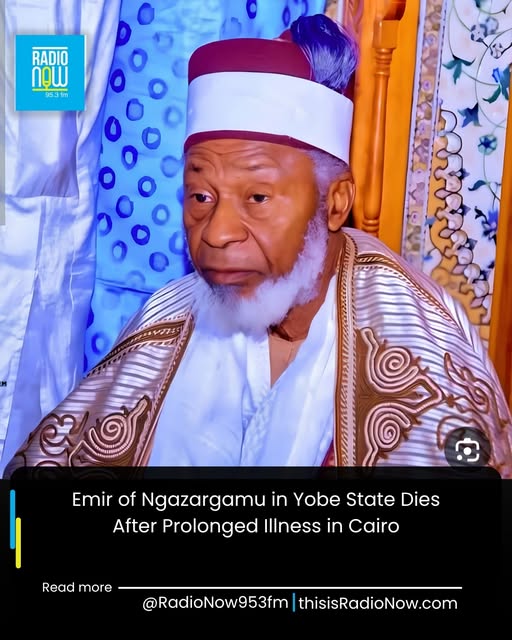
The Chairman of the Northern States Governors’ Forum (NSGF) and Governor of Gombe State, Muhammadu Inuwa Yahaya, has expressed deep sorrow over the death of the Emir of Ngazargamu in Yobe State, Alhaji Tijjani Ahmed Ibn-Saleh.
The revered traditional ruler died in Cairo, Egypt, after a prolonged illness. He was laid to rest on Friday in Yobe State in accordance with Islamic rites.
Governor Yahaya, in a condolence message issued on Friday, described the late monarch as a respected traditional leader whose reign was defined by peace, wisdom and selfless service to humanity.
The governor said the Emir dedicated his life to promoting unity among his people and worked tirelessly for the social and educational development of the Ngazargamu Emirate and Yobe State as a whole.
The condolence message was contained in a statement issued by the Director-General of Press Affairs, Government House, Gombe, Ismaila Uba Misilli.
According to Yahaya, the late Emir was a symbol of peace, progress and stability whose leadership inspired trust and brought people together.
“His Royal Highness lived an exemplary life defined by honour, selfless service and commitment to humanity. He was a bridge-builder and a father figure whose leadership inspired peace and unity among his people,” the governor stated.
He noted that the monarch’s contributions to community development and peaceful coexistence would remain fresh in the minds of those who came in contact with him.
Governor Yahaya said the late Emir strongly believed that education remained the foundation for societal advancement and lasting prosperity. He added that the traditional ruler devoted considerable efforts to encouraging educational growth and improving the well-being of his people.
He said Nigerians had much to learn from the life of the late monarch, particularly his commitment to justice, humility and service to others.
The NSGF chairman extended his heartfelt condolences to Governor Mai Mala Buni of Yobe State, the Ngazargamu Emirate Council, members of the royal family and the entire people of the state over what he described as a painful and irreplaceable loss.
He prayed Almighty Allah to forgive the shortcomings of the deceased monarch, accept his good deeds and grant him Aljannat Firdaus.
Yahaya also prayed for strength and comfort for the bereaved family, the Emirate Council and the people of Yobe State as they mourn the passing of their traditional ruler.
The death of the Emir has once again highlighted the important role traditional rulers continue to play in Nigeria’s social and cultural life.
Although they do not hold constitutional powers, traditional institutions remain influential, particularly in northern Nigeria, where emirs often serve as custodians of culture and religion while acting as mediators in community disputes.
They also support government efforts in areas such as public enlightenment, peacebuilding, conflict resolution and the promotion of education and healthcare initiatives.
The Emir of Ngazargamu was widely regarded as one of such respected voices. During his reign, he was known for encouraging dialogue, promoting peaceful coexistence and supporting initiatives aimed at improving the lives of his people.
Ngazargamu itself occupies an important place in the history of northern Nigeria. Historically associated with the old Kanem-Borno civilisation, the area reflects a rich cultural heritage and deep-rooted traditional values that continue to shape the identity of its people.
As news of the monarch’s death spread across Yobe State and beyond, sympathizers, political leaders and community members joined the royal family in mourning his passing.
Many described him as a humble and approachable leader who remained committed to the welfare of his subjects despite the challenges facing traditional institutions in modern times.
For the people of the emirate, the late Emir’s death marks the end of an era. However, those who knew him believe his legacy of service, compassion and commitment to peace will continue to guide future generations.
His passing also serves as a reminder of the enduring relevance of traditional leadership in fostering unity and preserving cultural values in Nigerian society.
While his family and subjects grieve his departure, they also celebrate a life devoted to faith, humanity and the service of others.
As prayers continue for the repose of his soul, many will remember Alhaji Tijjani Ahmed Ibn-Saleh as a royal father who used his position to build bridges, encourage development and promote harmony among his people.