
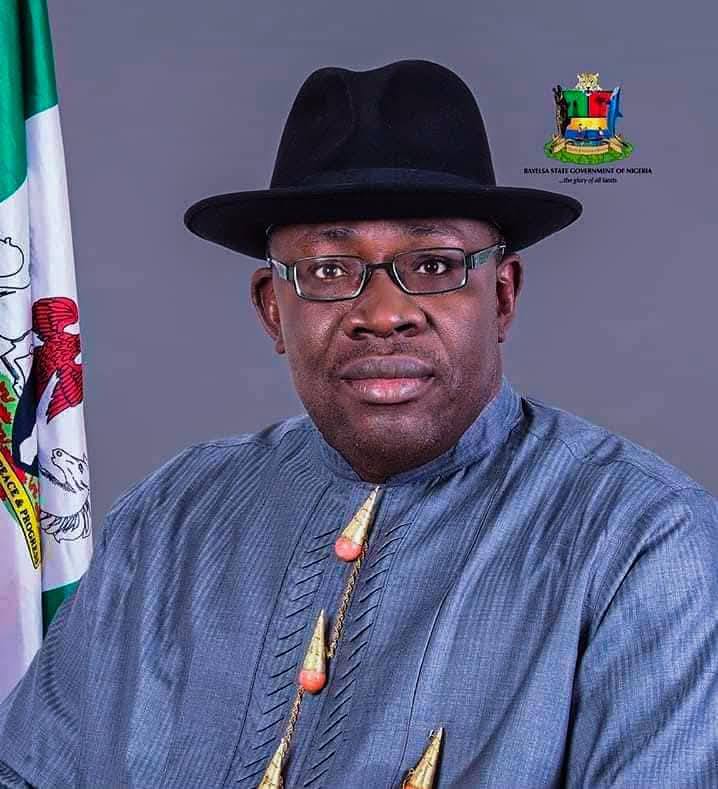
A former Governor of Bayelsa State and National Leader of the Nigeria Democratic Congress (NDC), Seriake Dickson, has backed President Bola Tinubu’s plan to establish state police but advised the Federal Government to slow down the implementation process.
Dickson said while decentralizing policing is necessary to improve security across Nigeria, the immediate priority should be tackling terrorism, banditry and other forms of insecurity that continue to threaten lives and livelihoods across the country.
He made the remarks during an interview on Sunday Politics, a program aired on Channels Television.
According to the former governor, the creation of state police is an important reform that deserves support, but it should be introduced gradually to ensure that the necessary constitutional and institutional frameworks are in place.
“President Tinubu should slow down the process of state police creation,” Dickson said.
He noted that although he supports the idea of decentralizing the country’s policing system, he believes the implementation should not be rushed.
“I commend the move to decentralize policing, but we should also decentralize mineral rights. That’s what we call resource control,” he added.
Dickson argued that the Federal Government should first concentrate its efforts on addressing the country’s pressing security challenges before embarking on major structural reforms.
Nigeria has continued to face serious security threats in several parts of the country, including insurgency in the North-East, banditry in the North-West, kidnapping for ransom, communal clashes and attacks by armed criminal groups in different states.
For several years, there have been growing demands for the establishment of state police as part of wider constitutional reforms aimed at giving states greater responsibility for internal security.
Supporters of state police argue that governors and local authorities understand the security challenges in their areas better than the Federal Government and are therefore better positioned to respond quickly to threats.
They also believe a decentralized policing system would improve intelligence gathering, community policing and crime prevention.
However, critics have expressed concern that state police could be abused by some state governments to intimidate political opponents or interfere in elections if adequate safeguards are not put in place.
Dickson acknowledged the need for police decentralization but proposed a phased approach that would reduce the risk of abuse while strengthening security institutions.
According to him, Nigeria should begin by creating police structures at the zonal level before moving fully to state police.
“The president has done this (state police), and it has my support, but my prescription would have been to decentralize it to the zonal levels first,” he said.
He also proposed constitutional amendments that would allow state governors to appoint commissioners of police serving in their states, subject to the involvement of the Police Service Commission (PSC).
Under his proposal, the appointments would also require screening and oversight by the respective State Houses of Assembly to ensure transparency and accountability.
“Then, we amend the constitution to give governors power to appoint the commissioners of police working with the Police Service Commission and then putting them to the Houses of Assembly for screening and oversight,” he explained.
Dickson further linked police reform to the long-standing debate over Nigeria’s federal structure.
He argued that if policing is to be decentralized, similar reforms should also be considered in the management of the country’s natural resources.
According to him, greater control over mineral resources by states should form part of broader constitutional reforms, a position often described as resource control.
The issue of state police has remained one of the key topics in discussions on constitutional amendment and restructuring.
Over the years, various committees, state governors and political leaders have recommended the establishment of state-controlled police to complement the Nigeria Police Force and improve security at the grassroots.
President Tinubu has repeatedly expressed support for the creation of state police, while the National Economic Council, made up of state governors and chaired by the Vice President, has also considered proposals aimed at making the initiative a reality.
Although there is broad agreement that the country’s security architecture requires reform, discussions have continued over how state police should be structured, funded and supervised to prevent political interference.
Dickson’s comments add to the ongoing national debate, highlighting the need to balance the urgency of security reforms with careful planning to ensure that any new policing system strengthens democracy and the rule of law.
As Nigeria continues to confront multiple security challenges, the conversation around state police is expected to remain at the centre of efforts to build a more effective and responsive security system.