
The Federal Government has dismissed reports alleging that more than ₦8 trillion was spent outside the 2025 budget, insisting that all public spending under the administration of President Bola Ahmed Tinubu was carried out in line with the Constitution and relevant laws passed by the National Assembly.
The government said claims that the money was spent without legislative approval were based on a misinterpretation of the International Monetary Fund (IMF) 2026 Article IV Consultation Report and did not accurately reflect Nigeria’s public finance system.
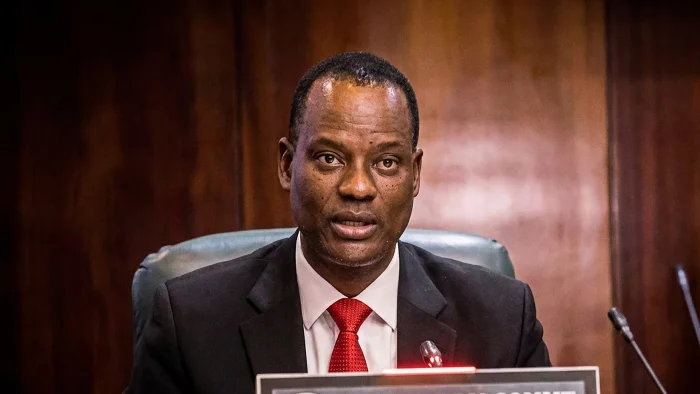
The clarification was contained in a statement issued on Sunday by Taiwo Oyedele on behalf of the Federal Government.
The statement was released following public debate over reports that about two per cent of Nigeria’s Gross Domestic Product (GDP), estimated at more than ₦8 trillion, had allegedly been spent outside the approved 2025 budget.
According to the government, suggestions that it operated a “shadow budget” or secretly spent trillions of naira without the approval of lawmakers are false and unsupported by facts.
The statement stressed that Nigeria’s Constitution provides a clear legal framework for the management and spending of public funds.
It explained that Sections 80 to 83 and 162 of the 1999 Constitution require that all public funds can only be withdrawn and spent in accordance with constitutional provisions and laws enacted by the National Assembly.
The government said all federal expenditure is undertaken through duly approved Appropriation Acts, Supplementary Appropriation Acts and other statutory authorisations recognised by law.
According to the statement, ongoing multi-year capital projects are also executed under existing legal provisions and approved capital rollovers where necessary.
It argued that such projects should not be mistaken for spending outside the budget simply because they extend beyond one fiscal year.
The Federal Government challenged those making allegations of secret spending to provide concrete evidence of projects allegedly executed without legal approval.
“It is inaccurate to suggest that trillions of naira have been secretly spent outside legislative approval. Such allegations should have identified the specific projects purportedly executed without appropriation or legal authority and present credible evidence in support of the claim. To be meaningful, assertions of this magnitude must be supported by verifiable facts rather than conjecture,” the statement said.
The government further explained that Nigeria’s public finance system contains several categories of expenditure that may not appear in the annual Appropriation Act in the same format used in international fiscal reporting.
According to the statement, these include statutory transfers to agencies and development commissions established by law, first-line charges, revenue collection costs retained by designated government agencies, separate capital budgets for certain agencies and the Federal Capital Territory, debt servicing obligations and special interventions for national priorities such as security and infrastructure.
The ministry maintained that all such expenditures are lawful, publicly disclosed and subject to oversight by relevant institutions.
It added that they are also monitored through established audit and accountability mechanisms, making claims of hidden spending misleading.
The government also rejected suggestions that the alleged ₦8 trillion represented an increase in Nigeria’s fiscal deficit.
It explained that a country’s fiscal deficit is calculated by comparing total government revenue with total expenditure rather than by the financing method used for approved projects.
According to the statement, the IMF’s observations focused mainly on improving the comprehensiveness, timing and presentation of fiscal reports rather than questioning the legality of government spending.
The Federal Government noted that efforts were already underway to strengthen Nigeria’s budgeting framework and improve fiscal transparency.
It recalled that while presenting the proposed 2026 Appropriation Bill to the National Assembly on December 19, 2025, President Tinubu called for the harmonisation of multiple and overlapping government budgets into a single, more transparent fiscal framework.
The administration said the proposed reforms are intended to simplify budget implementation, improve accountability and make government financial reporting easier for citizens and development partners to understand.
The statement also highlighted ongoing reforms aimed at strengthening public finance management.
According to the government, these reforms include improving budget credibility, strengthening revenue administration, expanding the digitalisation of government financial processes and enhancing treasury management.
It maintained that these measures demonstrate the administration’s commitment to prudent fiscal management and greater transparency in the use of public funds.
The IMF’s Article IV Consultation is a regular assessment conducted for member countries under the Fund’s Articles of Agreement. During the exercise, IMF officials review a country’s economic performance, fiscal position, monetary policy and broader macroeconomic outlook before making recommendations on reforms.
Although the IMF’s reports often contain policy advice and technical observations, they do not automatically imply wrongdoing by governments. Instead, they are designed to identify areas where economic management and fiscal reporting can be strengthened.
In recent years, Nigeria has embarked on several fiscal reforms aimed at improving public revenue, reducing waste and enhancing transparency in government spending. The Tinubu administration has introduced measures including tax reform proposals, efforts to widen the tax net, reforms in fuel subsidy policy and initiatives to improve the efficiency of public financial management.