
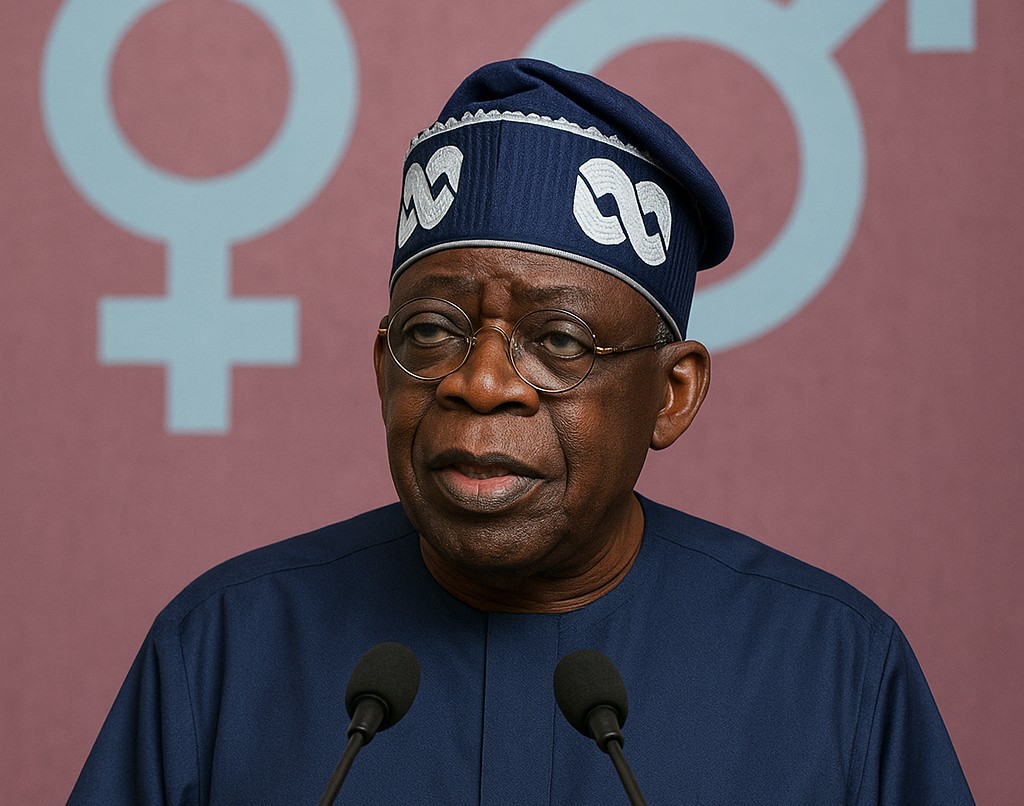
President Bola Tinubu has declined assent to two bills passed by the National Assembly, citing constitutional and legal flaws that he said must be corrected before the proposed laws can take effect.
The President’s decision was formally conveyed to the Senate on Thursday through two separate letters read during plenary by Senate President Godswill Akpabio.
The affected bills are the Raw Materials Research and Development Council (Amendment) Bill, 2026 and the Chartered Institute of Purchasing and Supply Management of Nigeria Bill.
In both letters, Tinubu said he was exercising his constitutional powers under Section 58(4) of the 1999 Constitution (as amended), which allows the President to withhold assent to bills passed by the National Assembly and return them with observations for lawmakers to reconsider.
Although the President acknowledged the importance of the proposed legislation, he said both bills contained drafting errors, structural defects and provisions that went beyond existing legal limits.
Following the reading of the letters, Akpabio referred the two communications to the Senate Committee on Rules and Business for further legislative action. He directed the committee to report back to the Senate within four weeks.
In his observations on the Raw Materials Research and Development Council (Amendment) Bill, Tinubu said the legislation failed to clearly reflect its main objective and contained several drafting mistakes that made it difficult to understand.
According to him, the bill’s long title does not properly describe its purpose of promoting the development, protection and processing of Nigeria’s raw materials.
The President said the title should clearly state that the amendment is intended to provide for the development and protection of Nigeria’s raw materials while encouraging local manufacturing and value addition.
He also pointed out inconsistencies in Section 2 of the bill, noting that it presented the council’s functions as legislative objectives instead of operational duties.
Tinubu explained that legislative objectives are meant to outline broad government policy, while the functions of a government agency should clearly state the responsibilities the organisation is expected to perform.
According to him, the bill mixed up the two concepts, creating unnecessary confusion.
The President also identified what he described as misplaced provisions relating to value addition in raw materials.
He noted that those provisions were inserted between sections dealing with the council’s finances and annual accounts, making the amendment difficult to follow.
Describing the arrangement as poorly drafted, Tinubu said the structure of the proposed amendment had made the bill disjointed.
He wrote: “These erroneous insertions make the Bill incoherent and difficult to comprehend within the context of the Principal Act. Accordingly, the Bill as currently proposed is disjointed.”
He advised lawmakers to review the bill thoroughly and correct the identified shortcomings before sending it back for presidential assent.
The President also declined assent to the Chartered Institute of Purchasing and Supply Management of Nigeria Bill.
While describing many of the proposed amendments as useful, Tinubu said some sections of the bill attempted to grant the institute powers beyond those allowed by law.
He specifically objected to the proposed amendment to Clause 8, which seeks to introduce new sub-sections into Section 11 of the principal Act.
One of the proposed provisions would require companies and other incorporated organisations to notify the institute within one month whenever they appoint a head of procurement or supply chain.
Tinubu argued that such a requirement was not legally sustainable because the institute is a professional body and not the statutory regulator of companies operating in Nigeria.
According to him, organisations that are not members of the institute cannot be compelled to provide such information.
“The Institute, not being the regulator, cannot force incorporated entities or organisations that are independent and perhaps not registered members of the Institute to furnish such particulars,” the President stated.
Tinubu also rejected provisions that would empower the institute to inspect organisations, enforce compliance and impose sanctions on employers.
He said such powers exceed the institute’s legal authority, especially over organisations established under the Companies and Allied Matters Act (CAMA).
According to the President, granting such regulatory powers to a professional institute could create legal conflicts with existing agencies responsible for regulating businesses and corporate entities.
Despite withholding assent, Tinubu indicated that he was not opposed to the objectives of the legislation.
He urged lawmakers to address the identified legal and constitutional issues and return the revised bill for his consideration.
“Subject to the correction of the above issues, the Bill may be suitable for retransmission for assent,” he said.
After the letters were read during plenary, Senate President Akpabio referred both bills to the Senate Committee on Rules and Business.
The committee is expected to examine the President’s observations and recommend the next steps to the Senate within four weeks.
Lawmakers may decide to amend the bills in line with the President’s recommendations before transmitting them again for assent.
Under Nigeria’s law-making process, a bill passed by both the Senate and the House of Representatives does not become law until it receives presidential assent.
Section 58 of the 1999 Constitution outlines the process. Subsection (4) allows the President to refuse assent and return a bill to the National Assembly with reasons for the decision.
Where this happens, lawmakers may reconsider the bill, make the necessary corrections and resend it to the President.
The Constitution also provides another option. If both chambers of the National Assembly pass the bill again with the constitutionally required two-thirds majority, the legislation can become law without the President’s signature. However, such veto overrides are uncommon in Nigeria because they require broad political agreement between lawmakers.
Tinubu’s latest decision highlights the role of constitutional checks in Nigeria’s legislative process. While the National Assembly is responsible for making laws, the President is expected to ensure that bills are consistent with the Constitution and existing legal frameworks before approving them.
The return of the two bills also reflects the ongoing collaboration between the executive and the legislature, where proposed laws may undergo further review and correction before becoming Acts of the National Assembly.
The Senate committee is now expected to work on the President’s observations before the bills are brought back to the chamber for further consideration.