
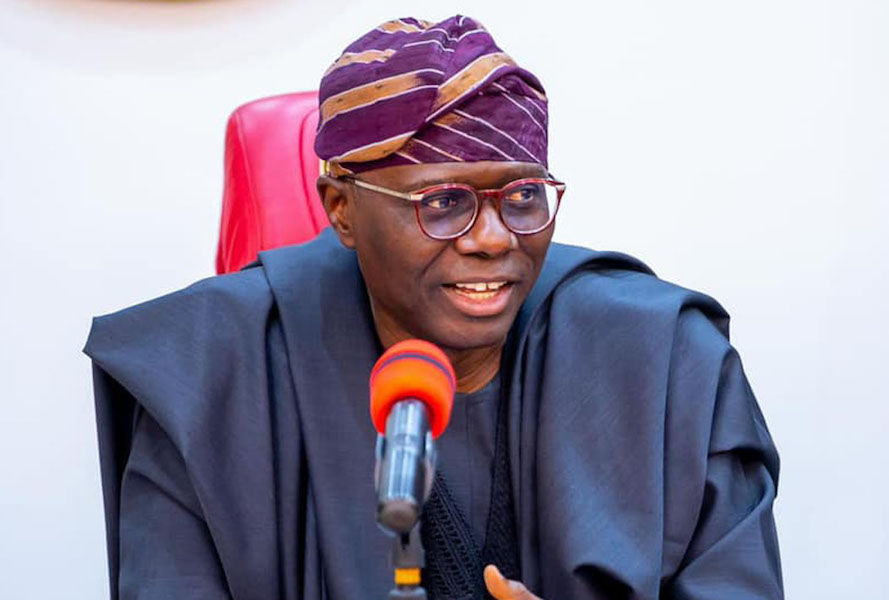
Lagos State Governor, Babajide Sanwo-Olu, has said the state needs about 40,000 additional doctors and another 40,000 nurses to adequately meet the healthcare needs of its growing population.
The governor also disclosed that the state’s health sector faces a funding gap of at least N100bn, warning that inadequate manpower and limited funding remain major challenges to the delivery of quality healthcare in the state.
Sanwo-Olu made the disclosures on Thursday while speaking at the opening of the second Eko Health Convention at the Oriental Hotel, Victoria Island, Lagos.
The governor said Lagos currently has about 7,000 doctors, far below what is required to provide adequate healthcare services to the state’s large population.
According to him, the shortage means that doctors currently working in the state are under heavy pressure as they struggle to meet the needs of millions of residents.
“Lagos needs about 40,000 doctors to properly serve its population, but we currently have about 7,000. We also require approximately 40,000 more nurses,” he said.
Sanwo-Olu said the shortage of medical workers had become one of the most serious challenges facing the state’s health system.
He explained that the government was taking steps to address the problem through fresh recruitment, improved welfare packages and better working conditions for health workers.
The governor said recruitment had recently commenced across all 29 secondary healthcare facilities in the state.
He added that the government was also providing accommodation and other incentives aimed at retaining health workers already employed in Lagos and encouraging Nigerian medical professionals working abroad to return to the state.
Sanwo-Olu said the government was also planning to establish a University of Medicine and Health Sciences as part of its long-term strategy to produce more medical professionals and strengthen the state’s healthcare workforce.
He said the plan was important because Lagos could not depend entirely on recruiting medical workers trained elsewhere to meet its growing needs.
Beyond manpower, the governor identified funding as another major challenge confronting the sector.
He said the state required significantly more money than was currently available through its health budget, putting the minimum shortfall at N100bn.
“The second challenge is funding. There is a minimum shortfall of N100 billion between what our health budget currently provides and what the system actually requires,” he said.
The governor also expressed concern over the decline in international donor funding for healthcare programmes.
According to him, foreign donor support had played an important role in financing disease control programmes in Nigeria for almost two decades, but such funding was now shrinking.
“Donor funding, which sustained many disease control programs for nearly two decades, is shrinking significantly and is unlikely to return in the same form,” he said.
The funding challenge is important for Lagos because of the size and complexity of its healthcare needs. The state has a large and growing population, with residents depending on public and private hospitals for services ranging from routine treatment to emergency care and specialist procedures.
The governor, however, said the state was pursuing several reforms aimed at making healthcare more accessible and affordable.
One of the key programmes highlighted at the convention was Ilera Eko, the state’s health insurance scheme.
Sanwo-Olu disclosed that 1,502,994 residents had enrolled in the scheme as of the end of May.
He said the implementation of the state’s mandatory social health insurance policy, following the domestication of the National Health Insurance Authority Act, had helped to increase access to healthcare.
Women account for more than half of those enrolled in the scheme, according to the governor.
Sanwo-Olu said the growing number of people using healthcare services under Ilera Eko showed that residents were not merely registering but were actually making use of the services available to them.
Health insurance is designed to reduce the financial burden of medical treatment by allowing enrolled residents to access approved healthcare services without paying the full cost at the point of treatment.
For many Nigerians, the cost of medical care remains a major barrier to seeking treatment, particularly for emergencies and long-term illnesses.
The governor also highlighted the impact of the Lagos State Health Management Agency’s Assistance in Distress, known as AID, programme.
He said the program had saved 18 lives since it became operational in March.
According to him, the intervention has supported victims of road crashes, surgical emergencies, obstetric complications and stroke cases by providing immediate access to treatment regardless of their financial situation.
Sanwo-Olu said the programme was particularly important because emergencies often require treatment before patients or their relatives are able to raise money.
The governor also spoke about the use of technology to improve healthcare delivery in the state.
He said the Lagos Smart Health Information Platform was being deployed across public health institutions to improve the way medical information is collected, stored and shared.
The digital system, according to him, would allow medical records to be accessed across different healthcare facilities, making it easier for doctors to understand patients’ medical history and provide appropriate treatment.
It is also expected to improve disease surveillance and help the government make better decisions based on reliable health data.
Sanwo-Olu said Lagos was also exploring artificial intelligence and other digital technologies to improve diagnosis, medical imaging and healthcare delivery.
The use of technology, he said, would complement efforts to address manpower shortages and improve the efficiency of the health system.
The governor said the state’s broader healthcare reforms were being designed as long-term systems rather than temporary programmes tied to his administration.
He pointed to Ilera Eko, the health district system and the digital health platform as examples of reforms intended to continue beyond his tenure.
“We have kept our promises. Now we are building systems that will continue to serve the people long after we have left office,” Sanwo-Olu said.
The governor’s comments came as stakeholders in the health sector gathered for the Eko Health Convention to discuss ways of improving healthcare delivery in Lagos.
The convention provides an opportunity for government officials, medical professionals, health managers and other stakeholders to examine the challenges facing the state’s health system and consider possible solutions.
The shortage of doctors and nurses remains a wider problem in Nigeria, with many trained health professionals leaving the country for better opportunities abroad.
The trend, commonly described as brain drain, has increased pressure on the health workers who remain in the country.
Lagos, as Nigeria’s economic centre and one of the country’s most populated states, faces additional pressure because of the large number of people seeking healthcare within the state, including residents and people who travel from other parts of the country.
Sanwo-Olu said the state’s efforts to recruit more workers, improve welfare, expand health insurance and introduce technology were part of a wider plan to build a stronger healthcare system.
However, the N100bn funding gap shows that the state will need significant additional resources to meet its health targets.
The governor said his administration remained committed to closing the gap and ensuring that Lagos residents could access quality healthcare without facing unbearable financial pressure.
He also stressed the need for reforms that would remain in place after his administration leaves office, saying the ultimate goal was to build a health system capable of serving the state’s growing population for many years to come.