
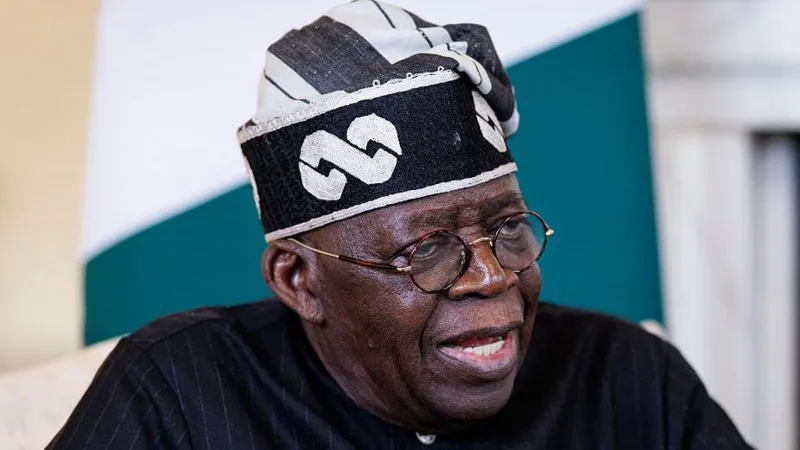
President Bola Tinubu on Thursday assured Nigerians that his administration would revive the country’s moribund state-owned refineries, but warned that their success would be measured by productivity and profitability rather than simply restarting operations.
The President said the refineries must be able to produce value for the country and operate in a way that makes economic sense.
Tinubu spoke when the Executive President of the Nigeria Union of Petroleum and Natural Gas Workers, Salimon Oladiti, and other leaders of the union visited him at the Presidential Villa, Abuja.
The meeting provided an opportunity for the President to address some of the concerns raised by the oil workers, particularly the prolonged efforts to revive Nigeria’s state-owned refineries.
Responding directly to the union’s concerns, Tinubu said the refineries would return to operation as part of the broader economic restructuring being undertaken by his administration.
“The refineries you mentioned are going to come back to work. We’re just building a very firm reset and structural reworking of the economy,” he said.
The President, however, warned that simply producing smoke or seeing flames from a refinery would not mean the facility was truly functioning.
“Ordinary flame and smoke of a refinery doesn’t mean it’s working, until it’s profitable and yields the value for which it is built,” he said.
The statement reflects one of the major challenges that have faced Nigeria’s petroleum sector for years.
Nigeria has four major government-owned refineries located in Port Harcourt, Warri and Kaduna. Despite the country being one of Africa’s leading oil producers, the facilities have operated below capacity or remained inactive for long periods due to years of poor maintenance, technical problems and other challenges.
The inability of the refineries to consistently produce petroleum products has forced Nigeria to depend heavily on imported refined products to meet domestic demand.
Successive administrations have announced plans to rehabilitate the facilities, but efforts to return them to full production have faced delays and rising costs.
Tinubu’s administration has made refinery rehabilitation one of the issues in its broader efforts to reform the petroleum sector.
The President also used the meeting to speak about the Compressed Natural Gas initiative, urging owners of vehicles and trucks that had converted to CNG to pass the benefits of lower fuel costs to commuters.
According to him, some vehicle and truck owners were enjoying the savings from CNG without transferring the benefits to passengers and consumers.
“We will do more. We will encourage you, but ask your drivers to let it trickle to the commuters too, because whatever benefit that is coming from CNG is going into the pocket of truck owners,” he said.
Tinubu said the adoption of CNG was not spreading as quickly as he would like and called for greater participation.
“It’s not spreading as fast as I would like it, but it should spread,” he added.
The Federal Government introduced the CNG programme as part of efforts to provide Nigerians with an alternative to petrol following the removal of petrol subsidy in May 2023.
CNG is generally cheaper than petrol and has been promoted by the government as a way of reducing transportation costs and easing the impact of higher fuel prices.
The President said the benefits of the programme should reach ordinary Nigerians, particularly commuters who bear the burden of higher transportation costs.
Tinubu linked the refinery revival, CNG programme and other government projects to the economic reforms introduced by his administration since 2023.
He said the reforms had created room for the government to raise funding for major infrastructure projects across the country.
According to him, the ability of the government to fund long-term road projects was one of the benefits of the changes being made to the economy.
“I’m glad you have seen the effect of being able to find funding for long-term projects, the Lagos-Ibadan Road, Abuja-Kaduna, Abuja-Kano, Sokoto-Badagry and many other road networks, all for the good of us, the good of our economy and the safety of our people,” Tinubu said.
The President also recalled his meeting with NUPENG leaders years ago at Akodo Resort in Lagos, when the issue of petrol subsidy was a major source of disagreement between the government and labour unions.
Tinubu said he had made it clear at the time that his administration would not reverse the subsidy removal, even in the face of threats of industrial action.
“You have been a very good partner of government in progress,” he told the union leaders.
“I’m glad you recall the Akodo Resort meeting. We had a threat of possible strike, and I told you: you may strike all you want, but fuel subsidy will be gone.”
The President said he would soon publish details of how the funds saved from subsidy removal had been used.
The removal of petrol subsidy has remained one of the most debated economic decisions of the Tinubu administration.
The policy resulted in a sharp increase in petrol prices and transportation costs, triggering widespread concerns among Nigerians over the rising cost of living.
The government has continued to defend the policy, arguing that subsidy payments were costly and that the money could be redirected to infrastructure and other public services.
Tinubu rejected the argument that the reforms had only harmed ordinary Nigerians.
He pointed to the payment of salaries by federal, state and local governments as one of the areas where he believed the reforms had produced benefits.
“Who are the people receiving the salaries in the local government administration? Are they not common men and women receiving salary regularly at the state level?” he asked.
He added that regular salary payments at the federal level also affected ordinary Nigerians and businesses.
The President said he had accepted responsibility for the economic situation he inherited when he assumed office and would not continue to blame previous administrations.
“I’m not a man who looks back at everything, because I’ve accepted the asset and liability of my predecessors, no matter what has happened in the years past,” he said.
“It’s my responsibility now, as President, to fix it and make it work for the largest common value of our population. I take responsibility for that, and I’m going to do it.”
Tinubu acknowledged that implementing economic reforms in a democracy was difficult, especially when the policies affected the daily lives of citizens.
He appealed to the oil workers and other stakeholders to continue supporting his administration despite the challenges.
“It’s not easy to manage a democratic regime full of twists and turns, hills and valleys,” he said.
The President called for perseverance and determination, saying the current difficulties would eventually give way to better economic conditions.
“But it’s through perseverance, endurance and good determination that we can bring about the relief of a newborn baby in a pregnancy,” he said.
“Motherhood is painful, but the joy is everlasting. I promise you, you will enjoy a better Nigeria.”
The meeting with NUPENG came as the government continued to face pressure over the cost of living, fuel prices, transportation costs and the need to improve domestic refining capacity.
For the oil workers, the revival of the refineries remains a major issue because local refining is expected to reduce Nigeria’s dependence on imported petroleum products, strengthen energy security and create more jobs within the petroleum industry.
Tinubu’s latest assurance suggests that the government intends to continue with the rehabilitation of the state-owned refineries, while placing greater emphasis on their long-term financial sustainability.