
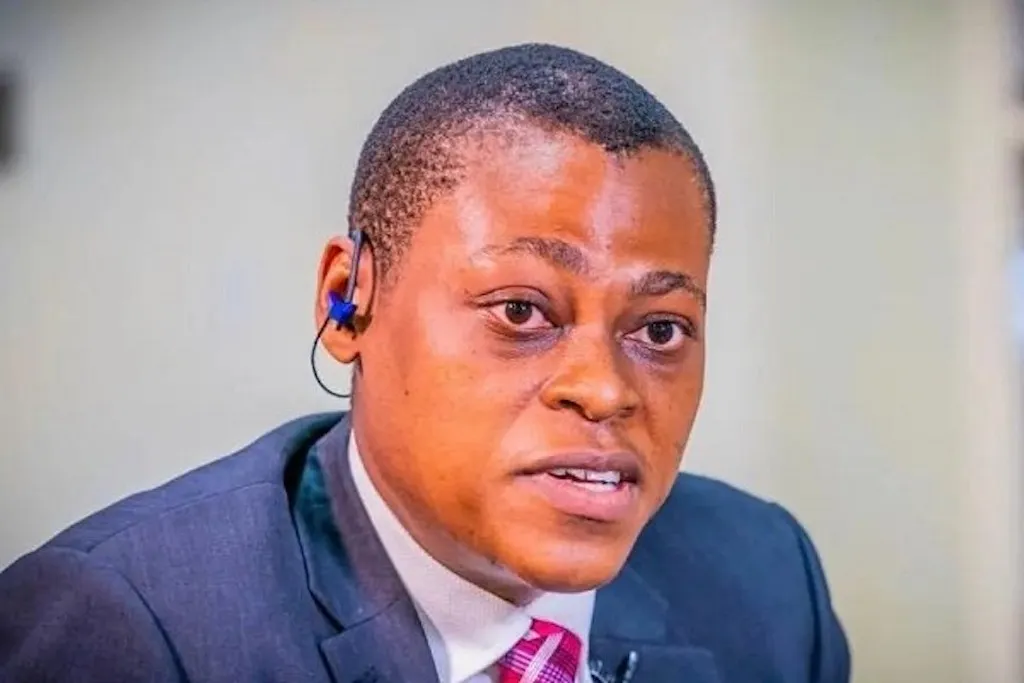
Arise Television’s The Morning Show anchor, Rufai Oseni, has warned Nigerians against assuming that the outcome of the 2026 Osun State governorship election will be repeated in the 2027 general elections.
Oseni said the political and security challenges that may accompany the 2027 elections could be different from those witnessed in Osun, urging Nigerians to understand the possible risks and prepare adequately for them.
The broadcaster spoke on Monday while reflecting on the outcome of the Osun governorship election and his earlier warnings to voters ahead of the poll.
He said his warnings were not intended to frighten voters but to prepare them for possible challenges and help them make informed decisions.
Oseni argued that Nigerians should not become complacent because of the outcome of the Osun election, stressing that political actors could adopt different strategies during the 2027 elections.
According to him, the use of what he described as “federal might” during the Osun election could be deployed on a much larger scale during the general elections.
“Last week, when I was telling the people the challenges they would face, it was not to scare them. No, I believe in telling the people the truth so that they know how to react to dangers,” he said.
Oseni said he believed the risk assessment helped voters in Osun to understand the situation before going to the polls.
“Yes, same risk assessment. I like to say it the way it is. Tell them the risks involved, and I think it worked for the Osun people because they knew the risks involved. Don’t sugarcoat it for them,” he said.
He urged Nigerians to approach the 2027 election with the same level of awareness, rather than assuming that the experience in Osun would automatically be repeated across the country.
Oseni warned that the scale of political competition at the national level would be much greater because the 2027 election would involve the presidential, National Assembly and state-level contests across the country.
“Just like I’m going to tell the Nigerian people the risks involved. If you think because Osun people stood up, it will be easy in 2027, you are foolish. You are delusional,” he said.
He added that political actors who were unable to achieve their objectives in Osun would likely study the election and adjust their strategies before the next general election.
“2027 is going to be different from Osun. The federal might that they used and couldn’t execute, they will use it three times over. They will go back to the drawing board and try to perfect it,” he said.
The comments come after the Independent National Electoral Commission declared Ademola Adeleke of the Accord Party the winner of the August 15 Osun governorship election.
The election attracted considerable national attention because of the political interests involved and the growing focus on the 2027 general elections.
The Osun poll was also seen as an important test for the political strength of the major parties and their ability to mobilise voters at the state level.
The election took place against the background of increasing political activity ahead of 2027, with politicians already forming alliances and opposition groups exploring ways of challenging the ruling party.
Oseni’s warning is therefore likely to add to the growing debate over the likely character of the next general election.
The 2027 elections are expected to be particularly competitive as President Bola Tinubu is expected to seek another term, while opposition politicians and parties are working towards forming a stronger challenge.
Political parties have already started positioning themselves, with discussions around alliances, coalition arrangements, presidential tickets and regional support becoming more prominent.
The Osun election has also generated discussions about the role of federal institutions and security agencies during elections.
Oseni’s reference to “federal might” reflects concerns often raised by opposition politicians and civil society groups about the possible influence of federal power on state elections.
However, claims of political interference or the misuse of government institutions remain matters that require evidence and should be distinguished from legitimate election security and enforcement activities.
The Independent National Electoral Commission remains responsible for conducting elections, while security agencies are deployed to maintain law and order and protect voters, electoral officials and election materials.
The effectiveness and neutrality of these institutions are expected to remain major issues in discussions leading to the 2027 elections.
Oseni urged Nigerians to remain alert and to understand the political environment rather than rely solely on the outcome of one election.
He said his approach was to give voters what he considered an honest assessment of the risks they might face.
The broadcaster also suggested that political actors would learn lessons from the Osun election and use those lessons in preparing for 2027.
His warning comes at a time when political parties are expected to intensify their campaigns, membership drives and coalition talks ahead of the next general election.
For voters, the 2027 election is expected to present a broader contest than the Osun governorship poll, with issues such as security, the economy, unemployment, infrastructure and the cost of living likely to dominate political campaigns.
Oseni’s message was that Nigerians should not interpret the Osun result as proof that the 2027 election would be easy for any political group.
Rather, he urged citizens to understand the challenges ahead and prepare to participate actively in the electoral process.
The 2027 election will also test the strength of Nigeria’s democratic institutions and the ability of political parties to conduct competitive campaigns while respecting electoral rules.
As preparations gradually build towards the next general election, concerns about election security, the neutrality of state institutions and the protection of voters are expected to remain central to public debate.
Oseni maintained that Nigerians should not be deceived by political developments in one state, saying the national contest would come with its own challenges.