
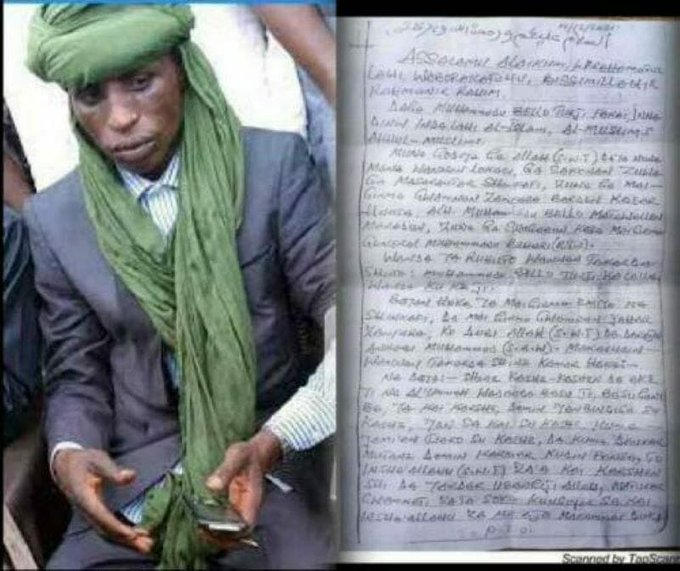
A chilling warning has been issued to the Nigerian government from Alhaji Attahiru Dalhatu Bafarawa, former governor of Sokoto State, urging the authorities to prevent notorious bandit leader Bello Turji from unleashing violence on innocent communities. Turji, notorious for his reign of terror in the North-West, including parts of Sokoto and Zamfara states, had recently threatened to launch attacks in retaliation for the arrest of his relatives by security forces.
In a viral video circulating on social media, Turji vowed to strike Zurmi and Shinkafi in Zamfara as well as Isa Local Government Area in Sokoto by January 1st if his relatives, including his father-in-law, who were detained by security operatives, were not released.
“Turji’s Threat Must Be Taken Seriously”
Bafarawa, speaking to newsmen from his Sokoto residence on Tuesday, warned that the federal government must act quickly to thwart Turji’s plans. He expressed concerns about the safety of civilians in the affected regions, urging both state and federal authorities to heed the warning.
“I believe the government is aware of his threat; they should prepare and not allow him to carry out his plan. His words are not to be ignored,” Bafarawa stated. “Just today (Tuesday), he launched an attack along the Jangeru-Chikki Road, targeting commuters. He shot some people and burnt their vehicle. Thankfully, there were no fatalities, but the victims are now receiving treatment in the hospital.”
Bafarawa’s statement sheds light on a worrying escalation of violence in the region. According to reports, the attack, though less deadly, may have been a warning shot linked to recent military airstrikes on suspected bandit hideouts, possibly aimed at Turji’s forces.
Bandit Kingpin’s Track Record of Brutality
Turji has become one of the most feared and influential figures in the ongoing violence that plagues parts of the North-West. His criminal operations span multiple states, including Sokoto, Zamfara, and Niger, where he controls vast territories and commands a network of armed bandits terrorizing local communities.
In his video message, Turji threatened, “If my people are not freed, I will ensure the blood of innocent Nigerians is spilled in these areas.” His threats of violence have become a pattern, with his forces frequently attacking civilians, looting villages, and abducting citizens for ransom.
Bafarawa, who has long been a vocal critic of the federal government’s handling of insecurity, stated that the government’s response to Turji’s threats must be swift and decisive. He called on Nigerians to lend their support to the military’s efforts to combat these criminal elements.
“We Need Collective Effort for Peace”
Despite the mounting tension and escalating violence, Bafarawa remains hopeful that unity among Nigerians will play a critical role in combating the insecurity. He emphasized that the fight against banditry cannot be won by the government alone, stressing the importance of public support.
“We need peace to conquer some of our most pressing challenges, like hunger, unemployment, and poverty. It’s not just about blaming the President or state governors. Government alone cannot do it; we all need to support them, and more importantly, we need to pray for the security forces,” Bafarawa said.
He also stressed that Nigeria’s current situation requires a national effort, where everyone plays a role in ensuring peace, stability, and the safety of citizens. “We cannot continue with this state of insecurity,” he added.
A Dead Man Walking: Military’s Response to Turji
Meanwhile, the Nigerian military has doubled down on its efforts to neutralize Turji and other bandit leaders. In a statement by the Director of Defence Media Operations, Major General Buba, Turji was described as a “dead man walking,” signifying that the military had intensified operations against him.
“He is a terrorist whose time is running out,” Buba said. “We are relentless in our pursuit of him and others like him. The military has sustained pressure on his hideouts and terrorist enclaves. It’s only a matter of time before Turji and his followers are eliminated.”
General Buba further reassured the public that the military was committed to ending the reign of terror by focusing on dismantling the operational strongholds of bandit groups. Over the past year, the military has claimed to have neutralized hundreds of terrorists, including key commanders and fighters.
Buba outlined a series of successes in the fight against terror, revealing that numerous terrorist leaders had been killed or captured. “We have taken down numerous notable leaders, including Halilu Sububu, Mohammed Amadu, and Saidu Hassan Yellow. Turji will meet the same fate soon,” he declared, further emphasizing that the pressure on these criminal gangs would not ease.
Terror Leaders Surrendering
In addition to military victories, Buba noted that the intensity of the military’s operations had forced many bandits to surrender. He explained that both fighters and their families were now seeking to lay down arms as the heat on them from the Nigerian Armed Forces increases.
“We are seeing more and more militants coming out of hiding, seeking amnesty. This is a clear sign that the military’s tactics are working,” Buba said, reaffirming that the pressure would continue until peace is restored in the North-West.
The Way Forward
While the military’s stance on Turji and other terrorist leaders is clear, questions remain about how the federal government plans to handle the broader issue of banditry and terrorism in the North-West. Bafarawa has called for greater collaboration between the military, local communities, and the government to effectively curb the rise of criminal activities in the region.
“The government must do everything in its power to prevent these attacks and ensure that our citizens are safe. The time for action is now,” Bafarawa concluded.
As January 1st passes, the nation holds its breath, hoping that Turji’s threat does not escalate into a full-blown attack. With the military ramping up operations and citizens placing their hopes on effective government intervention, the next few days could prove critical in the fight to reclaim peace and security in the North-West.