
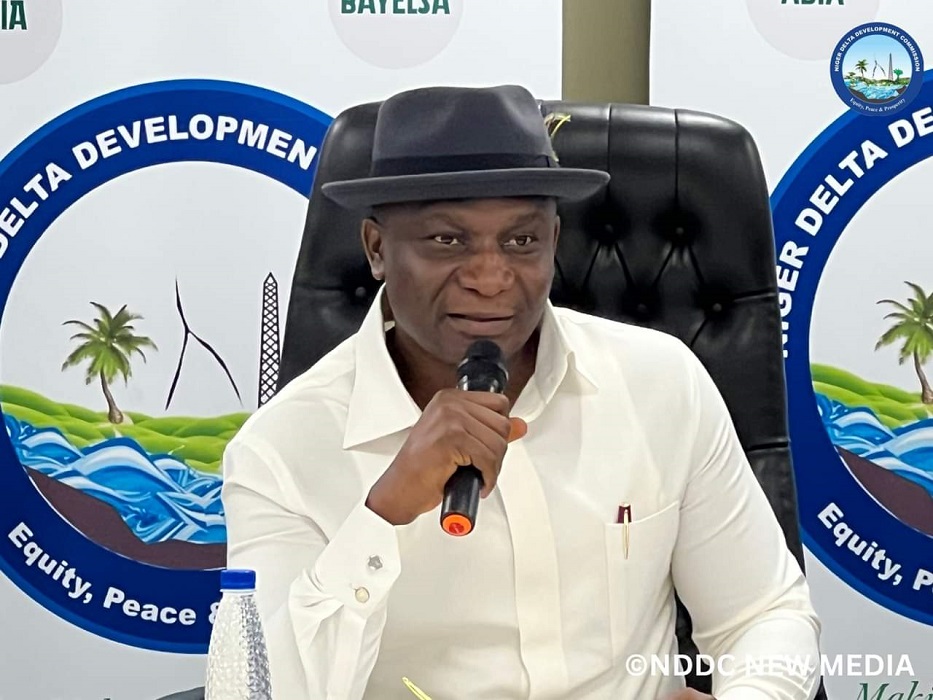
The Managing Director of the Niger Delta Development Commission (NDDC), Samuel Ogbuku, has blamed the commission’s past struggles on unstable leadership and high turnover of management.
Speaking during a press briefing in Asaba on Monday to mark NDDC’s 25th anniversary, Ogbuku said the commission had faced several internal challenges over the years, including incomplete projects and unmet expectations.
He noted that the NDDC, which was established in 2000 as a successor to the Oil Mineral Producing Areas Development Commission (OMPADEC), was created to address underdevelopment in the Niger Delta and respond to the region’s long-standing grievances.
“The Commission was a product of the people’s agitation and a response to the crisis in the Niger Delta,” Ogbuku said. “It was created to bring peace and development to the region.”
While acknowledging that the commission is not perfect, he stressed that it remains open to constructive criticism and committed to improving service delivery.
Ogbuku revealed that between 2015 and 2023, he was the ninth Chief Executive to lead the NDDC, highlighting the level of instability the agency has endured. He said only one board in the commission’s history had completed its full tenure.
“This frequent change in leadership affected our ability to plan and complete long-term projects,” he said.
Despite the setbacks, he praised President Bola Tinubu for reconstituting the board quickly and backing the agency’s renewed focus on completing abandoned projects.
“President Tinubu has shown great support for the Niger Delta. He not only gave us a fresh mandate but also directed us to sign a performance bond, which we did,” Ogbuku said.
He also noted that the NDDC has been responsible for most of the basic infrastructure in many rural parts of the Niger Delta, including roads, water supply, schools, and healthcare centres.
As the commission turns 25 on Saturday, July 12, Ogbuku assured stakeholders that the current leadership is determined to do things differently and fulfil the Renewed Hope Agenda by partnering with communities and stakeholders across the region.