
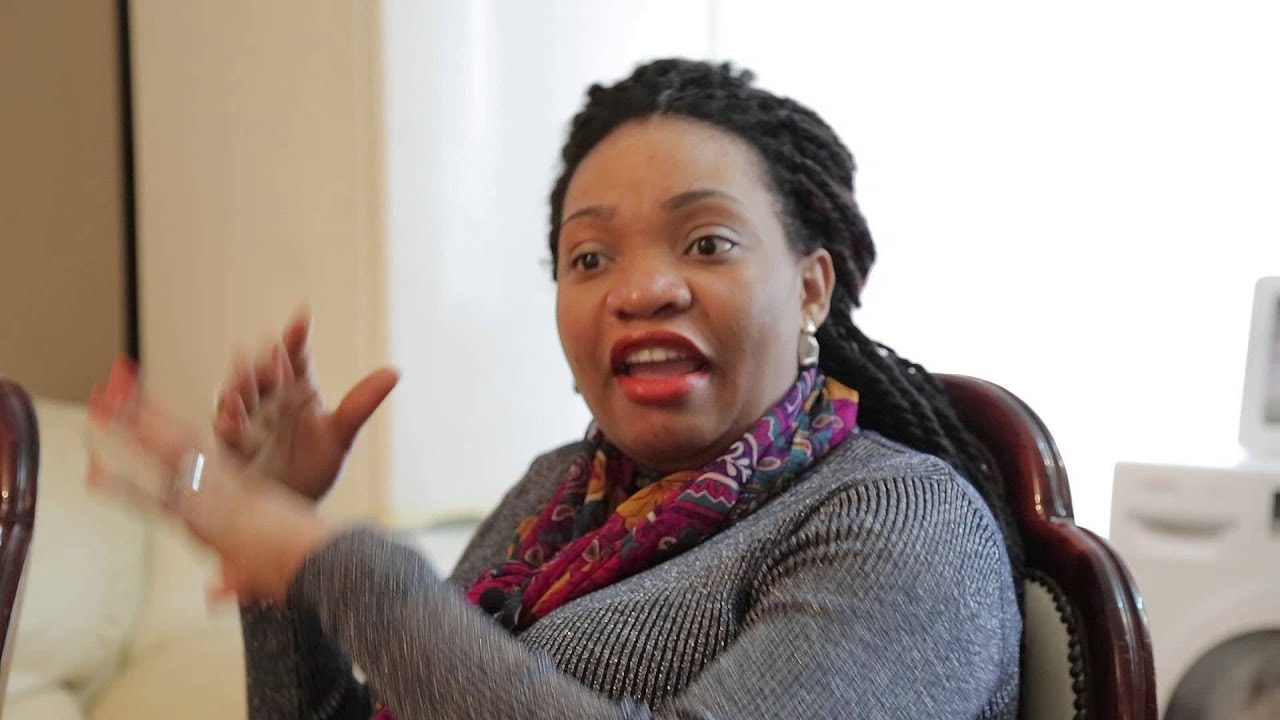
Uchechi Kanu, wife of Nnamdi Kanu, leader of the Indigenous People of Biafra (IPOB), has said her husband is confronting challenges even more difficult than those faced by Nelson Mandela during South Africa’s fight against apartheid.
Uchechi Kanu made the statement in a post on X, formerly known as Twitter, describing Nnamdi Kanu as “not a terrorist” but “Africa’s greatest freedom fighter.” She highlighted that Kanu’s struggle is for the freedom and welfare of millions of Biafrans across the globe.
“The Igbo youths and students are in solidarity with Mazi #NnamdiKanu. #NnamdiKanu is not a terrorist. He is the greatest African freedom fighter that exists and the leader of millions of Biafrans scattered all over the world who are under his umbrella #IPOB,” Uchechi Kanu wrote in her post.
She further noted that, while no human is perfect, her husband’s dedication to his people is unquestionable. “He loves his people and his people love him, and many are willing to protect him with their last breath,” she added.
Nnamdi Kanu is currently serving a life sentence at the Sokoto Custodial Centre after being convicted by Justice James Omotosho of the Abuja Federal High Court. His sentencing followed charges related to terrorism, which stemmed from his leadership role in IPOB and his advocacy for the creation of an independent Biafran state.
Uchechi Kanu contrasted her husband’s struggle with that of Nelson Mandela, stating that Mandela fought “in the arena (apartheid) with those amenable to reasoning, despite its brutality,” while Kanu is battling “forces far more darker.” Her statement reflects the family’s view that Kanu’s imprisonment is unjust and politically motivated.
IPOB, which was founded in 2012, has been at the center of Nigeria’s agitation for the actualisation of Biafra, a region in southeastern Nigeria that declared independence from the country in 1967. The Nigerian government, however, has repeatedly banned the organisation, declaring it a terrorist group, and has prosecuted its leader for activities related to secession and alleged violence.
Despite the controversies surrounding IPOB, Uchechi Kanu and other supporters maintain that the group’s core aim is peaceful advocacy for Biafran self-determination. “Mazi #NnamdiKanu fights for his people’s rights, and the government must recognise the legitimate grievances of the Biafran people,” Uchechi said.
Nnamdi Kanu first gained international attention as a vocal critic of the Nigerian government and a strong advocate for Biafran independence. Over the years, his leadership has inspired both fervent supporters and vocal critics, with IPOB’s activities sparking nationwide debates on self-determination, security, and human rights.
Since his arrest, Kanu’s detention has drawn widespread attention from human rights groups, activists, and foreign observers. Many of his supporters argue that he is a political prisoner, targeted for his stance on Biafra rather than for actual acts of violence. Conversely, the Nigerian government maintains that his arrest and conviction were necessary for national security and peace.
Uchechi Kanu’s recent remarks underscore the ongoing tensions surrounding her husband’s imprisonment. By comparing him to Nelson Mandela, she seeks to highlight the perceived severity and injustice of his situation, framing Kanu as a symbol of resistance against oppression. “While Mandela faced an oppressive regime, my husband faces forces far more insidious and determined to suppress him and the Biafran cause,” she said.
IPOB supporters have also rallied in solidarity, with youths and students across Nigeria expressing loyalty to Kanu. Social media platforms have seen an outpouring of messages reinforcing the narrative that Kanu is a freedom fighter rather than a criminal.
Historically, the Biafran struggle dates back to the Nigerian Civil War (1967–1970), when southeastern Nigeria attempted to secede under the leadership of Chukwuemeka Odumegwu Ojukwu. Although Biafra was reintegrated into Nigeria following the war, calls for independence have persisted, particularly among younger generations, many of whom see IPOB as a continuation of that struggle.
As Kanu serves his sentence, the debate over his role as a freedom fighter or a criminal continues to divide public opinion. Meanwhile, his wife, Uchechi, and other IPOB supporters remain vocal in defending him, vowing to continue the struggle for what they describe as justice for the Biafran people.