
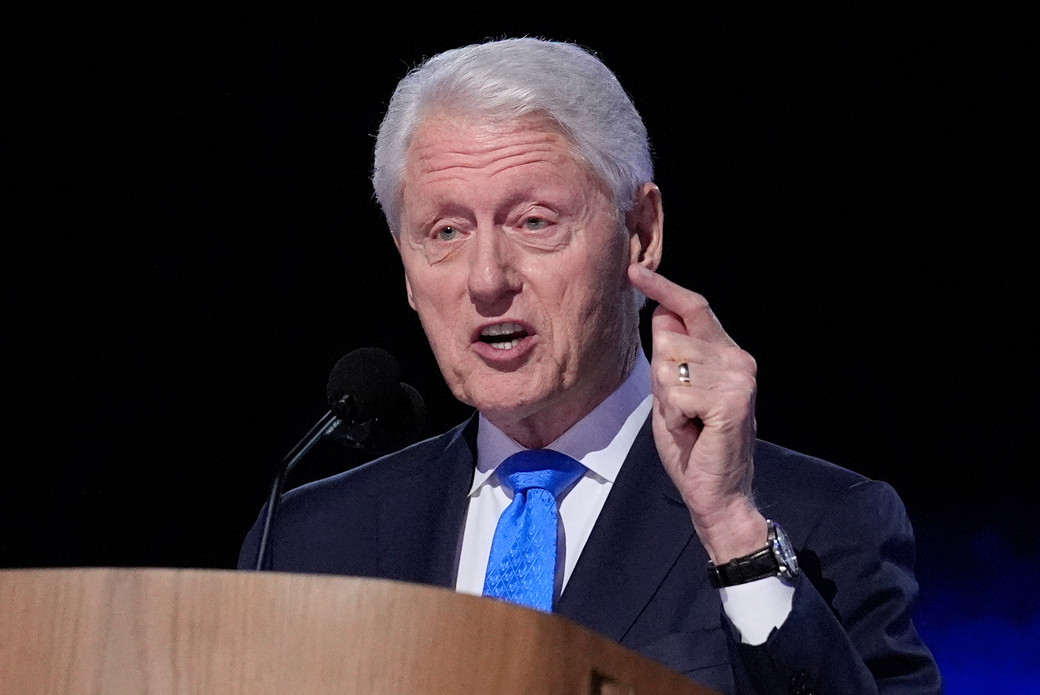
Former United States President Bill Clinton has denied any wrongdoing in connection with disgraced financier Jeffrey Epstein, as he appeared before a congressional panel investigating Epstein’s network and influence.
Clinton gave testimony behind closed doors on Friday in Chappaqua, New York, where he lives with his wife, Hillary Clinton. The session is part of an ongoing investigation by the US House of Representatives into Epstein’s relationships with powerful figures in politics, business and entertainment.
In an opening statement shared on social media, Clinton said clearly: “I saw nothing, and I did nothing wrong.” He insisted that he had cut ties with Epstein long before the financier’s 2008 conviction for sex offences.
Epstein was first convicted in 2008 in Florida for soliciting sex from girls as young as 14. He later faced federal sex trafficking charges but died in a New York jail cell in 2019 before trial. His death was ruled a suicide, though it has remained the subject of public debate and conspiracy theories in the United States.
The House committee leading the probe is chaired by Republican lawmaker James Comer. After the deposition, Comer told reporters that the session was “very productive” and said Clinton answered every question or attempted to answer them.
However, another Republican member of the panel, Nancy Mace, claimed there were “inconsistencies” in Clinton’s testimony. She did not provide specific examples of these inconsistencies.
Democratic members of the committee took a different position. Congressman Suhas Subramanyam said Clinton had not dodged any questions. He argued that attention should instead be focused on former President Donald Trump, who also had well-documented ties to Epstein.
“Let’s be real, we are talking to the wrong president,” Subramanyam said, calling on the panel to question Trump under oath.
In his own remarks, Clinton did not mention Trump by name but said, “No person is above the law, even presidents — especially presidents.”
Trump, speaking to reporters separately, said he liked Clinton and did not enjoy seeing him deposed. He has also expressed doubts about the investigation process.
The investigation into Epstein’s connections has become highly political. Republicans say they are carrying out legitimate oversight and seeking answers about how Epstein was able to build relationships with so many powerful individuals.
Democrats, however, argue that the probe is being used as a political weapon to attack opponents of Trump while avoiding deeper scrutiny of Trump’s own relationship with Epstein.
Hillary Clinton testified before the same panel a day earlier. She strongly called for Trump to appear before lawmakers.
The former Secretary of State said lawmakers should ask Trump “directly under oath about the tens of thousands of times he shows up in the Epstein files.” She also said she had never known Epstein personally and had never visited his homes, including his private Caribbean island.
That island, often described in media reports as a private retreat for wealthy and powerful guests, became central to allegations that Epstein trafficked young women and girls for sexual exploitation.
Bill Clinton has acknowledged that he had contact with Epstein in the early 2000s. He admitted flying several times on Epstein’s private plane, which became widely known in media reports after Epstein’s arrest.
Clinton has said those flights were linked to humanitarian work connected to the Clinton Foundation. He has repeatedly denied ever visiting Epstein’s private island in the Caribbean.
In his statement to the committee, Clinton said that if he had known about Epstein’s crimes, he would have acted differently.
“Not only would I not have flown on his plane if I had any inkling of what he was doing — I would have turned him in,” he said.
Comer, the committee chair, noted that Epstein had visited the White House multiple times during Clinton’s presidency and said these were among the issues the panel wanted to examine.
The US Department of Justice has released files related to Epstein’s activities, including photographs and visitor logs. Being mentioned in the files does not mean that an individual committed a crime, and neither Clinton nor Trump has been charged or formally investigated for wrongdoing in connection with Epstein.
The depositions are being held behind closed doors, which has drawn criticism from the Clintons. Bill Clinton described the proceedings as similar to a “kangaroo court,” suggesting he believes the process is unfair.
Both Bill and Hillary Clinton have called for the hearings to be open and televised so that the public can see the full context of their testimony.
Outside their home in Chappaqua, dozens of journalists and Secret Service officers gathered as the deposition took place. The presence of the media shows the strong public interest in the case.
Previously unseen photographs from the released files have also drawn attention. One image reportedly shows Clinton relaxing in a hot tub, while another shows him swimming near a woman believed to be Ghislaine Maxwell, Epstein’s longtime associate who was later convicted of helping him recruit and abuse underage girls.
Maxwell is currently serving a prison sentence in the United States for her role in Epstein’s crimes.
The renewed focus on Epstein’s network comes at a time of intense political rivalry in the United States, especially as the country prepares for another election cycle.
Epstein’s case has long raised questions about how wealth and influence can shield individuals from accountability. Many Americans continue to demand full transparency about who was connected to him and what they knew.
For Nigerians and other observers abroad, the developments highlight how political battles in the United States often mix legal investigations with party rivalry.
As the House committee continues its work, it remains unclear whether the probe will lead to further testimony from other high-profile figures, including Trump.
For now, Clinton maintains his innocence, saying he did nothing wrong and had no knowledge of Epstein’s criminal activities. The political debate surrounding the case, however, is far from over.

