
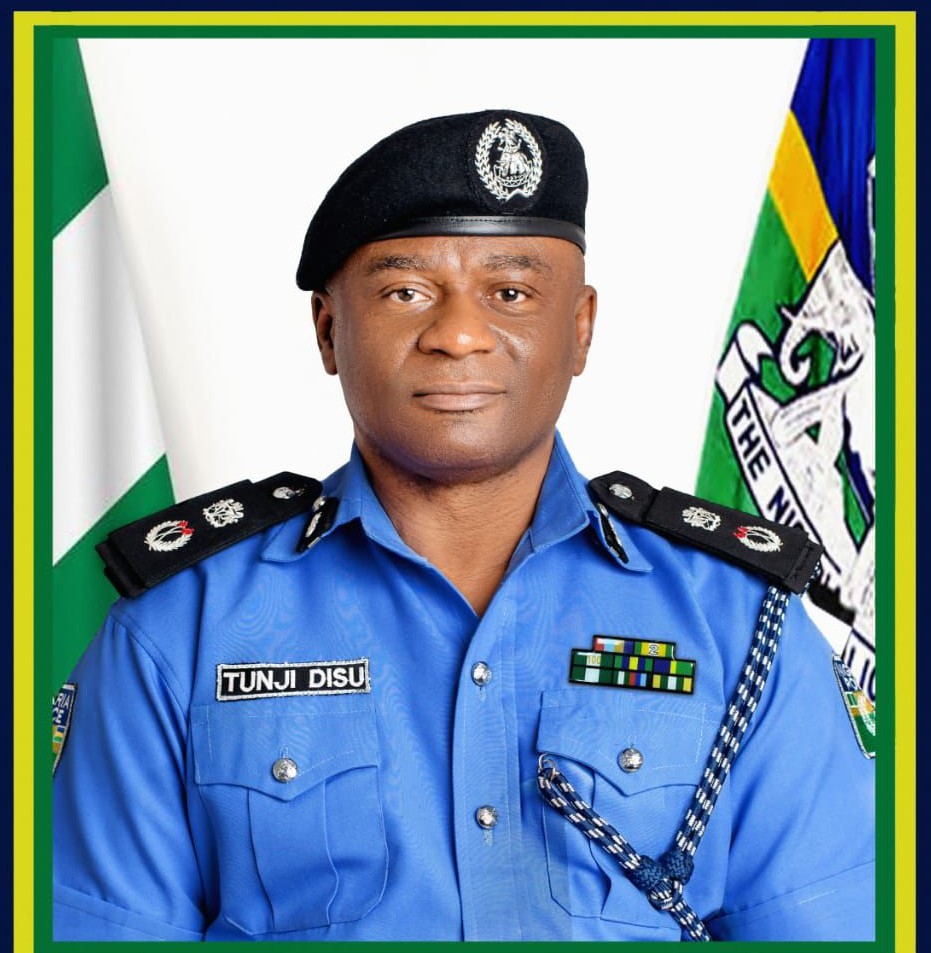
The Inspector-General of Police, Tunji Disu, on Wednesday inaugurated a committee to develop a framework for the possible establishment of state police in Nigeria, marking a new step in the ongoing national conversation on policing reforms.
The move comes as the Federal Government and lawmakers consider changes to the country’s policing system in response to growing security challenges across many states.
Speaking at the inauguration, Disu said the committee had been tasked with examining the concept of state policing and proposing how it could work within Nigeria’s security system. According to him, the panel will review policing models both within Nigeria and in other countries and study how local security needs can be better addressed.
He explained that the committee would also look at issues such as recruitment, training, funding, standards and accountability to ensure that any future state police system operates professionally and earns public trust.
“Among other responsibilities, the committee is expected to review existing policing models within and outside Nigeria, assess community security needs and emerging risks across the country, and propose an operational framework for the establishment and coordination of state police structures,” Disu said.
The committee will also address how officers would be recruited and trained, how resources would be allocated, and how oversight mechanisms would be designed to ensure transparency and professionalism.
The idea of state police has been widely discussed in Nigeria for several years. Supporters argue that decentralising the police structure would improve security by allowing local authorities to respond more quickly to threats in their communities.
Nigeria currently operates a centralised policing system under the Nigeria Police Force, which is controlled by the Federal Government. Critics of this system say it places too much responsibility on one national institution and often slows down responses to security threats at the local level.
Recently, the debate gained fresh momentum after President Bola Tinubu called for constitutional changes that would allow states to establish their own police forces.
During a breaking of fast with senators at the Presidential Villa in Abuja last week, the President urged the leadership of the Nigerian Senate to begin work on amendments to the Constitution that would make the reform possible.
Tinubu said decentralised policing would strengthen security at the grassroots level and improve the ability of states to respond quickly to security threats.
According to him, the current policing structure may need to be reviewed to reflect the country’s changing security realities.
The newly inaugurated committee is chaired by Olu Ogunsakin, Director-General of the National Institute for Police Studies in Abuja.
Other members include Commissioner of Police Bode Ojajuni, who will serve as secretary, as well as senior police officers such as DCP Okebechi Agora, DCP Suleyman Gulma, ACP Ikechukwu Okafor, CSP Tolulope Ipinmisho and retired Commissioner of Police Emmanuel Ojukwu.
The panel is expected to submit recommendations that could guide the Federal Government and lawmakers as they consider reforms to the country’s policing system.
Disu noted that the committee’s work would help ensure that the views of the police institution are included in national discussions about the proposed reform.
“The committee was set up early this morning to look into the issue of state police from the angle of the Nigeria Police,” he said.
“We don’t want it to appear that others are taking decisions while the institution most affected does not contribute. We want to ensure that the best approach is adopted.”
The police chief said the establishment of state police should not be seen as a threat to the existing national police force.
Instead, he described it as a partnership that could strengthen security across the country.
“State police has come to stay, and the police should be able to do their own part in making it succeed,” Disu said.
“The police are not afraid. Our jobs are not being taken. It is simply a matter of partnership.”
According to him, a decentralised system could improve community safety by allowing officers who understand local cultures and environments to handle issues such as neighbourhood patrols, conflict prevention and early response to emerging threats.
However, some critics have raised concerns that state police could be misused by state governments for political purposes. Because of these concerns, analysts say strong accountability and oversight systems will be necessary if the reform is eventually implemented.
Earlier on Wednesday, Disu was formally sworn in as the substantive Inspector-General of Police.
The oath of office was administered at the Presidential Villa at about 2:53 p.m., shortly after his citation was read by the State House Director of Information and Public Relations, Abiodun Oladunjoye.
The ceremony was attended by top government officials, including Vice President Kashim Shettima.
Also present were the Secretary to the Government of the Federation, George Akume; National Security Adviser Nuhu Ribadu; Chief of Staff to the President Femi Gbajabiamila; Minister of Police Affairs Ibrahim Gaidam; and the Minister of the Federal Capital Territory, Nyesom Wike.
Disu’s confirmation came less than a week after President Tinubu appointed him as acting Inspector-General of Police following the resignation of Kayode Egbetokun on February 23, 2026.
Meanwhile, the police chief also said the Nigeria Police Force is closely monitoring developments linked to the ongoing crisis in the Middle East.
According to him, tensions arising from the conflict involving the United States, Israel and Iran could have indirect effects in Nigeria.
Disu explained that intelligence reports show that some Islamic groups in Nigeria maintain ideological connections with countries in the Middle East.
“Our ears are to the ground. We know we have different Islamic sects in Nigeria, and some have connections with parts of the Middle East,” he said.
“So if anything happens there, the repercussion could reach us.”
He added that security agencies are already taking preventive measures to ensure that no group takes advantage of the situation to disturb peace in Nigeria.
Police patrols have also been intensified in some areas, while security officials continue to engage with community and religious leaders to discourage any form of violence.
Nigeria is home to several Islamic groups with links, ideological or organisational, to Middle Eastern countries.
For example, the Islamic Movement in Nigeria, led by Ibrahim El-Zakzaky, is known for its Shia orientation and strong support for Iran. At the same time, several Sunni organisations maintain religious ties with Saudi Arabia and other Gulf countries.

