
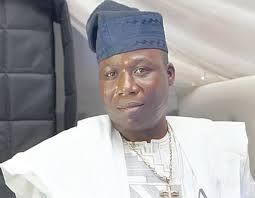
Yoruba nation agitator, Sunday Adeyemo, widely known as Sunday Igboho, has dismissed comments made by human rights activist and former presidential candidate, Omoyele Sowore, over what he described as “transactional politics” among some activists and regional figures.
The exchange between the two prominent voices has drawn public attention as political discussions ahead of the 2027 general elections begin to take shape across Nigeria.
The controversy began after a viral video surfaced online in which Sowore criticised what he called “transactional politics.” In the video, he accused some activists and influencers of aligning with politicians for personal or financial gain rather than acting on principle.
Although he did not mention names directly at first, Sowore appeared to refer to Igboho when he spoke about recent political positions taken by certain regional agitators. He linked such actions to what he described as “amala politics,” a popular slang often used to suggest opportunistic or interest-driven behaviour.
Sowore’s comments were widely shared on social media, sparking debate among Nigerians about the role of activism in politics and whether some figures have shifted their positions for personal reasons.
Reacting to the claims, Igboho, through a statement issued by his media aide, Olayomi Koiki, strongly rejected the allegations.
The statement, released in Ibadan, described Sowore’s remarks as baseless and not worthy of serious attention. It said the attempt to label Igboho’s activism as “transactional” was misleading and failed to reflect the true purpose of his agitation.
“We strongly reject the characterisation of Igboho’s activism as transactional. Such a position misrepresents the intent and focus of our agitation,” the statement said.
Igboho insisted that his actions have always been guided by the need to improve security in the South-West and protect the interests of the Yoruba people.
Part of the disagreement centres on Igboho’s recent political stance, including his support for President Bola Ahmed Tinubu and a possible second-term bid in 2027.
Sowore had suggested that such support reflected a form of compromise, implying that activists should remain independent and not align with political leaders.
However, Igboho defended his position, stating that supporting any political candidate is his constitutional right. He said his choices are based on what he believes will benefit the Yoruba people and Nigeria as a whole.
“I cannot be compelled to endorse political figures such as Peter Obi or Atiku Abubakar, or even align with Sowore’s platform,” he said.
He added that political decisions should remain a matter of personal conviction and not be dictated by others.
Igboho’s statement placed strong emphasis on the issue of insecurity in the South-West, which he described as the main focus of his agitation.
Since 2020, he has been known for his outspoken stance on security challenges in the region, especially attacks on farmers, kidnappings along major roads and violence against traditional rulers.
According to the statement, these concerns continue to drive his activities and public statements.
The media aide explained that Igboho’s movement is not about seeking political office or leading a nationwide revolution, but about addressing real threats faced by communities in Yorubaland.
“This agitation is a response to ongoing threats to lives and property,” the statement said.
The statement also took a swipe at Sowore’s style of activism, particularly his long-standing call for a nationwide revolution as a solution to Nigeria’s problems.
Igboho’s camp argued that such an approach has not produced the desired results and questioned its effectiveness in addressing current security challenges.
It pointed to recent reports of insecurity in parts of northern Nigeria, including incidents in Maiduguri, as evidence that broader strategies have not fully resolved the country’s issues.
The statement further challenged Sowore to focus on conditions in his home state of Ondo State, where cases of kidnapping and attacks on rural communities have also been reported.
Beyond policy differences, the exchange also included personal criticism. Igboho questioned Sowore’s record of support during his own legal challenges in the past.
He also raised concerns about Sowore’s lifestyle, alleging that his claims of fighting for the masses do not match reports of high daily expenses at a hotel in Lagos.
These claims, however, were not independently verified and reflect the growing tension between both figures.
The disagreement comes at a time when political discussions are gradually building up ahead of the 2027 general elections. Activists, politicians and regional leaders are beginning to position themselves and express their views on the future direction of the country.
Sowore, who has previously contested for the presidency, is known for his strong anti-establishment stance and calls for systemic change in Nigeria.
On the other hand, Igboho gained prominence through his advocacy for the Yoruba nation and his calls for stronger regional security measures.
Both men represent different approaches to activism—one focused on nationwide political reform, and the other centred on regional concerns and grassroots security.
The issue of insecurity remains a major concern across Nigeria. In the South-West, communities have reported cases of kidnapping, clashes involving farmers and herders, and attacks on local leaders.
These challenges have led to increased calls for local security arrangements and stronger community-based solutions.
Igboho’s supporters argue that his activism has helped draw attention to these problems and pushed authorities to take action.
Critics, however, believe that activism should remain neutral and not be tied to political endorsements.
The clash between Igboho and Sowore has generated mixed reactions among Nigerians. While some people support Igboho’s right to make independent political choices, others agree with Sowore’s concerns about the possible influence of politics on activism.