
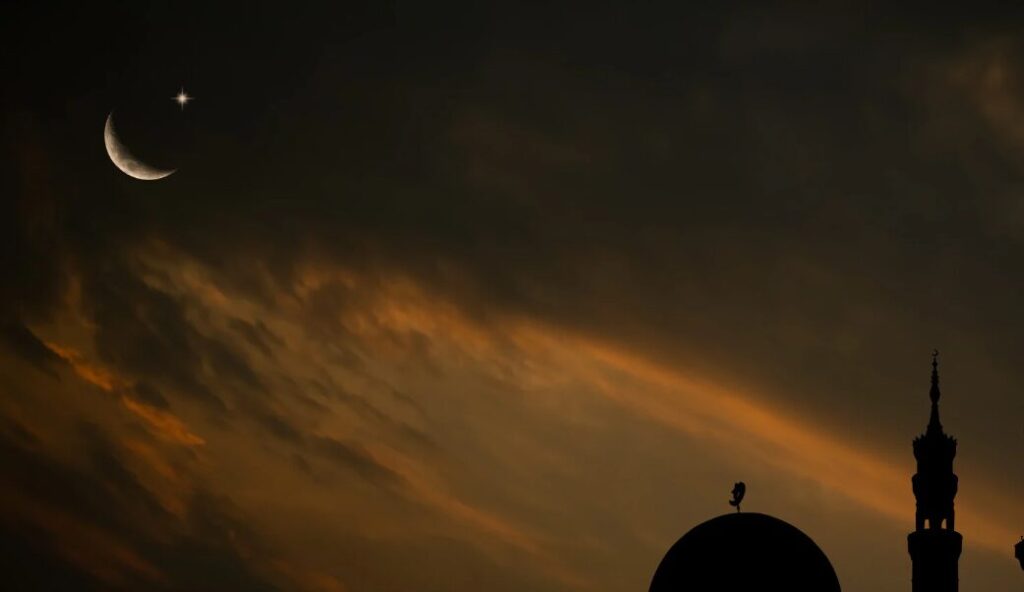
Muslims in Nigeria are awaiting an official announcement from the Muhammad Sa’ad Abubakar following Saudi Arabia’s declaration that Friday, March 20, 2026, will mark the celebration of Eid al-Fitr.
Authorities in Saudi Arabia confirmed that the crescent moon that signals the beginning of Shawwal, the 10th month of the Islamic calendar, was not sighted on Wednesday. As a result, the ongoing Ramadan will complete 30 days, with Eid celebrations scheduled for Friday.
In a statement released by Saudi officials, it was clearly stated that the failure to sight the moon means there will be no early end to the fasting period. “The crescent of Shawwal 1447 was not sighted anywhere in the Kingdom,” the statement read, adding that Ramadan will run its full course before the festival begins.
Despite this announcement, the situation in Nigeria remains undecided. The responsibility of declaring the end of Ramadan in the country lies with the Sultan of Sokoto, who is also the President-General of the Nigerian Supreme Council for Islamic Affairs. His decision is based on verified local moon sightings across different parts of Nigeria.
Earlier this week, the Sultan had called on Muslims nationwide to look out for the new moon on Wednesday, which marked the 29th day of Ramadan. The directive was contained in a statement issued by the Sultanate Council and signed by Sambo Wali Junaidu, who serves as the Wazirin Sokoto and Chairman of the Advisory Committee on Religious Affairs.
The statement urged Muslims to report any sighting of the crescent moon to their nearest district or village heads. These reports are then forwarded to the Sultanate Council for proper verification before any official announcement is made.
To make the process easier, the council also provided telephone lines through which credible sightings could be reported directly to the Sultan’s office. This system is part of efforts to ensure accuracy and unity in the observance of important Islamic events across the country.
In Nigeria, the Sultan’s pronouncement is regarded as the highest authority on such matters. This means that even if other countries, including Saudi Arabia, have announced a date for Eid, Nigerian Muslims traditionally wait for confirmation from the Sultan before concluding the fast.
This difference in timing is not unusual. Due to variations in moon sighting methods and geographical differences, countries sometimes begin and end Ramadan on different days. While Saudi Arabia often uses a combination of astronomical calculations and physical sightings, Nigeria relies strictly on verified local observations.
The importance of moon sighting in Islam dates back centuries and remains a key part of religious practice. The Islamic calendar is based on the lunar cycle, making the sighting of the crescent moon essential for determining the start and end of months.
Eid al-Fitr, which follows Ramadan, is one of the most important celebrations in Islam. It marks the end of a month-long period of fasting, prayer, and reflection. During Ramadan, Muslims abstain from food and drink from dawn to sunset, while also engaging in acts of charity and spiritual growth.
The Eid celebration is usually marked by special prayers, family gatherings, and acts of generosity. It is also a time when Muslims give to the less privileged through a form of charity known as Zakat al-Fitr, which is meant to ensure that everyone can take part in the celebration.
In Nigeria, Eid festivities are often colourful and widely attended, with large prayer gatherings held in mosques and open fields. Leaders at all levels, including governors and traditional rulers, usually join in the prayers and celebrations.
As Nigerians await the Sultan’s announcement, many Muslims have continued their fasting, preparing for the possibility that Eid could fall either on Friday or a day later, depending on local moon sightings.
Religious leaders have urged calm and patience, reminding the faithful of the importance of unity and adherence to established religious authority. They stress that the slight difference in dates does not affect the significance of the celebration.
Meanwhile, anticipation is building across the country, as markets and homes are already witnessing increased activity in preparation for Eid. Traders are stocking food items, clothing, and other goods typically associated with the celebration.
For many families, the period leading up to Eid is a busy one, involving shopping, cooking, and making travel plans to reunite with loved ones. Transport operators have also reported increased demand as people move across states to celebrate with family members.
As the wait continues, attention remains focused on Sokoto, where the Sultan is expected to make the final announcement after receiving and verifying reports from across the country.
Until then, Nigerian Muslims will continue their fast, guided by tradition and faith, as they prepare to mark the end of Ramadan and welcome Eid al-Fitr in unity and celebration.