
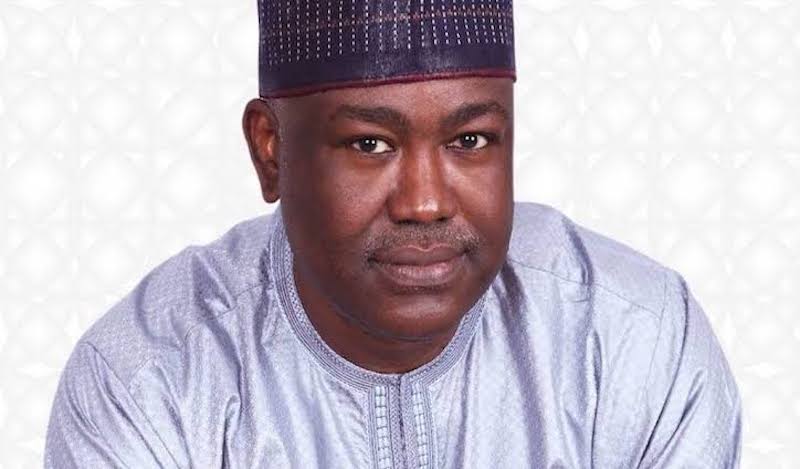
A chieftain of the Peoples Democratic Party (PDP), Gbenga Olawepo-Hashim, has criticized President Bola Ahmed Tinubu over his alleged role during Nigeria’s military era, sparking fresh political debate ahead of the 2027 general elections.
Olawepo-Hashim made the remarks during a live appearance on Sunday Politics, a program on Channels Television, where he spoke about the history and resilience of the PDP.
During the interview, he claimed that while members of the PDP and other pro-democracy groups were actively resisting military rule in Nigeria, Tinubu was outside the country.
“When we fought the military, President Bola Tinubu was one of the people drinking cognac abroad. He was not here,” he said.
His comments refer to Nigeria’s period of military rule, particularly during the regime of Sani Abacha, which lasted from 1993 until his death in 1998. That era was marked by political repression, arrests of activists, and restrictions on civil liberties.
Olawepo-Hashim said he was directly involved in the struggle to return the country to democratic rule. He recalled being part of meetings and negotiations involving political leaders and civil society groups during the final days of military governance.
“A day General Sani Abacha died, I was with General Ibrahim Babangida, the G-34 and the civil society group that confronted Abacha,” he said.
The G-34 was a group of senior Nigerian politicians who came together in the late 1990s to challenge military rule and push for a return to democracy. Their efforts later contributed to the formation of the PDP, which became one of Nigeria’s major political parties after the country returned to civilian rule in 1999.
Olawepo-Hashim also claimed that many founding members of the PDP were detained during the military era, highlighting what he described as the sacrifices made by the party’s leaders.
“So many founding fathers of the PDP were in prison as of then,” he said, adding that civilians were actively negotiating for the birth of a new democratic republic despite the risks involved.
His remarks have added to ongoing debates about the roles played by different political actors during Nigeria’s pro-democracy struggle. Over the years, various politicians, including Tinubu, have also been recognised by supporters for their contributions to the fight against military rule, especially through political activism and support for democratic movements.
President Tinubu, a former governor of Lagos State, was part of the National Democratic Coalition (NADECO), a group that opposed military rule and called for the validation of the June 12, 1993 election believed to have been won by MKO Abiola. Many NADECO members operated both within and outside Nigeria during that period due to security risks.
However, Olawepo-Hashim’s comments suggest a different interpretation of events, reflecting the deep political divisions that continue to shape Nigeria’s political landscape.
Beyond historical issues, the PDP chieftain also spoke about current political developments, particularly in relation to the 2027 general elections. He argued that the ruling All Progressives Congress (APC) is facing internal challenges that could weaken its position.
“If the opposition is dead and buried as they claimed, why then are they afraid of the next general elections?” he asked.
Olawepo-Hashim dismissed claims that the PDP is no longer a strong opposition force, insisting that the ruling party has more serious problems within its ranks.
“All the internet or data boys praise President Tinubu as a strategist. He has done the polls, and he knows that in a free and fair election today, the APC cannot score 20 per cent of the vote,” he said.
He further alleged that divisions within the APC could affect its chances in future elections, claiming that some members of the party may turn against one another.
“Even in the same APC, they know who are ready to bite them in the back. And I can tell you that they have more issues than the PDP,” he added.
Nigeria’s political environment has remained active since the 2023 general elections, which brought President Tinubu to power under the APC platform. Since then, both the ruling party and opposition groups have been positioning themselves ahead of the next election cycle.
The PDP, which governed Nigeria from 1999 to 2015, has been working to rebuild its strength after losing power to the APC. Internal disagreements and leadership challenges have affected the party in recent years, but its leaders continue to insist that it remains a strong force in national politics.
Political analysts say statements like those made by Olawepo-Hashim are part of early political positioning as parties prepare for future elections. They note that debates over history, performance, and leadership are likely to intensify as 2027 approaches.
While such comments may deepen political rivalry, observers also stress the importance of focusing on key issues such as security, economic growth, and governance, which remain major concerns for Nigerians.
As discussions continue, the exchange highlights how Nigeria’s past and present politics remain closely linked, with leaders drawing on history to shape current narratives and influence public opinion.
For many Nigerians, the hope is that political debates will lead to better policies and improved leadership, rather than deepen divisions in the country.