
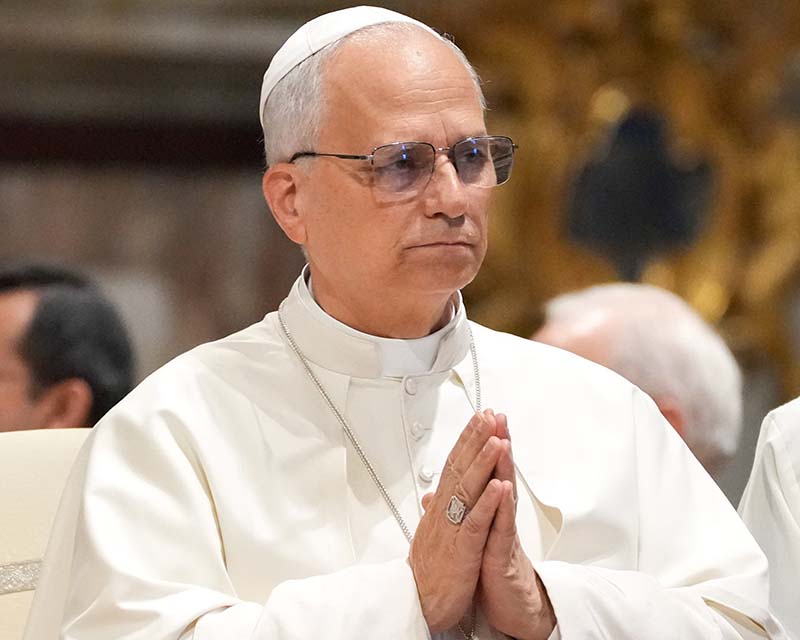
The head of the Catholic Church, Pope Leo XIV, has delivered a strong message against war and violence, warning that God does not listen to the prayers of leaders who promote conflict.
The Pope made this statement during the Palm Sunday Mass held at St. Peter’s Square, where thousands of worshippers gathered to mark the beginning of the Holy Week in the Christian calendar.
Speaking to the faithful, the pontiff reflected on the teachings of Jesus Christ, stressing that violence and aggression go against the core message of Christianity. He reminded listeners of a well-known biblical teaching that “those who take the sword will perish by the sword,” a warning often interpreted as a call to reject violence.
The Pope used the occasion to caution political and global leaders against engaging in or supporting war. According to him, no leader should attempt to justify violence using religion or faith.
“Jesus is the King of Peace, who rejects war, and no one can use Him to justify violence,” he said.
In a direct message to leaders involved in conflicts around the world, Pope Leo XIV declared that God does not accept prayers from those who are responsible for bloodshed. He supported this message with a quote from the Book of Isaiah in the Bible, which says that prayers offered by those with “hands full of blood” will not be heard.
“Even though you make many prayers, I will not listen: your hands are full of blood,” he quoted.
His statement comes at a time when several parts of the world are experiencing ongoing conflicts, with many civilians caught in the middle. From wars between nations to internal armed struggles, violence continues to cause loss of lives, displacement, and destruction of communities.
Although the Pope did not mention any specific country, his message is seen as a general call for peace and a reminder of the moral responsibility of leaders. Observers say such statements from the Vatican often aim to influence global opinion and encourage peaceful solutions to conflicts.
Palm Sunday is an important event in the Christian faith. It marks the day Jesus Christ is believed to have entered Jerusalem before his crucifixion. The day is usually celebrated with prayers, processions, and messages of peace and reflection.
For many Christians in Nigeria and around the world, the Pope’s message is especially relevant. Nigeria itself has faced different forms of violence over the years, including insurgency in the North-East, clashes between farmers and herders, and other security challenges in different regions.
Religious leaders in Nigeria have often called for peace and unity, urging both leaders and citizens to avoid actions that could lead to conflict. The Pope’s message adds to these calls, reinforcing the importance of dialogue and understanding.
Pope Leo XIV also used strong emotional language to describe the suffering caused by war. He expressed hope that the pain experienced by victims of violence would not last forever.
He said the suffering would one day be wiped away, comparing it to frost melting under the warmth of the rising sun. This message was meant to encourage those affected by conflict and remind them that peace is possible.
“From the cross, Christ calls out once more: God is love. Show mercy. Lay down your weapons. Remember that you are brothers and sisters,” the Pope said.
The Vatican, the headquarters of the Catholic Church, has a long history of speaking out on global issues, including war, poverty, and human rights. Popes have often used major religious events like Palm Sunday and Easter to send messages that go beyond the church and address the wider world.
For many believers, the Pope’s statement is a reminder that faith should be a force for unity, not division. It also places responsibility on leaders to act in ways that protect lives and promote peace.
As the world continues to face different security challenges, the call from Pope Leo XIV adds to the growing demand for an end to violence and a renewed focus on peaceful solutions.