
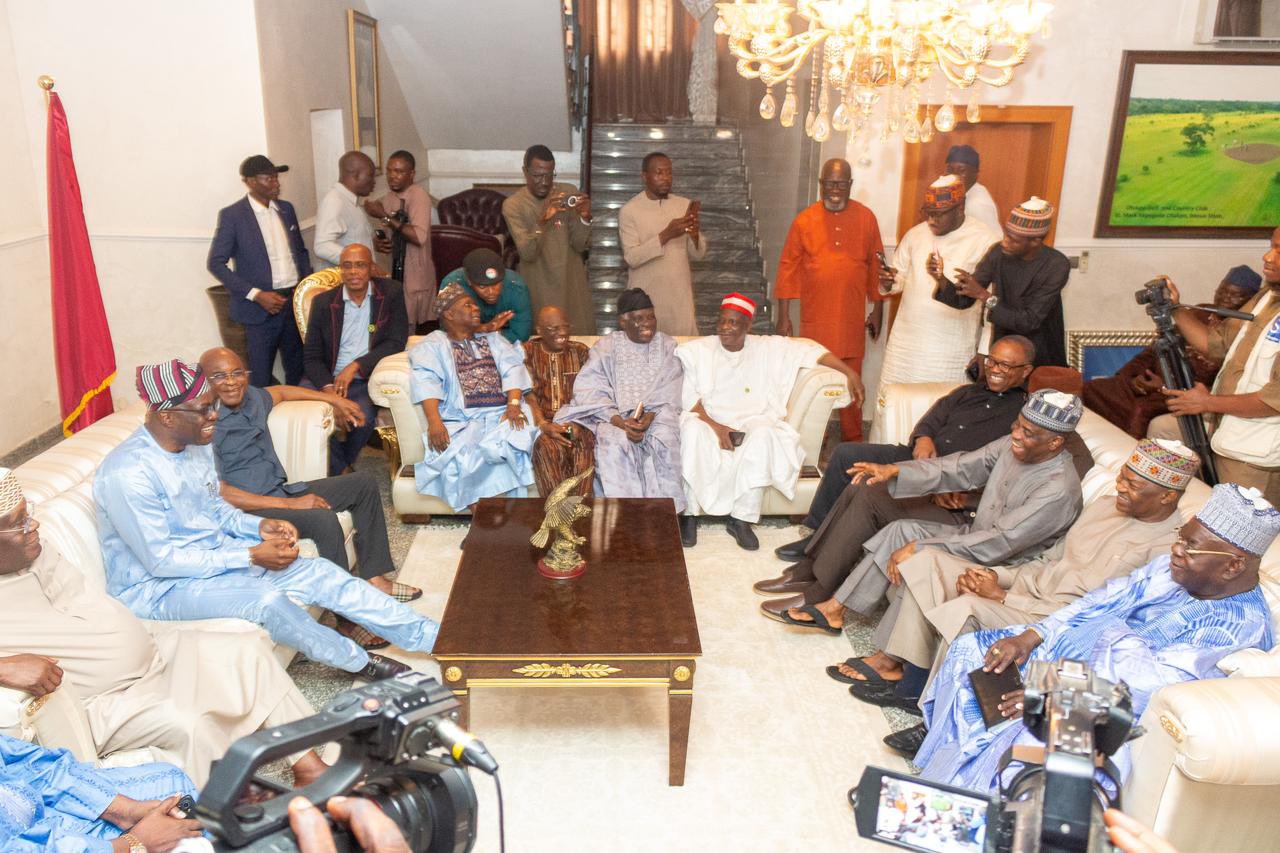
Leaders of the African Democratic Congress (ADC) and a faction of the Peoples Democratic Party (PDP) met in Abuja on Wednesday for a high-level stakeholders’ meeting, bringing together some of Nigeria’s most prominent opposition figures at a time of growing political activity in the country.
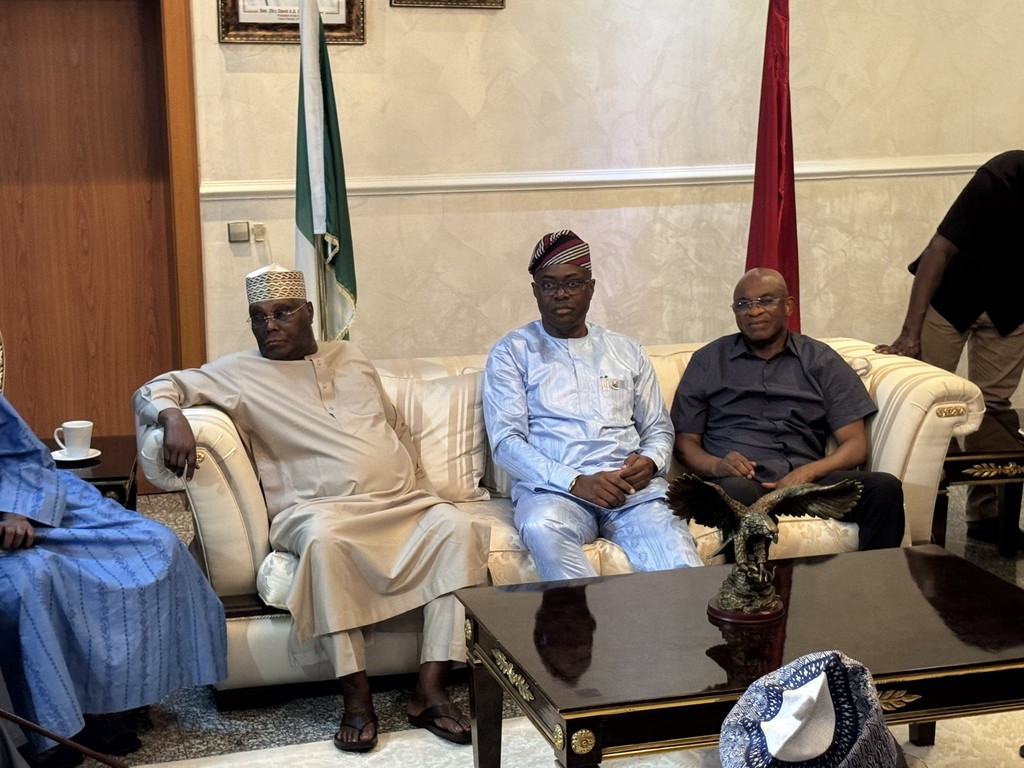
The meeting, which took place just hours after a protest in parts of the Federal Capital Territory, is seen by observers as part of ongoing efforts among opposition leaders to strengthen cooperation ahead of future political contests.
Among those present at the meeting were the National Chairman of the ADC, David Mark; former Vice President Atiku Abubakar; former Kano State Governor Rabiu Musa Kwankwaso; and the Labour Party’s presidential candidate in the 2023 election, Peter Obi.
Other notable figures in attendance included former Attorney-General of the Federation, Abubakar Malami; former Secretary to the Government of the Federation, Babachir Lawal; former Rivers State Governor, Rotimi Amaechi; and Senator Aminu Tambuwal.
From the PDP faction led by Professor Jerry Gana, those present included Oyo State Governor Seyi Makinde; factional National Chairman, Jerry Gana; former Senate President, Adolphus Wabara; and former Niger State Governor, Babangida Aliyu, along with other members of the party’s National Working Committee.
However, Bauchi State Governor Bala Mohammed, who was expected to represent another bloc within the PDP, was notably absent from the gathering. His absence has raised questions about the level of unity within the party, which has faced internal disagreements since the 2023 general elections.
The stakeholders’ meeting followed closely after a protest held earlier in the day in Abuja. The demonstration reportedly began at the Maitama Roundabout and moved toward the office of the Independent National Electoral Commission (INEC).
Although details of the protest are still emerging, it reflects ongoing dissatisfaction among some political groups and citizens over governance issues and the state of the nation. The timing of the protest and the meeting has added to speculation that opposition leaders are seeking to respond more actively to public concerns.
Nigeria’s opposition space has remained fragmented in recent years, with major figures spread across different parties including the PDP, Labour Party, New Nigeria Peoples Party (NNPP), and ADC. Attempts at forming a united front have often been slowed by personal ambitions and internal party disputes.
The presence of key figures like Atiku Abubakar, Peter Obi, and Rabiu Kwankwaso—who all contested the 2023 presidential election under different platforms—suggests that discussions may be focused on bridging these divides.
Although details of the meeting were not made public at the time of filing this report, sources indicate that talks may include strategies for cooperation, party reforms, and possible alignments ahead of future elections.
The PDP, Nigeria’s main opposition party since losing power in 2015, has been dealing with internal challenges that have weakened its position. The emergence of factions within the party, including the group led by Jerry Gana, reflects ongoing disagreements over leadership and direction.
Governor Bala Mohammed’s absence from the meeting is being closely watched, as he is seen as a key figure in another influential bloc within the party. His non-attendance may point to continuing divisions that could affect the party’s ability to present a united front.
Governor Seyi Makinde’s presence, however, indicates that some serving PDP leaders are still actively engaging in broader opposition discussions.
Since the 2023 general elections, Nigeria’s political landscape has remained active, with opposition parties seeking to redefine their roles. The elections saw strong performances from multiple candidates across different parties, showing a shift away from the traditional two-party dominance.
Peter Obi’s campaign, in particular, drew significant support from young voters and urban populations, while Kwankwaso maintained a strong base in parts of the North. Atiku Abubakar, as the PDP candidate, also retained influence across several regions.
The ADC, though smaller in size compared to the PDP, has increasingly positioned itself as a platform for coalition-building among opposition leaders.
For now, the meeting highlights a shared understanding among opposition figures that greater cooperation may be necessary in the face of current political realities.
As Nigerians continue to watch developments, attention will likely turn to whether this gathering leads to concrete actions or remains another attempt at unity without lasting impact.