
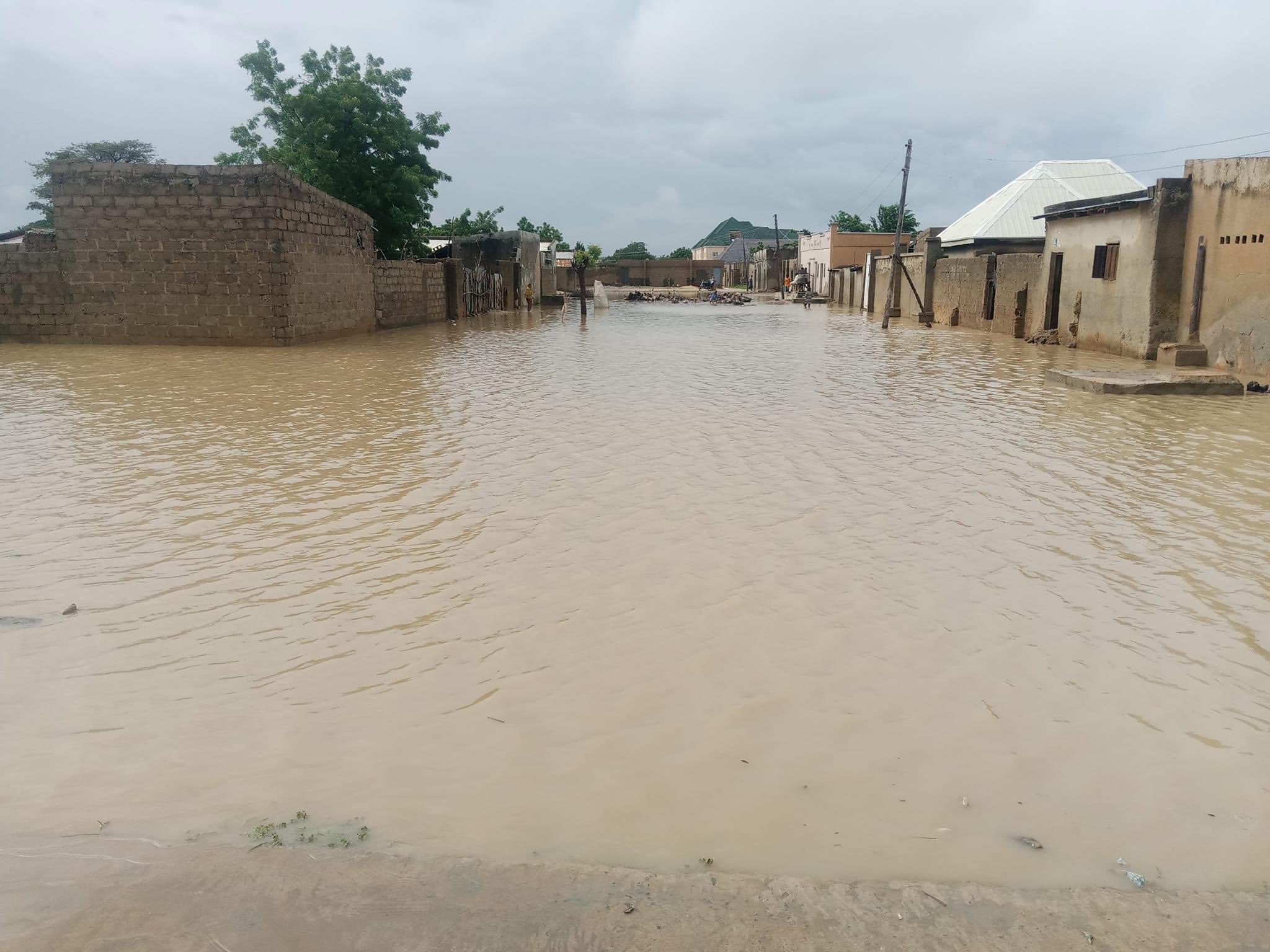
The Federal Government has issued a fresh warning that heavy rainfall expected in parts of the country may lead to flooding in at least 10 states between April 8 and April 12, 2026.
The alert was released by the National Flood Early Warning Centre under the Federal Ministry of Environment. In a notice dated April 8, the government advised residents in the affected areas to remain vigilant as rising water levels could disrupt normal life.
According to the notice, which was signed by the Director of the Erosion, Flood and Coastal Zone Management Department, Usman Bokani, several communities are at risk due to the expected intensity of rainfall during the period.
“The following locations and their environs are likely to witness heavy rainfall that may lead to flooding within the period of prediction,” the statement said.
The warning covers parts of 10 states across different regions of the country. These include Ebonyi State, Anambra State, Ogun State, Taraba State, Cross River State, Benue State, Imo State, Delta State, Rivers State, and Abia State.
In Ebonyi State, the government listed Afikpo and Nkalagu as areas likely to be affected. In Anambra State, communities such as Atani, Iyowa Odekpe, Odekpe, and the busy commercial city of Onitsha were identified as high-risk locations.
In Ogun State, Ayetoro and Ilaro may experience flooding if the rainfall becomes intense. Taraba State, which often records heavy rainfall during the wet season, has several communities on the list, including Donga, Kwata Kanawa, Lau, Serti, Takum, and Yorro.
The ministry also mentioned Edor, Ikom, and Itigidi in Cross River State, as well as Igumale in Benue State.
In Imo State, areas such as Nworievbi, Okigwe, Otoko, and Owerri were listed. Other locations include Oko Anara in Delta State, Port Harcourt in Rivers State, and Umuahia in Abia State.
The warning comes as Nigeria enters the early phase of the rainy season, a period that often brings heavy downpours in many parts of the country.
Flooding has become a recurring problem in Nigeria during the rainy season, especially in communities located near rivers or areas with poor drainage systems. Urban centres are also affected due to blocked drainage channels and rapid development without proper planning.
In recent years, floods have caused loss of lives, destruction of homes, and damage to farmland. In 2022, for example, one of the worst flood incidents in decades affected many states, displacing thousands of people and destroying crops.
The Federal Ministry of Environment urged residents in the affected areas to take precautionary measures to protect themselves and their property.
Such measures include clearing drainage systems, avoiding building or staying in flood-prone areas, and being ready to move to safer locations if necessary.
Local authorities and emergency agencies are also expected to monitor the situation closely and provide support where needed.
Community leaders have been advised to sensitise residents on the risks and encourage them to follow safety guidelines.
Flooding does not only affect homes; it also has serious effects on agriculture, which is a major source of livelihood for many Nigerians.
Heavy rainfall and flooding can wash away crops, destroy farmlands, and reduce food production. This can lead to higher food prices and increased hardship for families.
States like Benue and Taraba, known for farming, are particularly vulnerable during periods of heavy rain.
Cities like Port Harcourt, Onitsha, and Owerri have experienced repeated flooding in recent years. Poor waste disposal, blocked drains, and unplanned construction have made the situation worse.
Residents often complain that even a few hours of heavy rain can lead to flooded streets, making movement difficult and affecting businesses.
The Federal Government has introduced flood warning systems and continues to work with state governments to improve disaster response.
Agencies such as the National Emergency Management Agency (NEMA) are usually placed on alert during the rainy season to respond quickly to emergencies.
However, challenges remain, including limited resources, poor infrastructure, and lack of awareness in some communities.
Ignoring early warnings has, in the past, led to avoidable tragedies.
The government’s latest alert is therefore seen as an important step in preventing loss of lives and property.
As the rains continue in the coming months, authorities are expected to issue more updates based on weather conditions.
For now, residents in the affected states are advised to stay alert and take necessary precautions as heavy rainfall is expected to persist within the forecast period.