
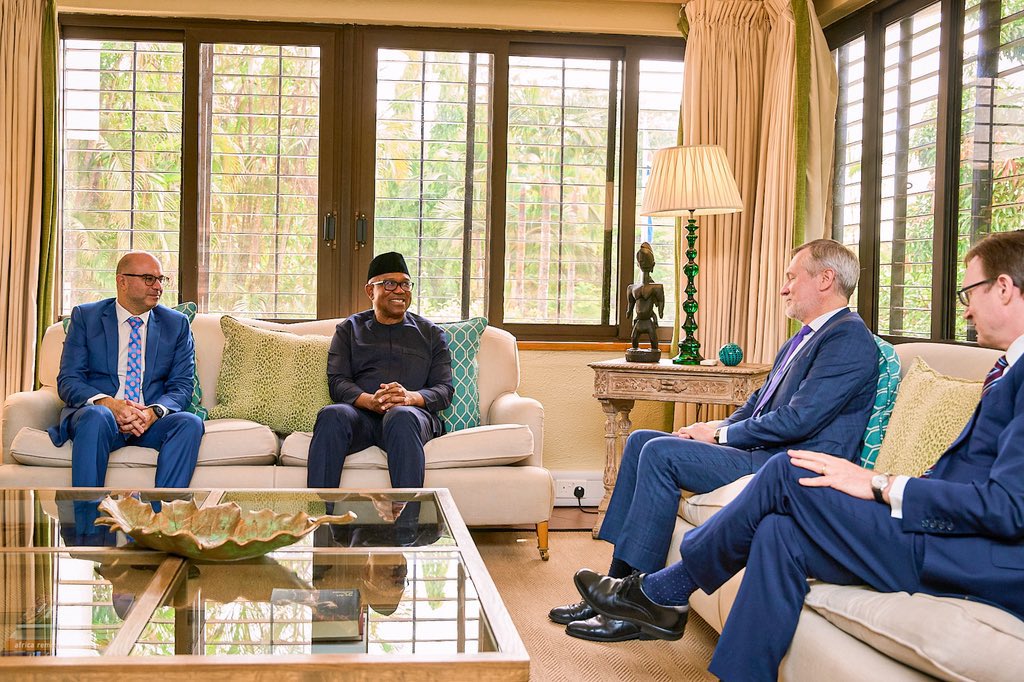
Peter Obi, the 2023 presidential candidate of the Labour Party (LP), on Wednesday held a meeting with envoys and representatives from key foreign missions in Abuja, in a move seen as part of ongoing political and diplomatic engagement.
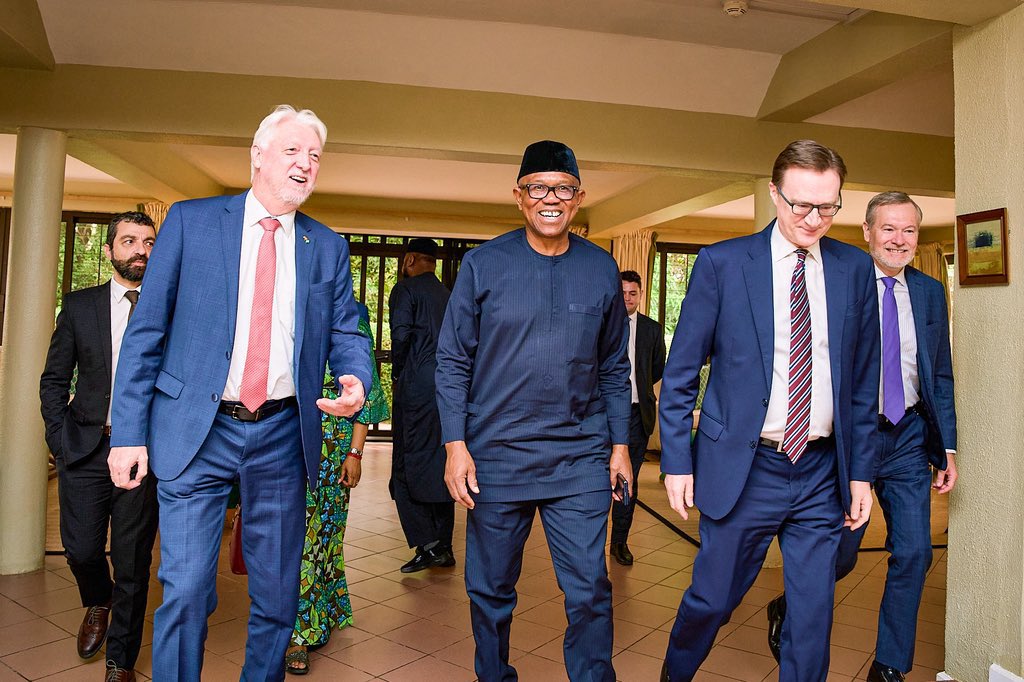
The meeting, which took place in the nation’s capital, brought together representatives from the United Kingdom, Germany, Canada, and France. Although details of the discussion were not officially disclosed, the development has drawn attention from political observers and members of the public.
News of the meeting was shared by Esther Umoh, who served as Obi’s campaign photographer during the 2023 general elections. In a post on X, she said the former governor met with “representatives from several diplomatic missions, including the British High Commissioner, and the embassies of Germany, Canada, and France.”
Meetings between political figures and foreign diplomats are not unusual in Nigeria, especially for individuals who have played major roles in national elections.
Although Obi no longer holds public office, he remains an influential political figure, particularly among young Nigerians and supporters of the Labour Party.
His meeting with envoys from countries such as United Kingdom, Germany, Canada, and France suggests continued international interest in Nigeria’s political landscape.
Peter Obi served as governor of Anambra State from 2006 to 2014. He gained national attention during the 2023 presidential election, where he ran under the Labour Party and attracted significant support, especially from young voters.
The election, however, was won by Bola Tinubu of the All Progressives Congress (APC), but Obi’s performance marked a shift in Nigeria’s political space, with many analysts noting the rise of a more issue-based campaign.
Since the election, Obi has remained active in public discourse, often speaking on governance, economic reforms, and accountability.
Foreign diplomatic missions in Nigeria, including those from the UK, Germany, Canada, and France, play important roles in strengthening bilateral relations.
They often engage with government officials, opposition leaders, and civil society groups to discuss matters of mutual interest.
Such meetings can cover a wide range of topics, including trade, security, education, and democratic development.
The meeting has generated mixed reactions among Nigerians on social media. While some see it as a positive step that reflects Obi’s continued relevance, others are asking for more details about the purpose and outcome of the discussion.
Supporters of the former governor have described the meeting as a sign of his growing influence beyond Nigeria, while critics argue that more transparency is needed regarding such engagements.
Though the exact details of the meeting remain unclear, political observers believe it may be part of ongoing consultations and relationship-building efforts.
As Nigeria continues to navigate economic challenges and political developments, interactions between local leaders and international partners are expected to remain important.
For now, Obi’s meeting with the foreign envoys highlights his continued presence on the political scene and the interest of the international community in Nigeria’s future.
More information may emerge in the coming days regarding the outcome of the discussions and any possible areas of cooperation.