
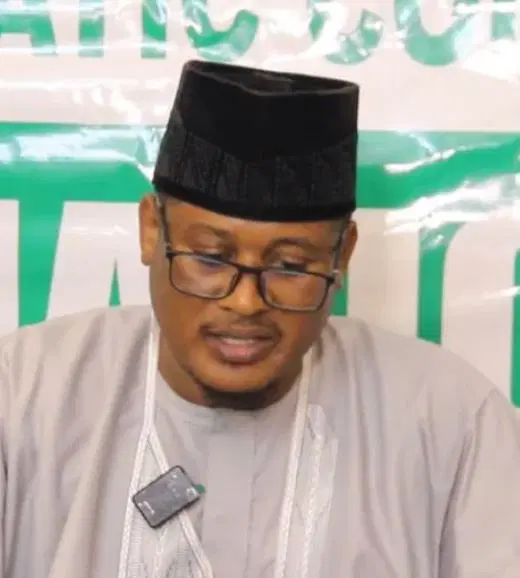
Fresh crisis has hit the African Democratic Congress (ADC) as a former deputy national chairman of the party, Nafiu Bala, accused the party’s former national chairman, Ralph Nwosu, of deceiving him into attending an event that led to a controversial change in leadership.
Bala made the allegation during an interview on African Independent Television (AIT), where he claimed he was unaware of plans to announce new party leaders at the gathering.
According to him, the event was originally meant to formalise the adoption of the ADC by a political coalition preparing for the 2027 Nigerian general election. However, he said the meeting took an unexpected turn when Nwosu announced his resignation and named new leaders for the party.
The new leadership announced at the event included former Senate President, David Mark, as national chairman, and former Osun State governor, Rauf Aregbesola, as national secretary.
Bala said the development came as a shock to him and was not part of the plan he was aware of before attending the ceremony.
“The day the coalition said they wanted to adopt ADC as a party and announced it to the world, Ralph Nwosu also announced his resignation and named David Mark and Rauf Aregbesola as chairman and national secretary,” Bala said.
“I was surprised because that was not what took me there. They only came to introduce themselves and adopt ADC as a party for the 2027 general election.”
The disagreement has since triggered a leadership crisis within the party, with Bala rejecting the new arrangement and insisting that due process was not followed.
Following the incident, Bala said he quickly moved to consult with key organs of the party, including the National Working Committee (NWC) and the National Executive Council (NEC). He explained that the consultations were necessary to determine the next line of action.
“One week later, I met with the national working committee across the country for consultation before taking action,” he said.
After the consultations, Bala said he wrote to the Independent National Electoral Commission (INEC), presenting himself as the acting national chairman of the party. He also confirmed that he has taken legal action to challenge the leadership changes.
The crisis has effectively split the party into factions, with one group backing Bala and another supporting the leadership announced at the event.
Bala also dismissed claims that he had resigned from his position as deputy national chairman. He alleged that reports of his resignation were false and that his signature may have been forged to support the claim.
“I did not resign. The signature being circulated is not mine,” he said, adding that he has formally asked INEC to recognise him as the legitimate national chairman of the party.
The ADC, though not one of Nigeria’s major parties, has in recent years positioned itself as a platform for coalitions and political alliances, especially ahead of national elections. Political observers say the party’s openness to alliances makes internal unity even more important.
The reported adoption of the party by a coalition ahead of the 2027 elections had initially raised expectations that the ADC could play a bigger role in national politics. However, the current leadership dispute now threatens to weaken that position.
For INEC, the situation presents another test of its role as the regulator of political parties. The commission is responsible for recognising party leadership and ensuring that due process is followed in internal party affairs.
Until INEC makes a clear decision or the courts settle the matter, the leadership of the ADC is likely to remain uncertain.
Supporters of both sides have called for calm, but there are concerns that the dispute could affect the party’s preparations for future elections. Some members have urged party leaders to resolve their differences internally to avoid long-term damage.
The involvement of prominent political figures like David Mark and Rauf Aregbesola has also drawn attention to the crisis, with many watching closely to see how it unfolds.
For Bala, the focus remains on challenging what he described as an unfair process and restoring what he believes is the rightful leadership structure of the party.
As the legal battle begins and political consultations continue, the ADC faces a critical moment that could shape its future ahead of the 2027 general elections.
The coming weeks are expected to determine whether the party can resolve its internal differences or slide deeper into division at a time when unity is seen as key to political relevance in Nigeria.