
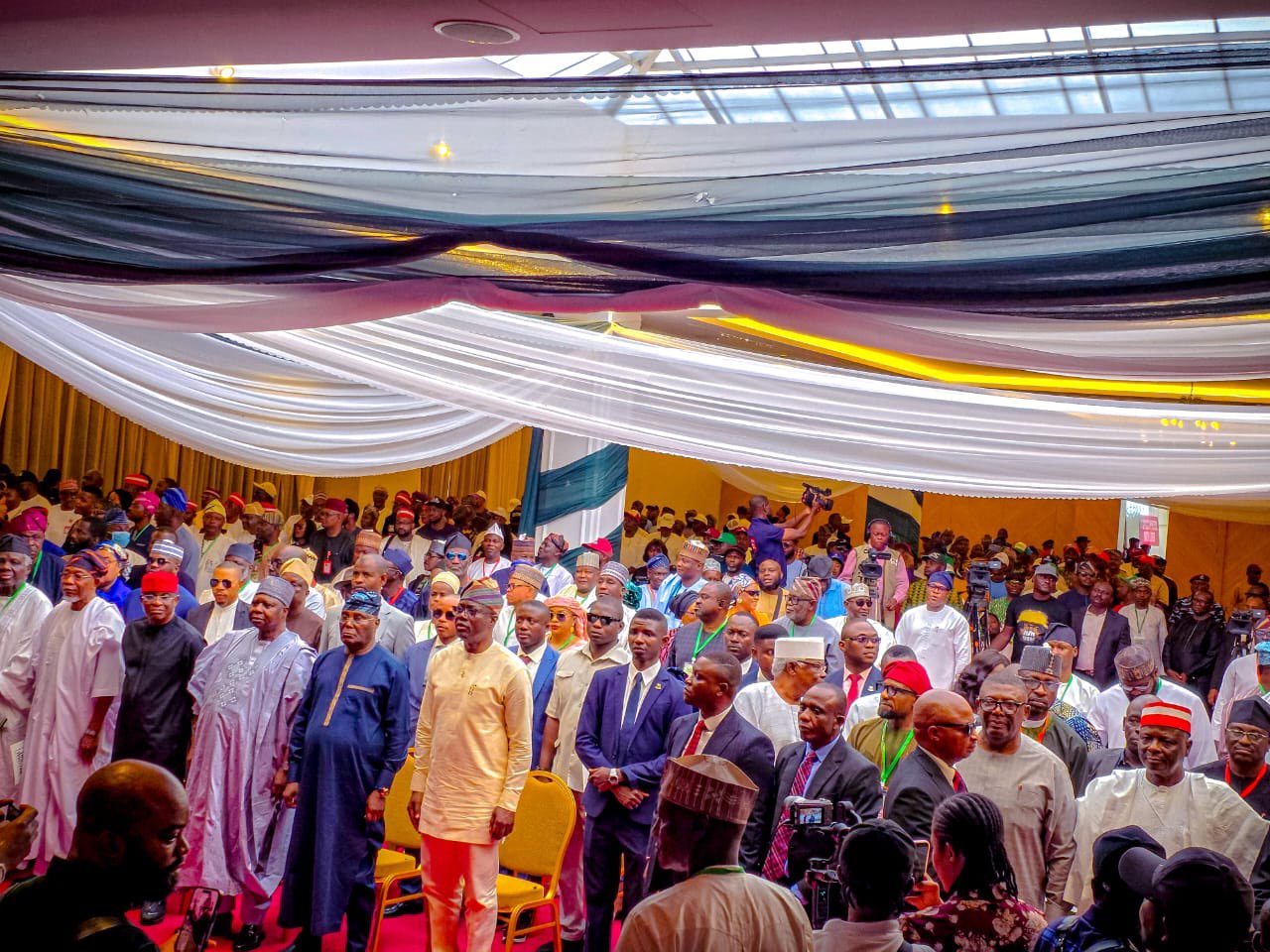
Leaders of opposition political parties in Nigeria have agreed to present a single presidential candidate for the 2027 general election, in what many observers see as a major step to challenge the ruling party and reshape the country’s political landscape.
The decision was reached on Saturday during a national summit held in Ibadan, the Oyo State capital. The meeting brought together some of the most prominent figures in Nigeria’s opposition politics, including former Vice President Atiku Abubakar, former Minister of Transportation Rotimi Amaechi, and former Kano State Governor Rabiu Kwankwaso.
Also present were key officials of the Peoples Democratic Party (PDP), including members of a faction aligned with Oyo State Governor Seyi Makinde. The gathering attracted attention across the country, as it signals a new level of cooperation among political groups that have often been divided in past elections.
Speaking at the summit, several leaders stressed the need for unity if the opposition hopes to defeat the ruling party in 2027. They pointed to past elections where multiple opposition candidates split votes, making it easier for the ruling party to win.
“This is a moment for serious reflection,” one of the speakers said. “If we continue to go our separate ways, we will keep getting the same results. Nigerians are expecting us to come together and offer a real alternative.”
Nigeria’s political history has shown that opposition unity can be a powerful force. In 2015, a coalition of opposition parties merged to form the All Progressives Congress (APC), which went on to defeat the then ruling PDP. That election marked the first time an incumbent president lost power at the national level in Nigeria.
However, since then, opposition parties have struggled to maintain unity. In the 2023 presidential election, major opposition figures ran separately, dividing votes among themselves. Political analysts believe this division played a key role in the outcome of that election.
The Ibadan summit appears to be an attempt to avoid repeating that situation in 2027. By agreeing to field a single candidate, opposition leaders hope to combine their support bases and present a stronger challenge.
Although the agreement marks an important step, many questions remain unanswered. It is not yet clear how the single candidate will be chosen, or which party platform the candidate will run on. Some leaders at the meeting suggested that a transparent process, possibly including primaries or consensus talks, would be needed to ensure fairness.
There are also concerns about whether all opposition groups will fully commit to the plan. In the past, similar agreements have broken down due to disagreements over leadership and power-sharing.
Despite these challenges, participants at the summit expressed optimism. They said the current economic and security situation in the country makes it necessary for opposition parties to work together.
Nigeria has faced rising inflation, high unemployment, and ongoing security issues in several parts of the country. These challenges have led to growing public frustration, with many citizens calling for better governance and accountability.
Some civil society groups have welcomed the opposition’s move, saying it could strengthen democracy by providing voters with a clearer choice. Others, however, have warned that unity alone is not enough, and that opposition parties must also present clear policies and credible plans to address the country’s problems.
For now, the summit has sent a strong signal that opposition leaders are willing to put aside their differences, at least for the purpose of the 2027 election. Whether this unity will last remains to be seen.
As Nigerians look ahead to the next general election, many will be watching closely to see if the opposition can turn this agreement into a practical and lasting political alliance.
If successful, the plan could reshape the race for the presidency and create one of the most competitive elections in recent years. If it fails, it may reinforce the pattern of division that has weakened opposition efforts in the past.
Either way, the Ibadan summit has marked the beginning of what is likely to be an intense period of political activity as parties prepare for 2027.