
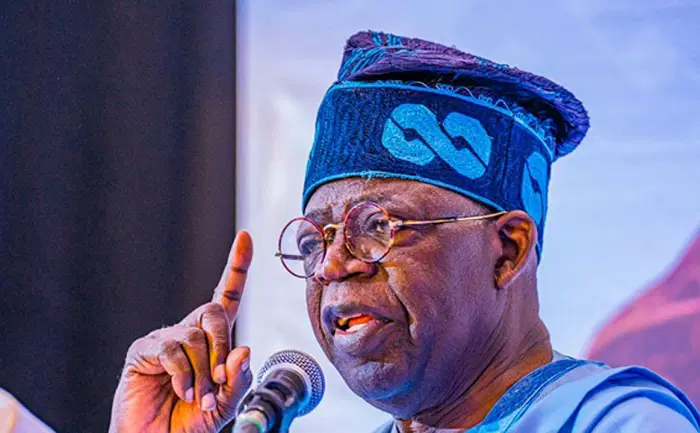
President Bola Ahmed Tinubu has declared poverty and insecurity as national emergencies, warning that both challenges are serious threats to jobs, productivity, and the overall stability of Nigeria’s economy.
The President made this known during the 2026 International Workers’ Day celebration held at Eagle Square in Abuja, where thousands of workers gathered alongside labour leaders and government officials. The annual event, also known as May Day, is marked across the world to recognise the contributions of workers and address issues affecting labour.
This year’s celebration carried the theme “Insecurity and Poverty: Bane of Decent Work,” reflecting the growing concern about how economic hardship and safety challenges are affecting Nigerian workers.
Represented at the event by the Secretary to the Government of the Federation, George Akume, President Tinubu said meaningful employment cannot exist in an environment where workers feel unsafe or cannot meet their basic needs.
“There cannot be decent work where workers fear for their lives, where wages cannot feed a family, or where insecurity disrupts farms, factories, markets and other economic activities,” he said.
He described insecurity and poverty as “hydra-headed challenges,” noting that both problems are deeply connected and require urgent attention. According to him, the Federal Government is taking coordinated steps to address the issues and improve the living conditions of Nigerians.
Tinubu said his administration remains committed to the Decent Work Agenda, a global framework that promotes fair wages, safe working conditions, and social protection for workers. He added that the government’s policies are designed to align with international labour standards while addressing Nigeria’s unique challenges.
As part of efforts to tackle insecurity, the President highlighted the Community Protection Guards Initiative, which he said has recruited about 45,000 young Nigerians. The initiative is aimed at strengthening local security while also providing employment opportunities for youths.
On poverty reduction, Tinubu said social investment programmes have been expanded to support vulnerable households across the country. According to him, about 15 million households have benefited from these programmes, with an estimated 7.5 million Nigerians lifted out of poverty.
However, these figures have continued to generate debate among analysts, with some experts calling for more transparency in how poverty reduction is measured.
The President also spoke on workers’ welfare, noting that his administration has taken steps to improve the condition of workers in both the public and private sectors. He said a new national minimum wage has been implemented, while pension arrears owed to retirees have been cleared.
In addition, gratuity payments for retired workers were reintroduced from January 2026, a move the government says is aimed at improving the lives of pensioners who depend on such payments after years of service.
Tinubu further revealed that over 800,000 workers in the informal sector have been enrolled in the micro pension scheme. The scheme is designed to help artisans, traders, and other self-employed individuals save for retirement.
He also pointed to support for small businesses, stating that a N200 billion Micro, Small and Medium Enterprises (MSME) fund has been made available to help entrepreneurs grow their businesses and create jobs.
In the agricultural sector, the President said the government is investing in programmes to boost food production and protect farmers. These include the National Agricultural Growth Scheme and mechanisation initiatives aimed at improving productivity.
He added that about 10,000 Agro Rangers have been deployed across 19 states to provide security for farmers and reduce the impact of attacks on agricultural activities.
Despite these efforts, organised labour groups used the Workers’ Day event to highlight the economic difficulties faced by many Nigerians and to demand better wages.
The Nigeria Labour Congress (NLC) and its allies called for a significant increase in the national minimum wage, proposing a new figure of about N225,000. Some labour leaders even suggested figures as high as N250,000, arguing that current wages are no longer enough to meet the rising cost of living.
In recent years, Nigeria has experienced high inflation, which has driven up the prices of food, transportation, and other basic needs. Many workers say their salaries can no longer support their families, leading to growing pressure on the government to review wages.
Labour leaders argued that without a substantial wage increase, workers would continue to struggle despite government reforms. They stressed that decent work must include fair pay that reflects current economic realities.
President Tinubu, while acknowledging the concerns of workers, urged labour unions to maintain industrial peace and use dialogue in resolving disputes. He cautioned against frequent strikes, saying they could disrupt economic activities and slow down development.
“Strike should be the last resort, not the first,” he said, encouraging continued engagement between the government and labour unions.
The President also used the occasion to commend security agencies for their efforts in protecting the country, despite the challenges they face. He noted that improving security remains a key priority for his administration.
Nigeria has faced various security challenges in recent years, including insurgency in the North-East, banditry in the North-West, and clashes between farmers and herders in some regions. These issues have affected economic activities, especially in agriculture and trade.
Workers’ Day celebrations in Nigeria often serve as a platform for both government and labour to present their views on economic policies and workers’ welfare. While the government highlights its achievements, labour unions use the opportunity to demand better conditions for workers.
This year’s event once again showed the gap between government efforts and workers’ expectations. While the administration pointed to ongoing reforms and programmes, labour leaders insisted that more needs to be done to ease the economic burden on Nigerians.
As discussions on wage review continue, many Nigerians will be watching closely to see whether the government and labour unions can reach an agreement that balances economic realities with the needs of workers.
For now, the message from both sides is clear: addressing poverty and insecurity is key to improving the lives of workers and ensuring a stable and productive economy.