
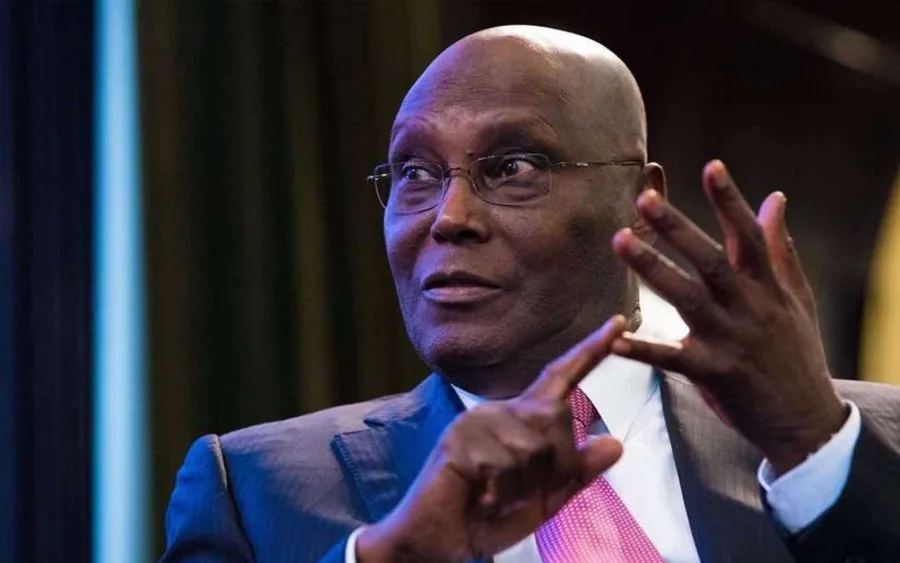
Former Vice President Atiku Abubakar has raised concern over the continued drop in Nigeria’s external reserves despite a significant increase in oil revenue, warning that the trend points to deeper economic problems under the current administration.
Atiku made his position known in a statement issued on Sunday by his spokesperson, Phrank Shaibu, where he questioned why the country’s savings are shrinking at a time when oil earnings have improved.
According to recent figures released by the Central Bank of Nigeria (CBN), Nigeria’s external reserves stood at $48.37 billion as of April 29, 2026. This represents a decline, even though the country reportedly earned about N5 trillion in oil windfall during the same period.
The windfall is largely linked to rising global oil prices caused by tensions and instability in the Middle East, a region that plays a key role in global crude oil supply. Such crises often push oil prices up, increasing earnings for oil-producing countries like Nigeria.
However, Atiku described the situation as a contradiction that requires urgent explanation from the administration of President Bola Tinubu.
He warned that the development suggests what he called a dangerous pattern of economic mismanagement, arguing that the country may be relying too heavily on its reserves to maintain stability rather than addressing underlying issues.
“This is not stability—it is a fragile illusion sustained by burning through national savings,” the statement said.
Atiku further explained that defending the naira by spending reserves without fixing key economic problems would not deliver lasting results. According to him, issues such as low productivity, weak exports, and declining investor confidence must be addressed if the country hopes to stabilise its currency.
“Defending the naira without fixing productivity, exports, and investor confidence is like pouring water into a basket,” he said.
Nigeria’s external reserves are funds held by the central bank to support the country’s currency, meet international payment obligations, and provide a buffer during economic shocks. A strong reserve position is often seen as a sign of economic stability, while a decline can raise concerns about a country’s ability to manage its currency and imports.
In recent years, Nigeria has faced several economic challenges, including rising inflation, a weakening naira, high fuel costs, and food supply issues. These problems have placed pressure on households and businesses across the country.
Atiku issued two key warnings in his statement. First, he cautioned the government against spending the oil windfall on routine government expenses or political activities.
He urged that the funds should instead be used to provide direct support to Nigerians, especially those struggling with the impact of fuel subsidy removal and rising cost of living.
“This windfall must not be squandered on recurrent expenditure or political patronage,” he said.
He suggested that the money should be used for targeted interventions, such as improving food supply systems, supporting vulnerable groups, and reducing the burden of higher fuel prices on citizens.
Since the removal of fuel subsidy in 2023, petrol prices have increased sharply, leading to higher transportation costs and a general rise in the prices of goods and services. Many Nigerians have continued to call for measures to ease the hardship.
Atiku’s second warning focused on the need for long-term economic planning. He advised the government to stop what he described as the “reckless” use of reserves to defend the naira and instead invest in sectors that can strengthen the economy over time.
He called for greater investment in local refining of petroleum products, infrastructure development, and policies that encourage non-oil exports.
Nigeria has long depended on crude oil exports as its main source of foreign exchange. However, experts have repeatedly warned that this reliance makes the economy vulnerable to global price changes and external shocks.
Efforts to diversify the economy have been discussed for years, but progress has been slow. Key sectors such as agriculture, manufacturing, and technology are often identified as areas with strong potential for growth if properly supported.
Atiku stressed that improving these sectors would help increase foreign exchange earnings and reduce pressure on the naira.
“The naira cannot be defended by force; it must be strengthened by fundamentals,” he said.
He also noted that periods of high revenue, such as the current oil windfall, should be used wisely to build a stronger economic foundation rather than for short-term gains.
“Windfalls are tests of leadership. They show whether a government is committed to long-term development or focused on short-term appearance,” he added.
The former vice president highlighted that Nigeria’s external reserves should not be treated as a tool for political advantage but as a critical national asset that must be managed carefully.
His comments come at a time of growing public interest in the state of the economy and government policies. With inflation still high and the naira facing pressure in the foreign exchange market, many Nigerians are looking to policymakers for solutions that can deliver stability and relief.
While the Federal Government has defended its economic policies, stating that reforms are necessary to correct long-standing issues, critics argue that more needs to be done to ensure that the benefits of such policies are felt by ordinary citizens.
As debates continue, Atiku’s warning adds to the ongoing conversation about how best to manage Nigeria’s resources and steer the economy towards sustainable growth.