
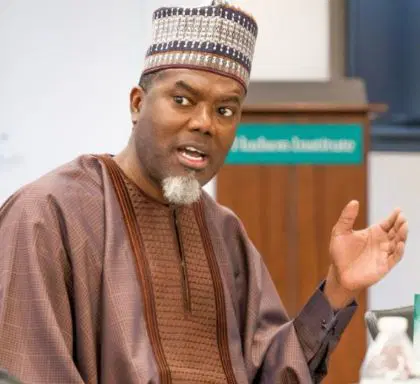
A former presidential aide, Reno Omokri, has criticised former Labour Party presidential candidate Peter Obi, describing him as a “serial promise breaker” and warning Northern Nigerians against placing their political hopes on him ahead of the 2027 general elections.
Omokri made the remarks in a strongly worded statement directed at the northern region, popularly referred to as Arewa, where he urged political leaders and voters to carefully assess their options before the next presidential race.
His comments come at a time when political realignments are beginning to take shape across the country, with major actors positioning themselves for 2027.
At the centre of Omokri’s criticism is Obi’s history of moving across political parties. He claimed that Obi had left several parties after making public commitments to remain, arguing that this raises concerns about his reliability.
“Once can be a mistake. Twice may be a coincidence. But after the third time, and then the fourth, it becomes a pattern,” Omokri said.
He further alleged that political parties Obi joined were relatively stable before his arrival but became troubled afterward. However, these claims remain part of ongoing political debate, with no independent verification provided in the statement.
Obi, a former governor of Anambra State, has been a prominent figure in Nigerian politics over the years. He has been associated with different political platforms, including the Peoples Democratic Party (PDP), before contesting the 2023 presidential election under the Labour Party.
His campaign gained significant support, especially among young voters and urban populations, largely due to his message of economic reform, accountability, and good governance.
In recent months, Obi has been linked with new political movements and alliances, following reported internal challenges in some parties. These developments have continued to fuel discussions about his political strategy and long-term plans.
Omokri also questioned Obi’s reported promise to serve only one term if elected president, arguing that his past actions do not inspire confidence.
“That being the case, what gives the North any confidence that a serial promise breaker will keep his promise to them to do just one term?” he asked.
The idea of a one-term presidency has been discussed in Nigeria’s political space as a possible way to balance regional interests and promote power rotation between the North and the South. However, it is not a constitutional requirement, as the Nigerian Constitution allows a president to serve a maximum of two four-year terms.
Omokri urged Northern leaders to instead support the incumbent president, Bola Tinubu, noting that he is constitutionally limited to one more term in office.
He argued that backing Tinubu would provide continuity and stability, while also recognising past political alliances.
Tinubu, who was elected president in 2023, remains a key figure in the ruling All Progressives Congress (APC). His administration has introduced several economic reforms, including the removal of fuel subsidy and changes to the foreign exchange system, policies that have generated both support and criticism across the country.
Omokri also pointed to the role Tinubu played in the emergence of former President Muhammadu Buhari, particularly during the 2015 elections, when Buhari defeated an incumbent president for the first time in Nigeria’s history.
According to him, this political support should not be forgotten by Northern stakeholders.
“It is in the best interest of Northern Nigeria to stick with the man who made it possible for General Buhari to win,” he said.
Beyond party politics, Omokri raised concerns about key challenges facing Northern Nigeria, including the high number of out-of-school children and the link between youth unemployment and insecurity.
The northern region has, for years, faced issues such as poverty, limited access to education, and security threats, including banditry and insurgency. These challenges have remained central to political discussions, especially during election periods.
Omokri argued that any candidate seeking support from the region must demonstrate a clear ability to address these problems, particularly in education and agriculture.
He questioned Obi’s record as governor, claiming that he did not make significant investments in schools or agricultural development during his time in office. However, Obi’s supporters have previously defended his record, citing improvements in financial management, infrastructure, and education in Anambra State during his tenure.
Analysts note that such disagreements over performance are common in Nigerian politics, where different groups often interpret records and achievements in different ways.
Omokri also emphasised the importance of national unity, urging Nigerians to consider the broader implications of their political choices.
“Let the North weigh its options rationally, as a politically astute region,” he said.
The statement reflects the growing intensity of political discussions as the country gradually moves toward the 2027 elections. Although the election is still some time away, key actors have begun to shape narratives and build alliances.
Observers say the coming months are likely to see more debates, endorsements, and criticisms as politicians and their supporters seek to influence public opinion.
For many Nigerians, the focus remains on issues such as economic hardship, inflation, unemployment, and security. These concerns are expected to play a major role in determining voter preferences in the next election.
While Omokri’s comments represent one side of the debate, supporters of Obi and other political figures are also expected to present their arguments, highlighting their preferred candidates’ strengths and addressing criticisms.
As the political landscape continues to evolve, Northern Nigeria is expected to remain a key battleground, given its large voting population and influence in national elections.
Ultimately, the decision on who to support will rest with voters, who will weigh the promises, records, and visions of different candidates as the 2027 race approaches.