
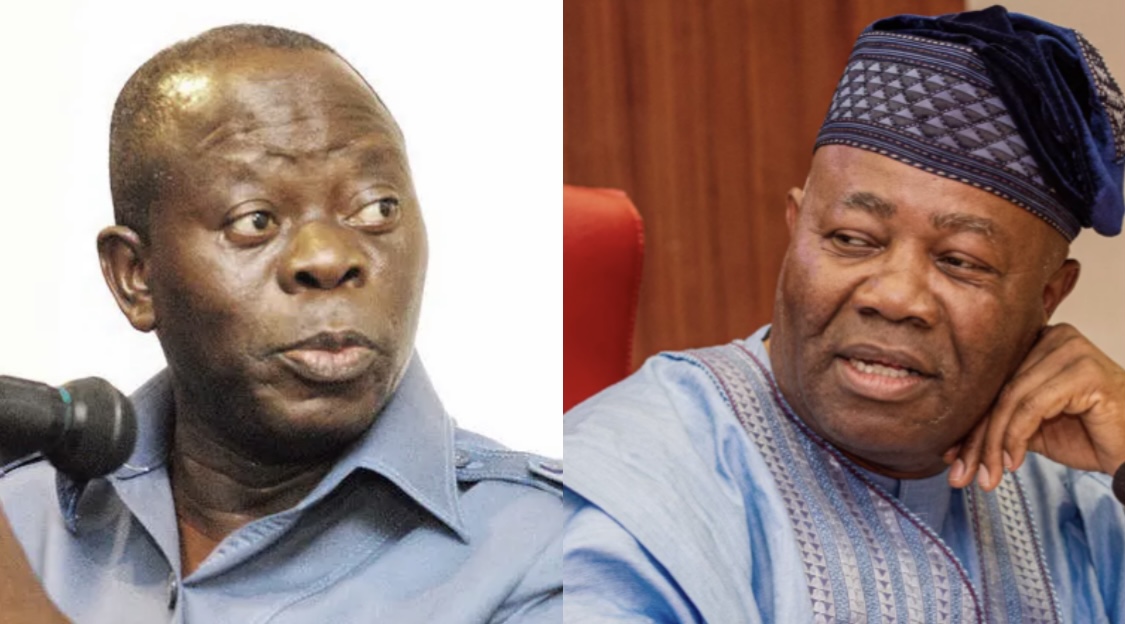
Fresh controversy erupted in the Senate on Thursday as Senator Adams Oshiomhole called on Senate President Godswill Akpabio to resign over the recent amendment to the Senate Standing Orders regulating the emergence of presiding and principal officers in the upper chamber.
Oshiomhole, who represents Edo North Senatorial District on the platform of the All Progressives Congress (APC), accused the Senate leadership of attempting to change the rules to favour a few individuals while shutting out other lawmakers from contesting key offices.
Speaking with journalists in Abuja, the former Edo State governor described the amendment as a “moral crisis” and argued that the proposed conditions contradicted the political history of some current leaders of the Senate, including Akpabio himself.
The Senate had earlier approved changes to its Standing Orders which stated that only senators who had served at least two uninterrupted consecutive terms would be eligible to contest for positions such as Senate President, Deputy Senate President, Majority Leader and other principal offices.
The amendment immediately generated reactions within political circles and among lawmakers, with critics arguing that the new conditions were designed to limit competition and strengthen the hold of a few powerful senators on the leadership structure of the National Assembly.
Oshiomhole said the amendment was unfair because many current and former leaders of the Senate rose to office under less restrictive rules.
According to him, Akpabio himself would not qualify to occupy the office of Senate President if the same rules being proposed today had existed when he emerged as leader of the 10th Senate in June 2023.
“This rule has serious moral crisis,” Oshiomhole said.
“The Senate President became Minority Leader during his first term in the Senate. He is now the one presiding and asking us to change those rules so that even those who have done one term cannot contest.”
The senator further argued that Akpabio had not completed eight consecutive years in the Senate and therefore lacked the qualification being proposed for future aspirants.
“As we speak today, the Senate President has not done eight years in office, even if you count the previous tenure and the current one,” he said.
“So, if we pass the rule that senators must do eight consecutive years before becoming Senate President, it means he should lead by example and vacate the seat because he is presiding without meeting the qualification.”
Oshiomhole also referred to the era of former Senate President David Mark, who led the Senate from 2007 to 2015 and remains the longest-serving Senate President in Nigeria’s history.
According to Oshiomhole, leaders should not attempt to rewrite rules after benefiting from more open conditions.
“David Mark had the honour and privilege of serving as Senate President for eight years by playing according to the rules that existed then,” he said.
“Those rules made it possible for him to serve. Why are we changing them now? Is it because some people fear that more senators will become eligible to contest? Leadership should not be about blocking competition.”
The comments by Oshiomhole have added fresh tension to ongoing debates within the Senate over leadership succession and internal democracy in the National Assembly.
Although the amendment was initially passed earlier in the week, the Senate on Thursday moved to reverse parts of the controversial changes following concerns raised by some lawmakers and legal experts.
The upper chamber reviewed aspects of Orders 2(2) and 3(1) of the Standing Orders after fears emerged that some provisions might conflict with Section 52 of the 1999 Constitution.
Section 52 of the Constitution deals with the powers of the National Assembly to regulate its own procedure and the requirement for decisions to be taken by a majority vote.
Some senators reportedly argued during Thursday’s session that parts of the amendment could create constitutional problems and unnecessarily restrict lawmakers from seeking leadership positions.
The development forced the Senate to soften aspects of the earlier decision in what observers described as an attempt to calm growing discontent within the chamber.
The controversy has once again drawn attention to the recurring battles over leadership positions in the National Assembly, where changes to internal rules often trigger accusations of political manipulation.
Since Nigeria’s return to democratic rule in 1999, the leadership of the Senate has remained one of the most fiercely contested positions in the country’s political system. Senate Presidents wield enormous influence over lawmaking, committee appointments and relations between the executive and legislative arms of government.
In many cases, disputes over Senate rules and leadership arrangements have led to deep divisions among lawmakers and political parties.
Political analysts say the latest disagreement reflects ongoing power struggles within the ruling APC and among senators positioning themselves for future leadership contests ahead of the 2027 general elections.
Akpabio, a former governor of Akwa Ibom State and former Minister of Niger Delta Affairs, emerged as Senate President in 2023 after a highly competitive contest backed by the leadership of the APC and President Bola Tinubu’s political allies.
However, his leadership has continued to face criticism from some lawmakers who accuse the Senate leadership of centralising power and limiting dissenting voices within the chamber.
The Senate President has not officially responded to Oshiomhole’s call for his resignation as of Thursday evening.
But supporters of Akpabio insist that the amendment was aimed at promoting stability and experience in the leadership of the Senate rather than targeting specific individuals.
Some lawmakers also argue that leadership positions in the National Assembly require experience and continuity to ensure effective legislative work.
Despite those arguments, critics maintain that imposing stricter eligibility conditions could reduce healthy competition and weaken internal democracy within the Senate.
The unfolding controversy is expected to dominate political discussions in the coming days as lawmakers continue consultations over the future of the amended rules.
For now, the disagreement has exposed fresh cracks within the Senate and raised questions about unity in the upper legislative chamber at a time when the National Assembly is expected to focus on pressing national issues including economic reforms, insecurity and rising public concerns over the cost of living.