
China has restated its position that Taiwan is not a sovereign nation but an inseparable part of its territory, reaffirming its long-standing One-China principle amid renewed global attention on the issue.
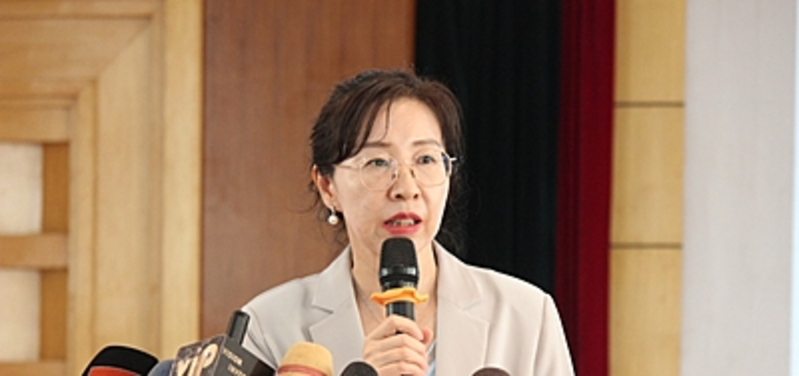
The position was restated on Thursday in Abuja by Counselor at the Embassy of the People’s Republic of China in Nigeria, Dong Hairong, during a Media Salon organised by the Centre for China Studies and the Centre for Contemporary China-Africa Research.
The event brought together diplomats, academics, media practitioners and policy experts to discuss China-Africa relations and the growing debate around Taiwan’s international status.
Speaking at the forum, Hairong said China remains firmly committed to protecting its territorial integrity and will continue to oppose any form of separatist movement involving Taiwan.
She said recent international activities involving Taiwan had made it necessary for China to restate its position and ensure that the global community clearly understands its stand.
According to her, recent reports of the visit of Taiwan’s regional leader, Lai Ching-te, to Eswatini, as well as alleged meetings between some Nigerian journalists and Taiwanese officials, reflect what she described as attempts to promote separatist narratives.
“Taiwan has been an inalienable part of Chinese territory since ancient times,” Hairong said.
“Taiwan has never been a country, was never one and will never be,” she added firmly.
The One-China principle is the diplomatic policy by which China insists there is only one sovereign state under the name China, and that Taiwan is part of it. The policy is a key pillar of China’s foreign relations and is recognised in different forms by many countries around the world.
However, Taiwan operates as a self-governing entity with its own political system, military and elected leadership, and has maintained separate administration from mainland China for decades.
The Taiwan issue remains one of the most sensitive geopolitical disputes in global politics, with tensions occasionally rising between China and countries that engage closely with Taiwan.
China has repeatedly urged countries and organisations to avoid official relations with Taiwan, warning that such actions undermine its sovereignty.
At the Abuja event, discussions also focused on Nigeria-China relations, which have grown significantly over the past two decades.
China is currently one of Nigeria’s largest trading partners and a major source of infrastructure financing, including railways, roads, power projects and telecommunications development.
Speaking at the same event, Convener of The Alternative Movement, Otunba Segun Showunmi, called for stronger economic and strategic ties between Nigeria and China.
He said Nigeria stands to benefit more from closer cooperation with China than from engaging separately with Taiwan.
Showunmi noted that China has become a major global economic and technological power, adding that countries seeking development opportunities must consider long-term partnerships with Beijing.
“In another 100 years, what Nigeria will gain from a firm relationship with China, Taiwan will not be able to provide in 1,000 years,” he said.
His comment reflects a growing debate among African policy thinkers about how best to position Nigeria in global partnerships, especially as competition between major world powers continues to shape international relations.
China’s growing presence in Africa has been a subject of global discussion, particularly in areas such as infrastructure development, trade, loans and technology transfer.
Nigeria, as Africa’s most populous country and one of its largest economies, has maintained strong diplomatic and economic relations with China, especially since the early 2000s.
Several major projects in Nigeria, including railway modernisation and airport upgrades, have involved Chinese financing and contractors.
However, critics of China-Africa relations have raised concerns about debt sustainability, trade imbalance and the need for more technology transfer and local job creation.
Despite these concerns, both countries have continued to describe their relationship as mutually beneficial and based on respect and non-interference in internal affairs.
Also speaking at the media salon, Provost of the Anti-Corruption Academy of Nigeria and Director of the Centre for China-Africa Research, Prof. Ghali Ibrahim, said the One-China principle has gained wide international recognition over the years.
He said most countries of the world recognise that Taiwan does not meet the legal definition of a sovereign state under international law.
“Taiwan is not an independent sovereign entity but rather a territory that is part of China,” he said.
Prof. Ibrahim’s position reflects the official stance of China and many of its diplomatic partners, although Taiwan continues to maintain informal relations with several countries and participates in some international organisations under different names.
The Taiwan issue has remained unresolved since 1949, following the end of the Chinese civil war, when the defeated Nationalist government retreated to Taiwan while the Communist Party established the People’s Republic of China on the mainland.
Since then, both sides have maintained separate governments, with China insisting on eventual reunification and Taiwan operating as a de facto independent entity.
Over the years, the United States and some other Western countries have maintained unofficial relations with Taiwan while formally recognising the One-China policy in diplomatic statements.
The situation continues to influence global diplomacy, trade relations and security discussions, particularly in the Asia-Pacific region.
In Nigeria, experts say discussions like the Abuja media salon reflect growing interest in global geopolitical issues and Africa’s role in international affairs.
As debates over China, Taiwan and global power relations continue, observers say African countries like Nigeria are increasingly becoming important voices in international diplomacy due to their population size, economic potential and strategic importance.