
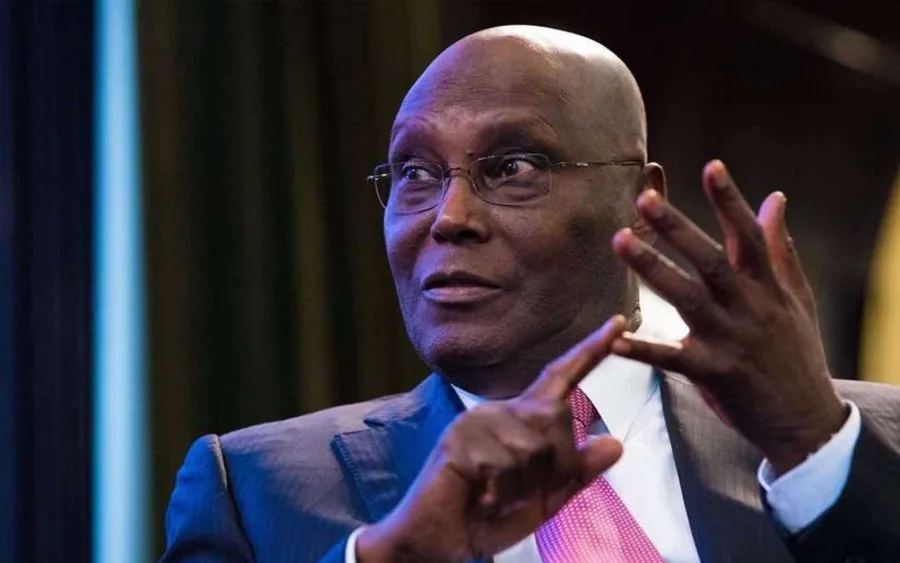
The camp of the African Democratic Congress (ADC) presidential candidate, Atiku Abubakar, has responded strongly to allegations made by former Secretary to the Government of the Federation (SGF), Babachir Lawal, over the party’s recent presidential primary election.
Atiku’s camp dismissed Lawal’s claims that the primary was rigged, insisting that the exercise was conducted democratically and reflected the wishes of party members across the country.
The response came barely hours after Lawal announced his resignation from the ADC, accusing Atiku and his supporters of manipulating the primary election that produced the former Vice President as the party’s presidential candidate for the 2027 general election.
In a statement issued on Monday by Atiku’s Senior Special Assistant on Public Communication, Phrank Shaibu, the former Vice President’s camp accused Lawal of making serious allegations without providing any evidence to support them.
The statement said Lawal’s comments amounted to an attempt to discredit both the party and thousands of members who participated in the primary process nationwide.
“Having chosen to malign a democratic process, insult thousands of ADC members nationwide, and make grave allegations without presenting a shred of evidence, it has become necessary to set the record straight,” the statement said.
The latest exchange marks a new chapter in the growing controversy surrounding the ADC presidential primary held on May 25, 2026.
The primary attracted national attention because it featured some of Nigeria’s prominent political figures, including former Vice President Atiku Abubakar, former Rivers State Governor Rotimi Amaechi and businessman Mohammed Hayatu-Deen.
At the end of the exercise, Atiku emerged victorious with 1,846,370 votes. Amaechi finished second with 504,117 votes, while Hayatu-Deen came third with 177,120 votes.
However, the outcome of the contest has continued to generate debate among some party members and aspirants.
While announcing his resignation from the ADC on Monday, Lawal alleged that the primary election was manipulated in favour of Atiku.
The former SGF claimed that election results were altered and that some declared winners in parts of the country were allegedly replaced by individuals loyal to Atiku.
Lawal described the exercise as a “disgraceful charade” and said he could no longer remain in a party whose internal democratic process had, in his view, lost credibility.
His resignation added to concerns already raised by some aspirants before and after the primary.
Prior to the announcement of the final results, Hayatu-Deen had expressed reservations about the conduct of the election and questioned the integrity of the process.
Amaechi also reportedly raised concerns about certain aspects of the primary, citing alleged irregularities.
Despite those concerns, Hayatu-Deen later chose not to challenge the outcome of the election, saying he preferred party unity and the broader goal of building a strong opposition platform ahead of future elections.
Responding to Lawal’s allegations, Shaibu maintained that the ADC primary was conducted across thousands of wards and that the outcome clearly reflected the wishes of party members.
According to him, Lawal had failed to present any verifiable evidence to support his claims of manipulation.
“The truth is straightforward. The ADC presidential primaries were conducted across thousands of wards and produced a clear and decisive outcome. What Mr Lawal has offered Nigerians is not evidence,” the statement said.
“He has produced no documents, no verifiable facts, no credible witnesses, and no proof whatsoever to support his sensational allegations.”
Shaibu argued that allegations as serious as electoral manipulation should be backed by facts and evidence rather than personal opinions or political disappointment.
The statement further suggested that Lawal’s claims were aimed at undermining a process whose outcome he could not influence.
Political observers say the disagreement highlights the challenges facing opposition parties as they prepare for the 2027 general election.
In recent years, efforts have been made by several opposition figures to build stronger political alliances capable of challenging the ruling party in future elections. However, disagreements over leadership, party structures and candidate selection processes have often created divisions within opposition camps.
Atiku, one of Nigeria’s most experienced politicians, has contested for the presidency several times and remains a major figure in opposition politics. His emergence as ADC presidential candidate has generated significant attention within the political landscape.
Lawal, on the other hand, has been a notable political ally of former President Muhammadu Buhari and has remained active in national political discussions since leaving office as SGF.
His resignation from the ADC and continued criticism of Atiku are expected to fuel further debate within opposition circles as political alignments continue ahead of 2027.
For now, the ADC leadership has not issued a detailed response to the latest exchange between Lawal and Atiku’s camp.
However, the dispute has once again brought the party’s presidential primary into the spotlight and raised questions about how opposition parties will manage internal disagreements as preparations for the next election cycle gather momentum.
With Lawal insisting that the primary was compromised and Atiku’s camp maintaining that the election was free, fair and democratic, the controversy is unlikely to fade anytime soon.