
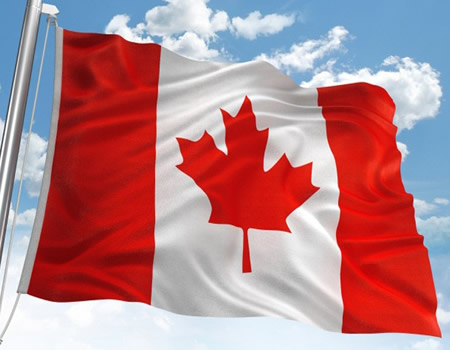
The Canadian government has announced a 90-day suspension of immigration documents and visa processing for residents of the Democratic Republic of Congo, Uganda and South Sudan as part of efforts to prevent the spread of Ebola into the country.
The measure, which took effect on May 27, is one of several emergency steps introduced by Canadian authorities in response to the ongoing Ebola outbreak affecting parts of Central and East Africa.
Canadian immigration authorities said the decision was taken as a precautionary measure to protect public health and reduce the risk of the virus entering Canada through international travel.
In a statement posted on its official social media platform on Tuesday, Immigration, Refugees and Citizenship Canada confirmed that immigration documents for residents of the three countries had been suspended for 90 days.
The agency also announced a temporary halt to decisions on immigration applications from the affected countries.
“Reminder: we are suspending immigration documents for residents of the Democratic Republic of Congo, Uganda and South Sudan for 90 days. During this time, we also plan to pause decisions on applications from these countries,” the agency stated.
According to Canadian authorities, the restrictions are necessary to help contain the spread of Ebola and protect public health.
“This is vital to respond to the Ebola outbreak and prevent the disease from spreading to Canada,” the statement added.
The policy was first outlined in a government memo issued on May 26, which detailed a broader package of temporary border control measures.
The Canadian government said the move became necessary because of the worsening Ebola situation in the Democratic Republic of Congo and increasing health concerns in neighbouring Uganda and South Sudan.
Officials explained that the restrictions are aimed at reducing the possibility of infected travellers entering the country and transmitting the disease.
“In response to the Ebola disease outbreak in the Democratic Republic of the Congo, and increasing risks in Uganda and South Sudan, the Government of Canada is taking decisive action by introducing temporary border measures to reduce the risk of the virus entering and spreading within Canada,” the government said.
Under the new rules, temporary resident visas, permanent resident visas and electronic travel authorisations (eTA) issued to residents of the affected countries are suspended during the 90-day period.
The restrictions also apply to new immigration applications from the three countries, which will not be processed while the measures remain in place.
Canadian authorities clarified that even individuals who already possess approved travel documents may not be allowed to travel to Canada during the suspension period.
The government further introduced additional health measures under Canada’s Quarantine Act.
One of the key provisions requires travellers who have recently visited any of the affected countries to undergo a mandatory 21-day quarantine upon arrival in Canada, even if they show no symptoms of illness.
According to the policy, the quarantine requirement applies to Canadian citizens, permanent residents, individuals registered under the Indian Act and foreign nationals who have been in any of the affected countries within 21 days before arriving in Canada.
The quarantine rule is expected to remain in force until at least August 29, 2026.
Officials said travellers who cannot provide suitable quarantine arrangements will be housed in designated government facilities.
Those showing symptoms associated with Ebola will be transferred to hospitals for further medical evaluation and treatment.
Despite the restrictions, Canadian citizens and permanent residents remain eligible to return home.
However, they will be subject to health screening and other border procedures before being allowed entry.
The government stressed that the measures do not affect people who are already in Canada legally.
Such individuals may continue their authorised stay in the country after undergoing any required health checks.
Authorities said the risk of Ebola spreading within Canada remains low, but noted that the severity of the disease requires a cautious approach.
They also pointed to increasing international travel and large global events, including the FIFA World Cup 2026, as factors that could increase movement across borders and create additional public health risks.
The government sought to reassure Canadians by noting that there has never been an imported Ebola case in the country.
“There has never been a case of Ebola disease imported into Canada and there are currently no cases of Ebola disease in North America,” the statement said.
The latest action by Canada comes as other countries also tighten health and travel measures in response to the outbreak.
The United States has reportedly introduced similar temporary restrictions and enhanced screening procedures for travellers arriving from Ebola-affected regions.
These measures include additional checks and limitations on entry for some non-citizens and lawful permanent residents who have recently visited the Democratic Republic of Congo, Uganda or South Sudan.
The current Ebola outbreak has attracted global attention because of concerns surrounding the Bundibugyo strain of the virus.
The World Health Organization (WHO) has declared the outbreak in the Democratic Republic of Congo and Uganda a Public Health Emergency of International Concern.
The declaration is reserved for serious health events that pose a risk beyond national borders and require coordinated international action.
Ebola is a severe and often deadly viral disease that spreads through direct contact with infected bodily fluids.
Symptoms can include fever, weakness, vomiting, diarrhoea and internal or external bleeding.
Past outbreaks in Africa have resulted in thousands of deaths and significant pressure on healthcare systems.
The latest Canadian measures highlight the growing concern among governments and international health agencies about preventing the disease from spreading beyond affected regions.
For travellers, immigrants and families with ties to the affected countries, the restrictions are expected to create temporary challenges.
However, Canadian authorities insist that the measures are necessary to protect public health while global efforts continue to contain the outbreak.
As health officials monitor developments, the restrictions are expected to remain under review and may be adjusted depending on how the Ebola situation evolves in the coming months.