
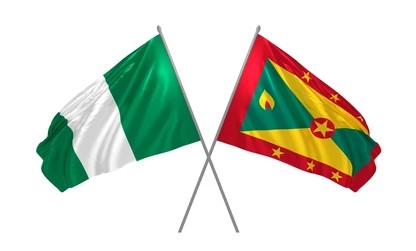
The Caribbean nation of Grenada has opened a new chapter in its relationship with Nigeria by offering visa-free access to Nigerians and unveiling plans aimed at attracting investors, entrepreneurs and professionals from Africa’s largest economy.
The move is part of a broader strategy by the island nation to strengthen economic ties with Africa and position itself as a gateway for Nigerian businesses seeking opportunities in the Caribbean region.
Speaking at a press conference in Lagos after a working visit to Grenada, the country’s Honorary Consul in Nigeria, Bidemi Sonoiki, said the Caribbean nation was actively building stronger commercial and investment links with Nigeria and other African countries.
According to him, Grenada is creating opportunities for Nigerian investors interested in expanding beyond traditional markets and exploring new business destinations.
“Today, Grenada presents a compelling opportunity for Nigerian investors and entrepreneurs looking to access new markets beyond Africa,” Sonoiki said.
“We are witnessing the emergence of a strategic economic corridor between Africa and the Caribbean, one that offers immense opportunities for trade, investment, tourism, education and business growth.”
A major highlight of the initiative is Grenada’s decision to grant visa-free entry to Nigerian citizens. The arrangement is expected to take effect in July and is designed to make travel easier for business owners, investors, students and professionals seeking opportunities in the Caribbean country.
The policy is expected to remove one of the biggest barriers to business engagement by reducing the time and costs associated with obtaining travel permits.
Sonoiki described the visa-free arrangement as a significant step towards closer economic cooperation between both countries.
“Visa-free access removes a significant barrier to engagement. It enables Nigerian investors, business owners and professionals to explore opportunities in Grenada more easily and creates a stronger foundation for commercial cooperation,” he said.
Beyond easing travel restrictions, discussions are also underway to establish direct air links between Nigeria and the Caribbean within the next six months.
According to the consul, direct flights could dramatically improve trade, tourism and investment activities by reducing travel time and making business interactions easier.
At present, travellers moving between Nigeria and most Caribbean countries often have to transit through Europe, North America or other international hubs, making journeys lengthy and expensive.
Industry experts have long argued that direct connectivity between Africa and the Caribbean could unlock enormous economic opportunities by encouraging trade and people-to-people exchanges.
Sonoiki said improved transportation links would help create a stronger economic bridge between both regions.
“Connectivity is one of the most important enablers of economic growth. Establishing direct links between Nigeria and the Caribbean would unlock enormous opportunities for trade, investment and tourism while positioning Grenada as a strategic gateway for African businesses seeking access to Caribbean markets,” he said.
The consul stressed that the opportunities being promoted are not limited to large corporations or wealthy investors. He noted that entrepreneurs, skilled professionals and small businesses could also benefit from the emerging partnership.
Several sectors have been identified as areas for immediate collaboration and investment. These include tourism, healthcare, agriculture, agro-processing, logistics, education, financial technology, renewable energy and real estate.
According to him, Nigerian businesses looking for new markets can find attractive opportunities in Grenada’s growing economy.
“We want Nigerian investors to see Grenada not simply as a Caribbean destination, but as a strategic business platform,” he said.
“The opportunities span tourism, real estate, healthcare, agriculture, education, fintech, logistics and renewable energy. For businesses seeking growth beyond traditional markets, Grenada offers access, stability and significant long-term potential.”
The growing relationship between both countries has gathered momentum in recent years.
Sonoiki noted that diplomatic and economic engagement increased significantly following the establishment of the Grenadian Honorary Consulate in Lagos in 2022.
Since then, there has been increased interaction between government officials, business leaders and private sector stakeholders from both countries.
The creation of the Nigeria-Grenada Chamber of Commerce has also helped to strengthen business ties and encourage investment discussions.
In recent years, governments across both regions have been working to transform those historical connections into stronger economic partnerships capable of delivering investment, innovation and job creation.
Grenada, often referred to as the “Spice Isle,” is globally known for producing nutmeg and mace. The island nation has traditionally relied on agriculture but has gradually diversified its economy over the years.
Today, tourism remains one of its leading economic sectors, while education, financial services and emerging industries have become increasingly important contributors to national growth.
The country is also regarded as one of the more stable democracies in the Caribbean, operating a parliamentary system and maintaining policies aimed at attracting foreign investment.
As a member of the Caribbean Community (CARICOM), Grenada provides businesses with access to a wider regional market, making it an attractive destination for investors seeking opportunities across the Caribbean.
With Africa seeking new export destinations and investment partnerships, and Caribbean nations increasingly looking towards the continent for economic cooperation, the relationship between Nigeria and Grenada could become an important model for future engagement.
Sonoiki expressed confidence that the partnership would continue to grow and create benefits for businesses and citizens in both countries.
“The future of Nigeria-Grenada relations is exceptionally promising,” he said.
“Our goal is to create a framework that enables businesses, investors and entrepreneurs from both countries to build meaningful partnerships, drive innovation and generate sustainable prosperity. The opportunities are real, and the time to engage is now.”
The latest initiatives signal a strong commitment by Grenada to deepen its presence in Africa while offering Nigerian investors a new gateway into the Caribbean, a region increasingly seen as an emerging frontier for trade, investment and business expansion.