
The Federal Government on Tuesday admitted that inflation and insecurity remain two of the biggest challenges facing Nigerians, even as it defended the economic and fiscal reforms introduced by President Bola Ahmed Tinubu’s administration since assuming office in 2023.
The acknowledgement came during a Democracy Day press briefing in Abuja, where top government officials reviewed the administration’s performance and highlighted achievements recorded over the past three years.
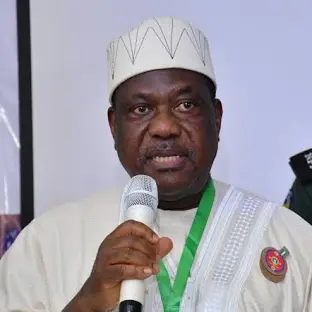
Speaking at the event, the Secretary to the Government of the Federation (SGF), George Akume, said the government was fully aware of the difficulties many Nigerians were facing due to rising living costs and persistent security threats.
He, however, maintained that recent economic indicators showed that the country was gradually moving in the right direction and that reforms implemented by the administration were beginning to produce positive results.
“The government, though with all hands on deck, would never claim that every challenge has been solved,” Akume said.
“While we pursue various reforms diligently, with purpose and with compassion, the government recognises that inflation has been painful, though it is on a downward trend. The government is similarly conscious of the fact that insecurity still threatens lives and livelihoods.”
The briefing formed part of activities marking Nigeria’s 2026 Democracy Day celebration and the country’s 27 years of uninterrupted democratic governance since the return to civilian rule in 1999.
It was attended by members of the Federal Executive Council and other senior government officials. According to Akume, the event also served as an accountability session designed to inform Nigerians about the administration’s achievements and challenges midway into its first term.
Since taking office in May 2023, President Bola Ahmed Tinubu has implemented a number of economic reforms aimed at stabilising public finances and attracting investment.
Among the most notable policies were the removal of fuel subsidy and the unification of the foreign exchange market. While government officials have argued that the measures were necessary to prevent economic collapse, many Nigerians have complained about the sharp rise in fuel prices, transportation costs, food prices and general living expenses.
Despite these concerns, Akume insisted that the reforms were beginning to yield results.
“Evidence shows that the country is moving in the right direction,” he said.
The SGF cited official economic data showing that Nigeria’s Gross Domestic Product (GDP) grew by 4.07 per cent in the fourth quarter of 2025 and 3.89 per cent in the first quarter of 2026.
According to him, the figures indicate that economic activity is improving across several sectors and that investor confidence is gradually returning.
The government also defended fiscal reforms introduced in recent years, including tax measures signed into law in 2025. Officials argued that the policies were designed to improve revenue generation, reduce waste and strengthen transparency in public finance management.
Akume used the occasion to showcase some of the administration’s social intervention programmes aimed at cushioning the impact of economic hardship on Nigerians.
He disclosed that more than one million students had benefited from the Nigerian Education Loan Fund (NELFUND), with over N184 billion already disbursed for tuition fees and upkeep allowances.
The student loan program was introduced to improve access to higher education by providing financial support to students in public tertiary institutions.
According to the SGF, the government’s Renewed Hope Conditional Cash Transfer Program has also reached millions of vulnerable households across the country.
He added that consumer credit initiatives introduced by the administration have expanded access to formal financing, enabling more Nigerians to purchase goods and services through structured repayment plans.
Government officials say these interventions are intended to reduce the burden on citizens while broader economic reforms take effect.
On the fight against corruption, Akume said anti-graft agencies had continued to recover proceeds of crime and prosecute offenders.
He noted that some of the recovered funds had been channelled into public programs, including the student loan scheme.
The SGF also linked Nigeria’s removal from the Financial Action Task Force (FATF) grey list in October 2025 to reforms aimed at strengthening anti-money laundering measures and combating terrorism financing.
“Accountability in this administration is sacrosanct,” he said.
According to government officials, these reforms have improved Nigeria’s international standing and strengthened confidence among investors and development partners.
Despite highlighting progress in the economy and governance, Akume admitted that insecurity remains a major concern across the country.
Nigeria continues to face security challenges, including terrorism, banditry, kidnapping, communal clashes and attacks by criminal groups in different regions.
The SGF said the government was not pretending that the problem had been solved.
“We continue to confront internal security challenges. Government will not pretend that insecurity will disappear today without the active support of all Nigerians,” he stated.
Akume said the administration had increased funding for security agencies and expanded recruitment into the armed forces and other security institutions.
He also disclosed that Nigeria was strengthening cooperation with neighbouring countries and international partners in the fight against terrorism and organised crime.
The SGF appealed to citizens to assist security agencies by providing useful information and remaining vigilant in their communities.
According to him, security is a collective responsibility that requires the participation of all Nigerians.
The Democracy Day event also provided an opportunity for the government to promote national unity and social cohesion.
Akume warned against ethnic and religious divisions, saying development could only thrive in an atmosphere of trust and cooperation.
“In a country as diverse and plural as ours, development is strongest when trust is stronger than division,” he said.
He noted that the government continues to support interfaith dialogue through the Nigeria Inter-Religious Council and recently approved a National Values Charter aimed at promoting responsible citizenship, tolerance and patriotism.
In what many observers viewed as an early political message ahead of the 2027 general elections, Akume said the administration intends to build on its current reforms and seek renewed support from Nigerians.
“Our responsibility is to finish what we commenced in 2023, and as we go into the cycle for the 2027 general elections seeking a revalidation of our mandate, we shall scale what is working,” he said.
He added that the government was ready to have its performance assessed by Nigerians.
“This government remains prepared to be judged by evidence,” Akume stated.
In his welcome address, the Minister of Information and National Orientation, Mohammed Idris, described Democracy Day as a time for reflection on Nigeria’s democratic journey and the sacrifices made by those who fought for democratic governance.
He paid tribute to Moshood Kashimawo Olawale Abiola, whose June 12, 1993 election victory is widely regarded as a symbol of Nigeria’s democratic struggle.
Idris also acknowledged the contributions of President Tinubu and other pro-democracy activists who played important roles in the campaign for the restoration of civilian rule.
According to him, Nigeria’s 27 years of uninterrupted democratic governance represent a significant achievement despite the country’s economic and security challenges.
Since the beginning of the Fourth Republic in 1999, Nigeria has maintained democratic rule through successive elections, although concerns over governance, poverty, unemployment and insecurity have continued to dominate national discourse.