
The Federal Government will today commence the trial of more than 400 suspected terrorists as part of ongoing efforts to tackle insecurity and ensure accountability for terror-related offences across the country.
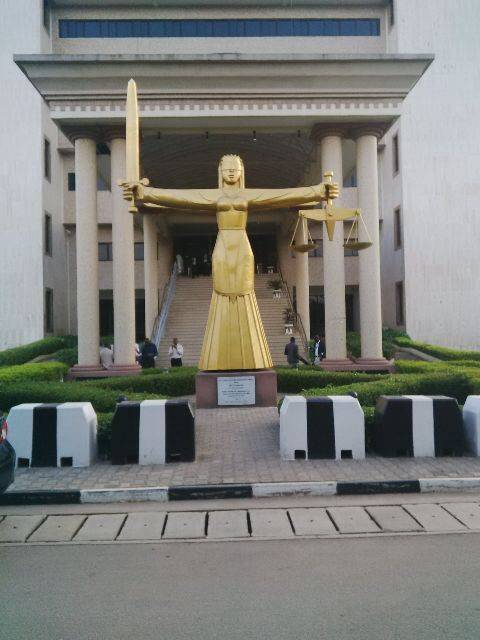
The large-scale prosecution, being coordinated by the Office of the Attorney General of the Federation (AGF) in collaboration with the Department of State Services (DSS), will take place at the Federal High Court in Abuja before specially designated judges.
The suspects are accused of involvement in recent terrorist attacks in different parts of Nigeria and are expected to face a range of charges relating to terrorism and other security-related offences.
According to a notice issued ahead of the proceedings, the Attorney General of the Federation and Minister of Justice, Prince Lateef Olasunkanmi Fagbemi, SAN, will personally lead the Federal Government’s legal team in prosecuting the cases.
Fagbemi will be supported by the Director of Public Prosecutions of the Federation (DPPF), Mr Rotimi Oyedepo, SAN, and other government lawyers assigned to the exercise.
Some of the defendants, however, will be represented by lawyers from the Legal Aid Council of Nigeria to ensure that they receive legal representation during the proceedings.
The trials will be conducted before selected judges assembled by the Chief Judge of the Federal High Court, Justice John Tsoho, specifically for the assignment.
As part of arrangements for the exercise, the Federal High Court in Abuja has suspended regular court activities for most cases scheduled within the period.
The notice indicated that from Monday, June 15, through Thursday, June 18, 2026, the court would devote its attention almost entirely to terrorism-related cases.
According to the directive, all other matters previously fixed for hearing within the period would be postponed to new dates that would be communicated to lawyers and litigants involved.
The move highlights the importance attached to the prosecution by the judiciary and the Federal Government as Nigeria continues to confront security challenges in several parts of the country.
At the time of filing this report, the more than 400 suspects had already been transferred from the military detention facility in Kainji, Niger State, to the custody of the DSS in Abuja.
The relocation was aimed at ensuring their timely appearance before the court and preventing logistical challenges that could delay the proceedings.
Information made available on the planned trials showed that the cases have been distributed among the selected judges, with each judge expected to handle no fewer than 64 suspects during the intensive exercise.
The five-day proceedings are expected to be among the largest terrorism-related prosecutions undertaken in Nigeria in recent years.
The latest exercise follows an earlier round of trials conducted by the Federal Government just two months ago.
During that phase, about 500 terrorism suspects were prosecuted in Abuja in what authorities described as part of efforts to strengthen the rule of law and ensure that those accused of violent crimes face justice.
After concluding the previous trials, Fagbemi had informed journalists that another batch of suspects would be brought before the courts in June.
The commencement of the new proceedings means that the government is moving ahead with that commitment.
Nigeria has battled terrorism and insurgency for more than a decade, particularly in the North-East, where extremist groups have carried out attacks on communities, security formations, schools and places of worship.
In recent years, the security crisis has evolved to include banditry, kidnapping for ransom and other forms of organised violence in parts of the North-West and North-Central regions.
Thousands of lives have been lost, while millions of people have been displaced by the prolonged conflict.
Successive administrations have adopted both military and legal approaches to addressing the challenge.
While security forces continue operations against armed groups in affected areas, the government has increasingly focused on prosecuting suspects linked to terrorism to reinforce accountability and discourage future offences.
The mass trials have, however, generated discussions among legal experts and human rights advocates.
Others have stressed the need to ensure that the rights of defendants are fully protected and that every accused person receives a fair hearing in line with the Constitution.
Fagbemi has repeatedly assured Nigerians that the trials would be conducted transparently and in accordance with the law.
He maintained that justice must not only serve the interests of the nation and victims of terrorism but must also protect the rights of the accused.
The Attorney General said the prosecution would be fair, just and transparent in the interest of Nigeria, the defendants and the general public.
As the hearings begin in Abuja, many Nigerians will be watching closely to see how the judicial system handles one of the country’s biggest terrorism prosecution exercises.
For families affected by years of attacks and violence, the trials represent another step in the search for justice and accountability.
For the government, they reflect a determination to complement military operations with legal action in the broader effort to end terrorism and restore peace across the country.