
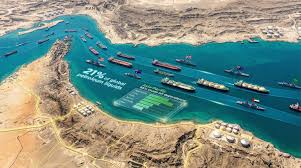
United States President Donald Trump has announced what he described as a historic peace agreement between the United States and Iran, saying the deal would immediately end hostilities between both countries and lead to the reopening of the strategically important Strait of Hormuz.
The agreement, which was later confirmed by Iran’s Deputy Foreign Minister, Kazem Gharibabadi, marks a dramatic turn in a conflict that had raised fears of a wider war in the Middle East and threatened global energy supplies.
Trump made the announcement on Sunday through a series of posts on his Truth Social platform, declaring that the agreement had been concluded and that ships from around the world could once again move freely through the Strait of Hormuz without restrictions or additional charges.
“The Deal with the Islamic Republic of Iran is now complete,” Trump wrote.
“Congratulations to all! I hereby fully authorize the toll free opening of the Strait of Hormuz, and, simultaneously herewith, authorize the immediate removal of the United States Naval blockade. Ships of the World, start your engines. Let the oil flow!”
The Strait of Hormuz is one of the world’s most important shipping routes. Located between Iran and Oman, it serves as the main passage for a significant portion of the world’s oil exports. Any disruption to shipping through the narrow waterway often causes anxiety in global markets and can push up fuel prices worldwide.
The waterway had been largely closed since late December after military tensions escalated following assaults launched by the United States and Israel against Iran on December 28. The closure triggered concerns about the impact on international trade and energy supplies.
In another post, Trump described the agreement as a major diplomatic breakthrough.
“This Great Deal will bring Peace and Security to the whole Region,” he wrote.
He also suggested that a broader peace framework involving Iran could emerge in the coming months.
“Many presidents have tried to make Peace with Iran, and all have failed before me. The leaders of the region have, for the first time, found a President who can help them achieve real Peace,” Trump said.
He added that the reopening of the Strait would allow oil to flow freely again, benefiting both the Middle East and the wider global economy.
However, even as he celebrated the agreement, Trump maintained a tough stance towards Tehran. In an interview with The New York Times, he warned that the United States could resume military operations if necessary or even become “the guardian of the Middle East” in exchange for a share of regional revenues.
It was not immediately clear whether the interview took place before or after the peace agreement was announced.
The announcement came shortly after Pakistani Prime Minister Shehbaz Sharif revealed on X that an agreement had been reached between Washington and Tehran to end military operations on multiple fronts.
“Following intensive talks, we are pleased to announce that the Peace Deal between the United States of America and the Islamic Republic of Iran has been reached,” Sharif wrote.
“Both sides have declared the immediate and permanent termination of military operations on all fronts, including in Lebanon.”
Sharif disclosed that an official signing ceremony would take place in Switzerland on Friday, June 19.
He praised both countries for choosing diplomacy over conflict and acknowledged the role played by mediators in achieving the breakthrough.
“We would like to thank the United States of America and the Islamic Republic of Iran for their commitment to finding a diplomatic solution to the conflict,” he said.
He also expressed appreciation to Qatar, Saudi Arabia and Türkiye for supporting the mediation efforts that paved the way for the agreement.
According to him, mediators will facilitate a series of meetings aimed at addressing technical aspects of the deal before the formal signing ceremony.
The development follows days of uncertainty and speculation over whether a ceasefire would eventually materialize.
Trump had earlier hinted that an agreement would be announced. However, concerns intensified after Israel reportedly carried out an air raid on Beirut’s southern suburbs, raising fears that renewed hostilities could derail ongoing diplomatic efforts.
Iran had also warned that it was prepared to respond forcefully to actions viewed as crossing its red lines, especially attacks linked to its regional allies.
Despite these tensions, diplomatic channels remained active.
Qatar’s Ministry of Foreign Affairs welcomed the memorandum of understanding reached between the two countries and described it as an important step towards lasting peace.
According to the ministry, ensuring freedom of navigation through the Strait of Hormuz would promote regional stability and support economic growth globally.
The United Kingdom also welcomed the agreement.
British Prime Minister Keir Starmer said attention should now shift to implementing the memorandum and ensuring that the Strait remains permanently open.
“Attention must now turn to fully implementing the memorandum of understanding to ensure the Strait reopens and remains fully and permanently open,” Starmer said.
He also stressed the importance of finalizing the details of any nuclear-related arrangements connected to the agreement.
“We are clear that toll-free freedom of navigation must now be restored,” he added.
French President Emmanuel Macron praised the diplomatic efforts that produced the agreement and urged all parties to honour their commitments.
“I welcome the agreement reached between the United States and Iran,” Macron said.
He noted that unrestricted maritime traffic through the Strait was essential for global economic stability and pledged France’s support for efforts aimed at strengthening Lebanon’s sovereignty and territorial integrity.
Meanwhile, US Vice President JD Vance described the ceasefire as the beginning of a possible “new era” in the Middle East.
“What the president has done is create the real space to transform that region,” Vance said.
“And now, hopefully a new era with the Iranians.”
He also expressed confidence that Iran would never acquire a nuclear weapon and predicted that the agreement could contribute to lower energy prices.
For now, however, the announcement has been welcomed across much of the international community as a rare diplomatic breakthrough in one of the world’s most volatile regions.
If successfully implemented, the deal could reduce tensions that have persisted for decades, stabilize global oil markets and open a new chapter in relations between the United States and Iran.
As preparations begin for the signing ceremony in Switzerland, the world will be watching closely to see whether this agreement delivers the lasting peace and stability that many in the region and beyond have long hoped for.