
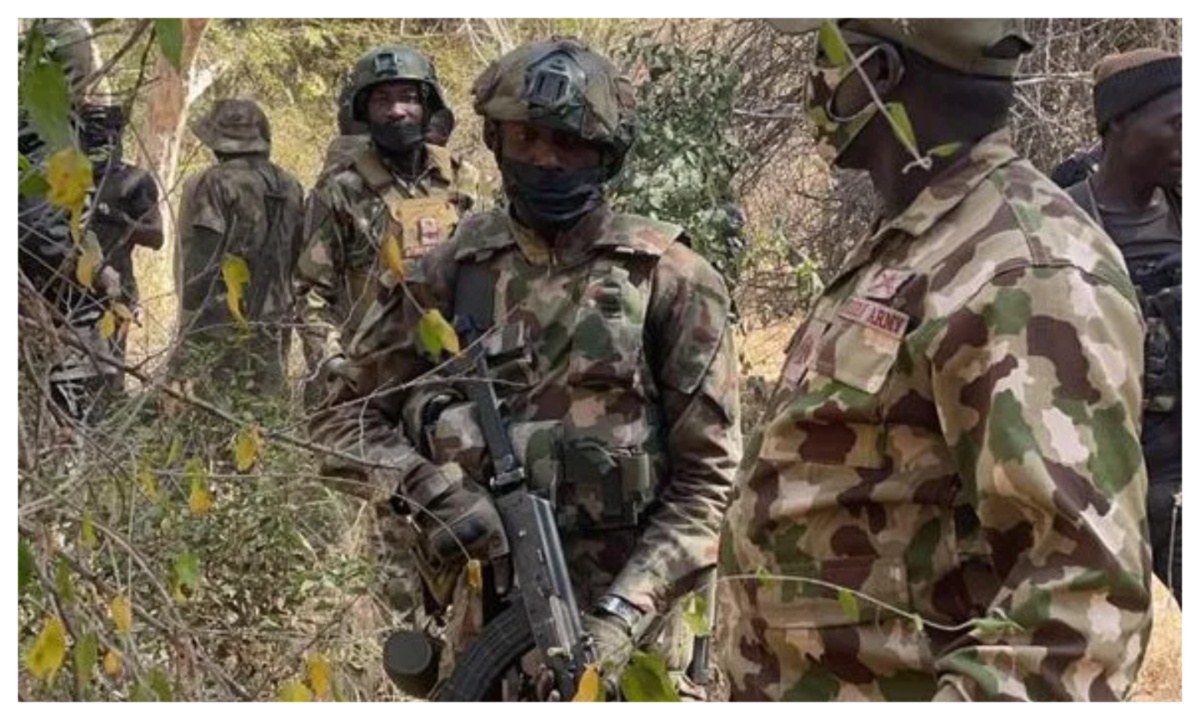
The Nigerian Army has called for stronger collaboration among security agencies as part of efforts to tackle the country’s growing security challenges, including insurgency, terrorism, banditry, kidnapping and militancy.
The call was made on Monday by Major General Olurotimi Awolo, Commander of the 4 Special Forces Command, Doma, Nasarawa State, during the opening ceremony of the week-long Command Operations Planning Cadre 2026.
Speaking at the event, Awolo said Nigeria continues to face different forms of security threats across various parts of the country and that no single security agency can successfully address the challenges alone. He stressed the need for closer cooperation, better coordination and regular information sharing among all agencies involved in maintaining peace and security.
According to him, security threats vary from one region to another and require specialised responses based on the nature of the challenge in each area.
He noted that while some regions are battling insurgency and terrorism, others are facing problems such as banditry, kidnapping, militancy and other criminal activities. These differences, he said, make it necessary for security personnel to receive appropriate training and work together to achieve better results.
Awolo explained that the Command Operations Planning Cadre 2026 was organised to strengthen the operational capacity of personnel and equip them with the skills needed to respond effectively to emerging security threats.
The training program, which is expected to last for one week, has as its theme: “Tactical Leadership Capacity Building and Multi-Agency Approach to Asymmetric Operations in Joint Operations Area.”
Participants at the program include personnel drawn from various formations and units of the Armed Forces of Nigeria as well as officers from other relevant security agencies.
According to the commander, the participation of different agencies reflects the growing need for a united approach to national security.
“The essence of including other security agencies in this training program was necessitated by the notion that confronting the numerous security challenges across the nation requires integrated collaboration among all relevant stakeholders in the security domain,” he said.
He added that effective cooperation among military and non-military security organizations remains critical to achieving lasting peace and stability across the country.
Awolo further stated that the training aligns with the vision of the Chief of Army Staff, Lieutenant General Waidi Shaibu, which focuses on building a professional, adaptable and combat-ready Nigerian Army capable of operating effectively in joint and multi-agency environments.
According to him, modern security operations have become increasingly complex, making it necessary for security personnel to understand how to work with other agencies in planning and executing operations.
He said the training would expose participants to practical lessons on leadership, operational planning, logistics management and inter-agency cooperation, all of which are essential in contemporary security operations.
The commander urged participants to pay close attention to lectures and presentations, particularly those dealing with cooperation among agencies and logistics planning.
He noted that operational success often depends not only on combat capability but also on effective planning, coordination and support systems.
Awolo expressed confidence that the knowledge gained during the program would improve the effectiveness of future deployments and strengthen ongoing efforts to combat insecurity across the country.
He also encouraged participants to actively engage resource persons and take advantage of the opportunity to learn from experienced military officers and security experts.
The commander thanked the Chief of Army Staff for approving and funding the training program, describing the support as a demonstration of the army leadership’s commitment to capacity building and professional development.
He also commended the resource persons and senior military officers contributing to the program for their dedication to strengthening national security through training and mentorship.
Awolo charged participants to ensure that the lessons learned during the cadre are translated into practical actions in the field.
He said the ultimate goal of the program is to improve operational performance and enhance the ability of security agencies to respond swiftly and effectively to security threats.
Nigeria has in recent years continued to battle multiple security challenges across different regions of the country.
In the North-East, security forces have been engaged in a prolonged fight against insurgent groups responsible for attacks on communities, military formations and public infrastructure. Despite significant gains recorded by the military, attacks and security concerns still persist in some areas.
The North-West and parts of the North-Central have witnessed rising incidents of banditry, kidnapping and attacks on rural communities. Several states have recorded cases of abductions for ransom, cattle rustling and violent assaults on residents.
In the South-South region, security agencies continue to monitor activities linked to oil theft, pipeline vandalism and other forms of criminality that threaten economic activities and national revenue.
Meanwhile, some parts of the South-East have experienced security tensions arising from attacks on security facilities, government institutions and public infrastructure.
The Federal Government has in recent years increased investments in security operations through the procurement of military equipment, recruitment of personnel and expanded training programs aimed at improving the capacity of security forces.
The Command Operations Planning Cadre 2026 is therefore expected to provide an important platform for strengthening cooperation among security agencies and improving the skills of personnel involved in security operations.
As the program continues, participants are expected to explore practical strategies for enhancing joint operations, improving tactical leadership and developing more effective responses to the security challenges confronting the country.
Military authorities expressed optimism that the training would contribute to a more coordinated security architecture and support ongoing efforts to restore peace and stability across Nigeria.