
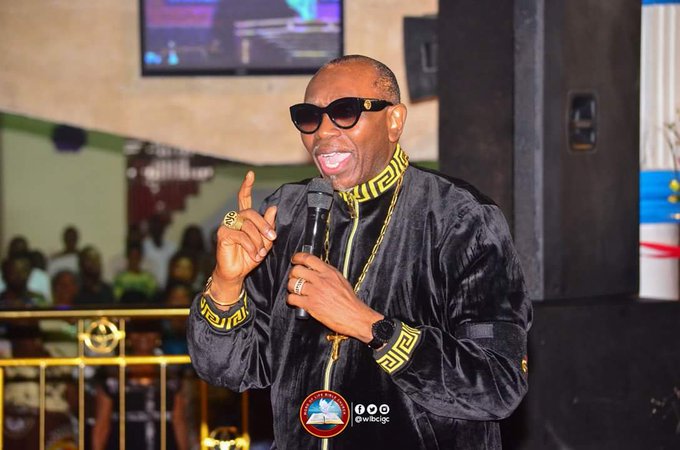
Former President of the Christian Association of Nigeria (CAN), Pastor Ayo Oritsejafor, has described the administration of late former President Muhammadu Buhari as a failure, saying he had warned Nigerians before the 2015 general election that the country was heading in the wrong direction.
Oritsejafor also expressed concern over the current state of the nation under President Bola Tinubu, claiming that conditions have become even more difficult for many Nigerians.
The respected cleric made the remarks on Monday during an appearance on Politics Today, a current affairs program on Channels Television.
Speaking on the challenges facing the country, Oritsejafor said he had foreseen problems before Buhari assumed office and had publicly cautioned Nigerians about the direction the country was taking.
According to him, events that unfolded during Buhari’s eight-year administration confirmed his fears.
“In 2014, I tried to warn this nation of the direction it was going. When the Buhari government was getting ready to come in, I knew that it was going to be a mess,” he said.
The former CAN president added that the situation in the country has worsened since then, making it necessary for public figures, religious leaders and citizens to speak out.
“From there, I don’t know what to call where we are now; it has grown worse. In 2014, I tried to warn this nation of the direction it was going,” he stated.
Oritsejafor said he could no longer remain silent because of the suffering many Nigerians are experiencing.
According to him, as a pastor who interacts daily with ordinary citizens, he sees firsthand the struggles people face and believes leaders must be held responsible for their actions and decisions.
“And it has gotten to a point where I feel I have to say something. I must begin to say something because I pastor people, they are human beings, Nigerians, and we must begin to hold people accountable for what is happening,” he said.
The comments are coming at a time when many Nigerians continue to grapple with economic hardship, rising food prices, high transportation costs and inflation.
Since assuming office in May 2023, President Tinubu has introduced a number of economic reforms aimed at restructuring the economy. Among the most notable were the removal of petrol subsidy and the unification of foreign exchange rates.
While the Federal Government has defended the reforms as necessary steps to stabilise the economy and attract investment, many Nigerians have complained about the immediate impact on their daily lives.
The rising cost of living has become a major topic of public debate, with labour unions, civil society organisations, opposition politicians and religious leaders expressing concerns about the hardship facing citizens.
Oritsejafor’s remarks add to growing calls from different quarters for government officials to pay greater attention to the welfare of ordinary Nigerians.
The cleric has remained one of Nigeria’s most prominent religious leaders over the years. He served as President of CAN from 2010 to 2016 and was also National President of the Pentecostal Fellowship of Nigeria (PFN).
During his tenure as CAN president, Oritsejafor was known for his outspoken views on national issues, including insecurity, governance, corruption and religious relations.
His relationship with the administration of former President Goodluck Jonathan attracted both support and criticism, particularly during the heated political atmosphere that preceded the 2015 elections.
The 2015 election marked a major turning point in Nigeria’s democratic history. Buhari, who contested under the platform of the then-opposition All Progressives Congress (APC), defeated incumbent President Jonathan, becoming the first opposition candidate to unseat a sitting president through the ballot box.
Many Nigerians at the time supported Buhari because of his promises to fight corruption, improve security and revive the economy.
However, Buhari’s administration faced criticism over several issues, including economic recession, insecurity, rising debt and growing unemployment.
Despite efforts by the government to address these challenges, critics argued that progress was slow and that many of the promises made during the campaign were not fully achieved.
Buhari completed two terms in office and handed over power to Tinubu on May 29, 2023.
Since then, Tinubu’s government has repeatedly said it inherited serious economic and security challenges that require difficult but necessary decisions to fix.
Government officials have maintained that current reforms are designed to place the economy on a stronger foundation and that Nigerians will eventually begin to enjoy the benefits.
The administration has also introduced various intervention programmes aimed at easing hardship, including support for vulnerable households, student loans, agricultural initiatives and investments in infrastructure.
However, critics insist that the impact of the reforms has placed enormous pressure on citizens, especially low-income earners and small businesses.
As debates over the state of the nation continue, Oritsejafor has called for greater accountability from public office holders, stressing that leaders must take responsibility for policies and actions that affect the lives of citizens.
His remarks are likely to generate reactions from political actors and government supporters, especially as discussions about the performance of past and present administrations remain a major issue in Nigeria’s political landscape.