
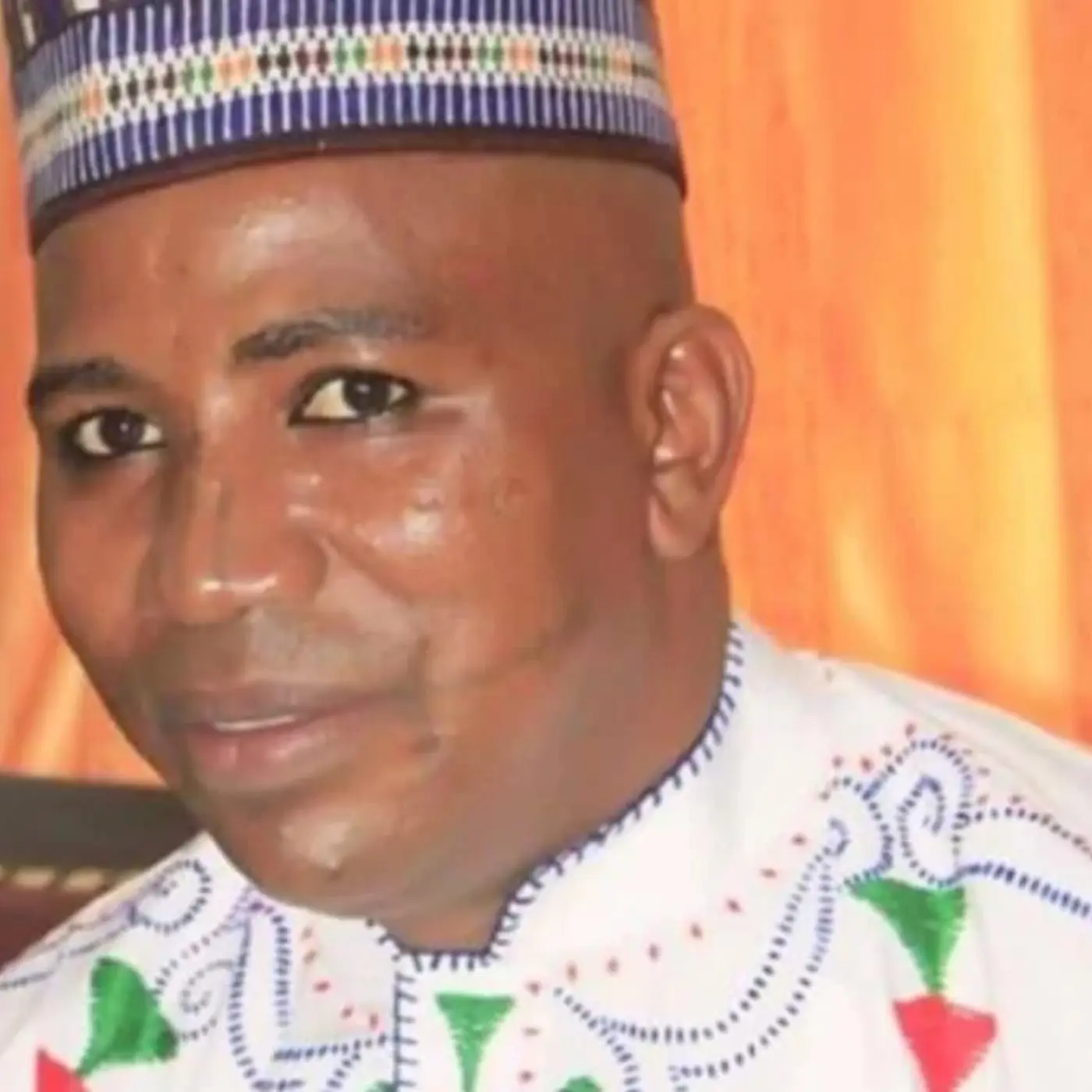
The Economic and Financial Crimes Commission (EFCC) on Thursday arraigned the leader of Miyetti Allah Kautal Hore, Bello Bodejo, before the Federal High Court in Abuja over alleged money laundering involving about $2.33 million.
Bodejo appeared before Justice Inyang Edem Ekwo on a 12-count charge filed by the anti-graft agency, which accused him of violating provisions of Nigeria’s Money Laundering (Prevention and Prohibition) Act.
He pleaded not guilty to all the charges.
Following his plea, the court adjourned the matter until July 20 to rule on his bail application and ordered that he be remanded in the custody of the EFCC pending the court’s decision.
The development marks another high-profile prosecution by the anti-corruption agency, which has intensified efforts to enforce compliance with Nigeria’s anti-money laundering laws.
The EFCC disclosed details of the arraignment in a statement posted on its official X account on Thursday.
According to the commission, Bodejo is accused of receiving large sums of money in cash without passing the transactions through recognised financial institutions, contrary to the provisions of the law.
The anti-graft agency alleged that the total amount involved in the case is approximately $2.33 million.
One of the charges alleged that Bodejo unlawfully received 100,000 United States dollars in cash from a former Accountant-General of Bauchi State, Sa’idu Abubakar, without routing the payment through a financial institution as required by law.
According to the charge, the transaction was carried out knowingly and without lawful authority or excuse.
The charge reads in part that Bodejo “did knowingly and wilfully, without lawful authority or excuse, accept a cash payment of the sum of One Hundred Thousand United States Dollars (USD $100,000.00) without routing the said transaction through a financial institution as required by law.”
The EFCC also alleged that Bodejo accepted another cash payment of 980,000 United States dollars from the same individual in February 2024.
According to the prosecution, that transaction also violated the provisions of the Money Laundering (Prevention and Prohibition) Act, 2022.
The charge alleged that the money was received directly in cash instead of through the banking system, as required under Nigerian law.
Investigators believe the transactions formed part of a series of cash payments that make up the total amount of about $2.33 million listed in the charges before the court.
Although the full details of all 12 counts were not read out in open court, the EFCC maintained that each of the charges relates to alleged breaches of Nigeria’s anti-money laundering laws.
After the charges were read, Bodejo pleaded not guilty to each of them.
Following the plea, counsel to the EFCC, Wahab Shittu (SAN), urged the court to fix a date for trial and order that the defendant be remanded in the custody of the Nigerian Correctional Service pending the hearing of the case.
However, Bodejo’s lawyer, Ahmed Raji (SAN), asked the court to grant his client bail.
The defence relied on a bail application filed on June 30, 2026, arguing that the defendant should be allowed to remain free while standing trial.
The prosecution opposed the request.
Shittu argued that Bodejo could interfere with the investigation and influence witnesses because of his position and public profile.
He also told the court that the Department of State Services (DSS) was monitoring the defendant.
According to the prosecution, Bodejo poses a flight risk and could frustrate the trial if released on bail.
“Being an influential person, he may manipulate the witnesses and progress of the case,” Shittu told the court.
After hearing arguments from both lawyers, Justice Ekwo declined to rule immediately on the bail application.
Instead, the judge ordered that Bodejo be remanded in the EFCC’s holding facility pending the determination of his bail request.
The court fixed July 20 for its ruling on the bail application.
If bail is granted, the court is expected to set conditions that Bodejo must meet before regaining his freedom while standing trial.
The case has attracted public attention because of Bodejo’s position as the national leader of Miyetti Allah Kautal Hore, a prominent cattle breeders’ association in Nigeria.
The organisation has often featured in national discussions on security, open grazing, herders-farmers conflicts and livestock development.
Bodejo himself has remained a familiar figure in public debates on issues affecting pastoralists and livestock owners across the country.
He has also previously been involved in legal disputes with security agencies.
In 2024, he was arrested over allegations linked to the establishment of a security outfit known as Kungiya Zaman Lafiya, an issue that generated widespread public interest before the matter was eventually taken to court.
The current case, however, is unrelated to those earlier proceedings.
Instead, it centres on alleged violations of Nigeria’s anti-money laundering laws, particularly provisions that require large financial transactions to pass through licensed financial institutions.
The Money Laundering (Prevention and Prohibition) Act was enacted to curb illicit financial flows, improve transparency and strengthen Nigeria’s financial system.
The law places limits on cash transactions and requires individuals and organisations to use banks and other recognised financial institutions for large payments.
The legislation also empowers the EFCC and other law enforcement agencies to investigate suspicious financial transactions and prosecute offenders.
Like every criminal defendant, Bodejo is presumed innocent until proven guilty by a court of law.
The prosecution is expected to present witnesses and documentary evidence during the trial in an attempt to prove the allegations beyond reasonable doubt.
The defence, on the other hand, will have the opportunity to challenge the evidence and present its own case before the court reaches a final decision.