
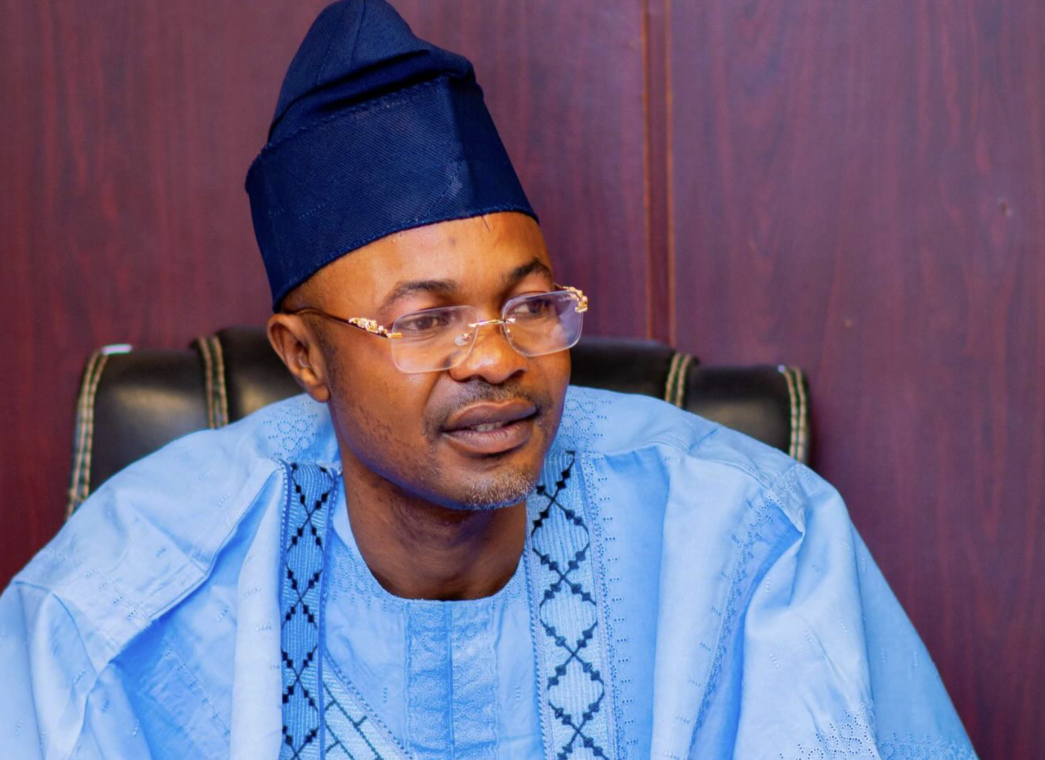
The embattled Director-General of the disowned Presidential Foreign Intervention Promotion Council (PFIPC), Adeniyi Adeyemi, has claimed that the N400 million he allegedly paid to secure his appointment was borrowed money and that those who lent him the funds have now petitioned the Economic and Financial Crimes Commission (EFCC) to recover their money.
Adeyemi made the disclosure during an appearance on Channels Television’s *Politics Today* on Monday night, as the controversy surrounding the alleged fake government agency continues to generate public attention.
His latest comments come weeks after he accused the Chief of Staff to President Bola Tinubu, Femi Gbajabiamila, of receiving N400 million through a proxy to facilitate his appointment as Director-General of the council.
Gbajabiamila has denied the allegation, while the Presidency has maintained that the PFIPC is not a recognised government agency and that Adeyemi’s appointment letter was forged.
Speaking during the interview, Adeyemi said he was under pressure because the people who provided the money expected him to repay the loan.
“I borrowed this money. In fact, those that I borrowed this money from have reported to the EFCC. I borrowed this money to pay for this appointment. They have written to the EFCC, asking me to refund their money,” he said.
He added, “So, I’m not even here to pay the money back. I borrowed this money.”
Adeyemi described the government’s handling of the matter as unfair, saying he had been embarrassed by what he called powerful individuals within the system.
“It is very, very unfortunate. Imagine the government claiming I manoeuvred the whole system. It’s unfortunate,” he said.
The former council chief also dismissed reports that he was planning to flee Nigeria or seek political asylum abroad.
When asked about reports linking him to a United States lobbying firm allegedly assisting him to seek asylum, Adeyemi said he only heard about the claims through media reports.
“I read it the way you read it. Some people call me that they are looking for me,” he said.
According to him, he has limited knowledge of developments because his social media accounts were allegedly taken down.
“I just ignore it because they sponsored a lot of people to bring my social media handle down. So, I don’t really know much about what is going on again. I just hear from family and friends,” he said.
He insisted that he remained in Nigeria and had no intention of leaving the country.
“They pulled my social media handle down, and they still reported that I was about to run away out of Nigeria. I’m still in Nigeria. I’m not going anywhere,” he stated.
The controversy over the PFIPC began after the Presidency issued a public disclaimer on June 11, stating that no agency known as the Presidential Foreign Intervention Promotion Council exists under the administration of President Bola Tinubu.
In a statement signed by the Chief of Staff, Femi Gbajabiamila, the Presidency described Adeyemi as an impostor who falsely claimed to head a non-existent government agency.
The matter deepened on July 1 when the Special Adviser to the President on Information and Strategy, Bayo Onanuga, released another statement detailing the outcome of preliminary police investigations.
According to the Presidency, investigators found that Adeyemi allegedly forged a presidential appointment letter bearing Gbajabiamila’s signature.
The statement also alleged that he operated a fictitious government agency and maintained 34 bank accounts, including nine reportedly opened in the names of non-existent government organisations.
The Presidency further explained that concerns about the council first emerged in October 2025 after the Nigerian Investment Promotion Commission (NIPC) raised an alarm that another organisation claiming to be a federal agency was carrying out activities similar to its own.
Despite the government’s position, Adeyemi has continued to insist that his appointment was genuine.
He claimed that he openly carried out official duties for nearly three years without any objection from government institutions.
According to him, he met with the heads of several ministries, departments and agencies and also hosted meetings involving officials of the Ministry of Foreign Affairs, the EFCC and other government bodies.
Adeyemi has repeatedly alleged that Gbajabiamila demanded money to facilitate his appointment.
He claimed that N400 million was paid through a proxy and that an additional N200 million was later requested.
He also alleged that he was asked to surrender 48 per cent of a proposed N27.4 billion take-off grant for the council.
However, Gbajabiamila’s legal team has strongly denied the allegations.
His lawyers described the claims as false, malicious and defamatory. They also threatened legal action against Adeyemi, demanding a public apology and warning that they would seek N10 billion in damages if the allegations were not withdrawn.
The controversy took another twist after Adeyemi, in an interview with social media activist Martins Otse, popularly known as VeryDarkMan, admitted that he had never met Gbajabiamila face-to-face.
He also acknowledged that he could not confirm the identity of the person he allegedly spoke with over the phone regarding the appointment process.
That admission raised further questions about the basis of his allegations against the Chief of Staff.
Another issue that has attracted public attention is the inclusion of the PFIPC in the 2026 national budget.
The council reportedly received an allocation of more than N1.3 billion, despite the Presidency’s insistence that no such agency officially exists.
The budget allocation has triggered fresh concerns over how a body now described as fictitious was captured in a federal budget and passed through the necessary approval processes.
In response to the growing controversy, President Bola Tinubu directed the Independent Corrupt Practices and Other Related Offences Commission (ICPC) to investigate the entire matter.
The anti-corruption agency has been given 30 days to complete its investigation and submit its findings to the President.
The outcome of the probe is expected to determine whether criminal charges will be filed and could also answer lingering questions about the alleged appointment, the disputed budget allocation and the roles played by all those connected with the controversy.
As investigations continue, the PFIPC scandal has become one of the most closely watched political controversies in recent weeks, raising concerns about transparency, public appointments and accountability within government institutions.