
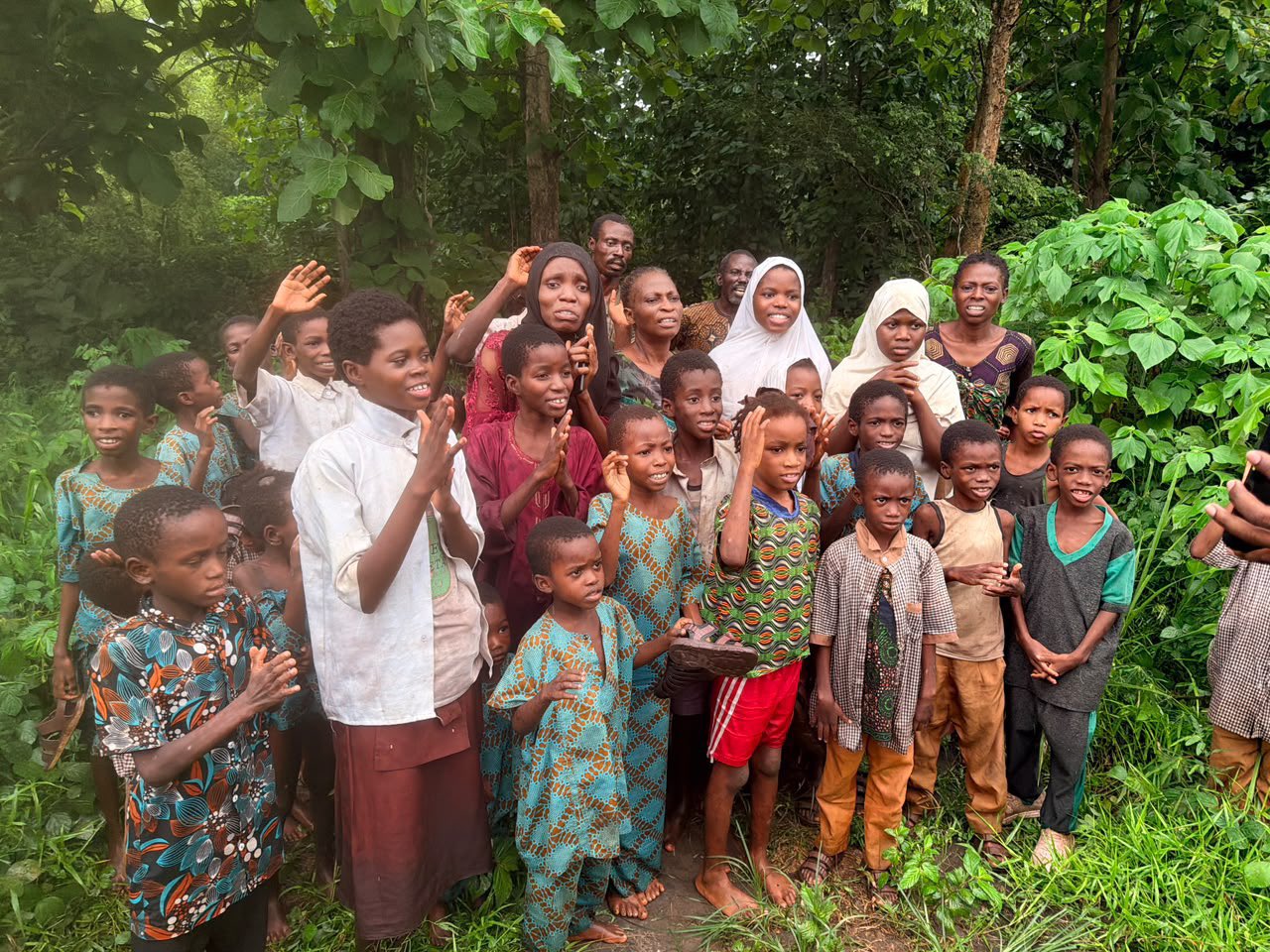
One of the teachers rescued after spending 56 days in the custody of kidnappers in Oyo State, Zacchaeus Olatunde, has claimed that he and the other captives were released by their abductors before they eventually met security personnel who escorted them home.
Olatunde made the revelation during a telephone interview on Nigeria Info FM, where he gave a detailed account of the ordeal he and other teachers and pupils went through after they were abducted from schools in Oriire Local Government Area of Oyo State.
His account has added a fresh dimension to the circumstances surrounding the release of the victims, which had earlier been announced by the Oyo State Government. While security agencies have maintained that the victims were rescued through coordinated operations, Olatunde said the kidnappers themselves informed them that they had been freed before they encountered government officials.
The teacher said the captives were kept blindfolded throughout their 56-day stay in the forest, making it impossible for them to know where they had been taken.
“It is difficult to say on air, but I will just say what I can. When we were there, we were blindfolded, not an ordinary blindfold. We didn’t even know if we were in Nigeria or another country. We were just there. We were saying maybe the government had even forgotten us,” he said.
According to him, the kidnappers spoke several languages, including Hausa, Nupe, English and Yoruba. He claimed they repeatedly told the captives they were members of the Islamic State West Africa Province (ISWAP), not Boko Haram.
“They said they are not Boko Haram. They said they are ISWAP. I was the last person who was captured in the school and I was the last person that was released,” he said.
Despite the fear and uncertainty, Olatunde said the victims never gave up hope, believing that prayers offered by families, churches and well-wishers would eventually lead to their freedom.
“All I can say is that God answered all the prayers that people were praying for us,” he added.
The teacher described life in captivity as harsh, although he said the kidnappers ensured the victims received food twice daily.
“In terms of feeding, those people really tried for us, to be sincere. Right from the day we were abducted, they told us on the way that if we cooperated and the government cooperated, there would be no problem,” he said.
According to him, their meals consisted mainly of rice, small quantities of beans, onions, margarine and salt.
“We were fed twice a day, morning and evening. We ate only rice, little beans, onions, margarine and salt. Throughout our stay there, we did not taste pepper,” he said.
He said the teachers endured extremely poor living conditions throughout the period, revealing that they were unable to bathe or wash their clothes for the entire 56 days.
“For the 56 days, we the teachers did not bathe. We did not wash our clothes,” he said.
Olatunde also recalled that the kidnappers initially stopped them from praying.
According to him, after about one month, they relaxed the restriction but imposed conditions on how prayers should be conducted.
“When we got there, they told us not to pray. After about a month, they allowed us to pray, but they warned us not to mention the name of Jesus and not to pray aloud,” he said.
The teacher said the captives were unexpectedly informed of their freedom when the commander of the kidnappers arrived smiling and announced that they had been released.
“Until the last day when their commander came and was smiling and laughing and said we should thank God that we had been freed. The next thing they said was that we should open our eyes,” he said.
He explained that he became the last person to leave because a key used to unlock his handcuffs had broken earlier during their captivity.
“When they released us, everybody had gone. They said I could not carry the handcuff home because the key had broken. One of them suggested they should cut off my hand, but another said no. They later used a small rope to remove the handcuff,” he recounted.
Olatunde said he almost thought he would be killed when the kidnappers’ commander called him back after the others had left.
“Their commander called me back. He pointed a gun at me and said, ‘Come.’ I thought I was going to die because I was the only one left in the bush. He asked where I was going, and when I said I didn’t know, he showed me the correct route and told me to follow where the others had passed,” he said.
He said the former captives trekked for between 40 minutes and one hour before motorcycles provided by the kidnappers conveyed them closer to a nearby village. From there, they walked for another one and a half hours before meeting security personnel.
“We trekked for about 40 minutes to one hour before they provided motorcycles that took us close to the nearest village. They later stopped and told us they could not go further, so we trekked for another one and a half hours before we got to where the government people who came to rescue us were,” he said.
According to him, the victims were initially afraid of the security personnel because they were speaking Hausa and arrived in buses without number plates.
“When we saw the buses, we were afraid because the people were speaking Hausa. We even asked them to show us their identity cards. They kept assuring us that the government sent them.
“The buses had no number plates and had Arabic inscriptions. We were afraid they wanted to take us somewhere else,” he added.
During the difficult journey out of the forest, Olatunde said he helped some of the younger pupils who could not walk long distances.
“There were some children that could not walk. I carried one little girl on my neck. At the river, I used a stick to check the depth before helping the children and some adults cross safely,” he recalled.
He also narrated how he was captured during the attack on the school after arthritis in his left leg prevented him from escaping.
“I had arthritis on my left leg and couldn’t run. I hid under the grass because my clothes blended with it. A student who refused to leave me looked in my direction, and that was how their commander noticed me and ordered me to stand up,” he said.
Ironically, he claimed the medication given to him by the kidnappers helped ease the arthritis that had troubled him for a long time.
“The leg that I had spent so much money treating got better after they gave me one drug,” he said.
Despite returning safely, Olatunde said he had not received any financial assistance. Instead, he appealed for support for the school that was attacked.
“The utmost support for now should be for my school,” he said.
The teachers and pupils were abducted in May when heavily armed men invaded schools in Oriire Local Government Area of Oyo State, an attack that sparked nationwide concern and renewed fears over the safety of schools in Nigeria.
Following their return, Governor Seyi Makinde announced that all the victims had regained their freedom after 56 days in captivity. He directed that they should receive medical treatment and psychosocial support to help them recover from the trauma.
The governor also called for a United Nations-backed investigation into the abduction, saying Nigerians deserved a full account of what happened and how such attacks could be prevented in future.
However, the governor’s request drew criticism from the Presidency. The Special Adviser to the President on Information and Strategy, Bayo Onanuga, said the call suggested a lack of confidence in Nigeria’s security institutions, insisting that the military and other security agencies had already explained how the victims regained their freedom.