
The Federal Government on Monday defended the borrowing record of President Bola Tinubu’s administration, insisting that much of the increase in Nigeria’s public debt is not the result of fresh loans but accounting adjustments, debt refinancing and the formal recognition of obligations inherited from the previous administration.
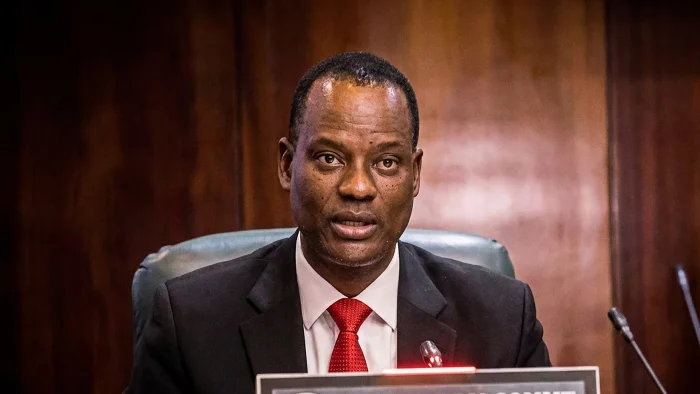
The Minister of Finance and Coordinating Minister of the Economy, Taiwo Oyedele, made the clarification while appearing before the Senate Committee on Finance in Abuja.
The session, chaired by Senator Sani Musa, focused on the implementation of the 2026 budget, public debt management and the government’s plans to improve capital project execution.
The minister’s explanation followed concerns raised by Senator Adamu Aliero, who questioned reports suggesting that the Tinubu administration had borrowed about ₦80 trillion in addition to the approximately ₦75 trillion public debt inherited when it assumed office in May 2023.
Responding to the concerns, Oyedele said many of the figures circulating in the public space did not reflect the true borrowing position of the current administration.
He explained that one of the biggest reasons for the sharp increase in Nigeria’s debt stock was the depreciation of the naira, which significantly increased the naira value of the country’s foreign debts.
According to him, although the amount owed in foreign currencies did not necessarily increase, the value of those debts rose when converted into naira following the exchange rate changes introduced after the government’s economic reforms.
“When this administration came into office, public debt was around ₦75 trillion. Many people simply compare that figure with today’s debt stock and conclude that this government has borrowed massively,” the minister said.
“However, it is important to note that, following the reforms and the depreciation of the naira, the foreign currency component of our public debt had to be revalued because Nigeria reports its debt in naira. That accounting adjustment alone added more than ₦40 trillion to the public debt figure.”
He also explained that another major factor behind the increase in the debt stock was the securitisation of the Federal Government’s Ways and Means advances obtained under the previous administration.
Ways and Means advances are loans granted by the Central Bank of Nigeria (CBN) to the Federal Government to cover temporary funding shortfalls.
The National Assembly had previously approved the conversion of these advances into long-term debt, making them part of Nigeria’s official public debt.
According to the minister, this process alone added about ₦33 trillion to the country’s debt records without representing fresh borrowing.
“Another important factor is the securitisation of the Ways and Means advances from the previous administration, which the National Assembly approved. About ₦33 trillion was added to the public debt through that process. It was not new borrowing; it was simply bringing previously existing obligations onto the official debt books,” he said.
Oyedele, argued that the developments had not been properly explained to Nigerians, leading many people to wrongly conclude that the Tinubu administration had borrowed far more than it actually had.
He further explained that much of the government’s domestic borrowing involved refinancing existing debts rather than taking on new financial obligations.
According to him, when previously issued government bonds or loans mature, the government often raises new debt to repay them, a process known as refinancing.
He stressed that refinancing should not be mistaken for additional borrowing because it merely replaces existing obligations.
“The actual amount this administration has borrowed is nowhere near what many people believe,” he said.
“Even for domestic borrowing, much of it is refinancing. Debt that was borrowed previously matures, and the government raises new debt to refinance it. That is not new borrowing.”
The minister assured lawmakers that the Federal Government remained committed to responsible borrowing and prudent debt management.
He said the administration only borrows to finance projects capable of supporting economic growth, improving infrastructure and generating returns that exceed the cost of the loans.
“This administration has been very responsible in its borrowing. We understand the concerns of Nigerians and of the distinguished senators, but we remain fully committed to debt sustainability,” he said.
“We see debt as leverage. Every naira and every dollar borrowed should generate more value than the amount borrowed.”
Nigeria’s rising debt profile has remained a major issue of public concern in recent years as successive governments borrowed to finance infrastructure projects, support budgets and address revenue shortfalls.
While the Federal Government has maintained that borrowing is necessary because of low revenue and growing development needs, economists have repeatedly called for stronger revenue generation and better management of public finances to reduce dependence on loans.
The issue also featured prominently during Monday’s meeting as lawmakers expressed dissatisfaction with the pace of implementation of the capital component of the 2026 Appropriation Act.
Senate Chief Whip Tahir Monguno described the slow release of funds for capital projects as a serious concern, warning that delays could affect infrastructure development and economic growth.
Other lawmakers also questioned why many approved projects had yet to receive adequate funding despite the passage of the budget.
Responding to the concerns, Chairman of the Senate Committee on Finance, Senator Sani Musa, assured members that the pace of capital budget implementation would improve.
He disclosed that discussions between the National Assembly and the government’s economic team were already underway to address the challenges affecting project funding.
According to him, the government is considering a new budgeting system that will focus more on performance and national priorities rather than the current envelope budgeting approach.
Under the proposed arrangement, ministries, departments and agencies would receive funding based on clearly defined priorities and measurable performance targets.
Musa also said efforts were being made to restore the previous payment system for contractors to speed up the execution of government projects across the country.