
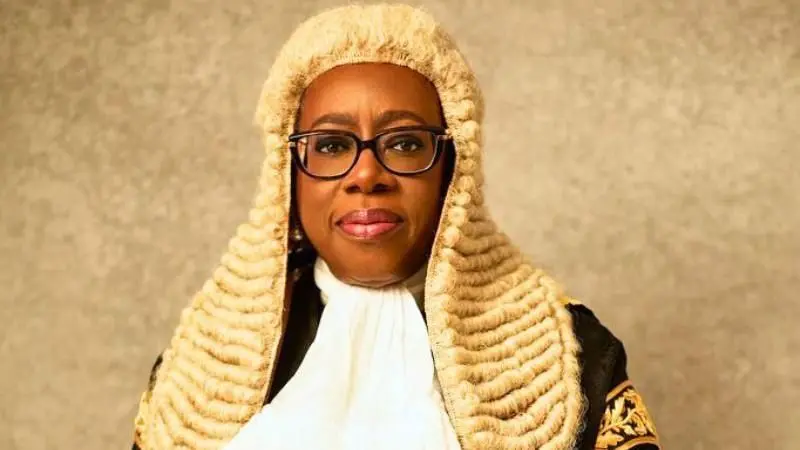
The Chief Justice of Nigeria (CJN), Justice Kudirat Kekere-Ekun, has directed lawyers, court officials and other personnel at the Supreme Court to stop using the title “Barrister” as a prefix to their names in all official engagements, saying the practice is inappropriate and does not meet the professional standards expected at the country’s highest court.
The directive, which takes immediate effect, was conveyed in an official memorandum dated July 13, 2026, and signed by the Chief Registrar of the Supreme Court, Kabir Akanbi.
The circular was addressed to litigation staff, legal practitioners, court registrars and lawyers working with or appearing before the Supreme Court.
According to the memorandum, the decision is part of efforts to strengthen professionalism and ensure uniform standards in official communication and documentation within the apex court.
The circular stated that the Chief Justice had directed that the title “Barrister” should no longer be used before the names of legal practitioners and court personnel in official correspondence or other formal engagements connected with the Supreme Court.
It read: “I am directed by the Honourable the Chief Justice of Nigeria to notify all Litigation Staff, Legal Practitioners, Court Registrars, and Lawyers that the use of the title ‘Barrister’ as a prefix to names is inappropriate and inconsistent with the standards of professionalism expected within the Supreme Court of Nigeria.”
The memorandum further instructed all affected officers to immediately discontinue the use of the title in every official capacity.
It stated: “Consequently, all officers concerned are hereby directed to discontinue the use of the title ‘Barrister’ before their names in all official correspondence, records, documents, identity materials, and any other official engagements with immediate effect.”
To ensure that the directive is fully implemented, the Chief Justice also directed heads of departments and unit heads to monitor compliance among officers under their supervision.
The circular added: “Heads of Departments and Unit Heads are requested to ensure strict compliance with this directive by all officers under their supervision. Please be guided accordingly.”
The directive is expected to affect the way legal practitioners, court staff and registrars identify themselves in official documents, letters, court records, identity cards and other materials used in the daily activities of the Supreme Court.
While the order applies specifically to official engagements within the Supreme Court, legal observers believe it could influence practices in other courts and judicial institutions across the country.
The title “Barrister” is commonly used in Nigeria by lawyers who have been called to the Nigerian Bar after completing their legal education and meeting the requirements for legal practice.
Although many lawyers use the title in social and professional settings, it is not a constitutional or statutory title that must precede a lawyer’s name in official judicial documents.
Many senior lawyers and judges instead prefer the use of professional or academic titles where applicable or simply use their names without the “Barrister” prefix in official correspondence.
The move is the latest in a series of efforts by legal authorities to preserve the dignity and integrity of the legal profession.
Only a few weeks ago, the Council of Legal Education issued a warning to prospective lawyers against wearing wigs and gowns or presenting themselves as qualified legal practitioners before they had been formally called to the Nigerian Bar.
The council described such actions as a violation of professional ethics and warned that anyone found engaging in the practice could face disciplinary measures.
According to the council, the use of legal regalia is governed by the Rules of Professional Conduct and is strictly reserved for persons who have completed all legal training requirements and have been officially called to the Bar.
The warning followed reports that some law graduates and students had appeared in legal attire during events before completing the formal process required to become practising lawyers.
The Council of Legal Education stressed that the tradition of wearing wigs and gowns represents admission into the legal profession and should not be used by unqualified persons.
Justice Kekere-Ekun, who heads the Nigerian judiciary, has repeatedly emphasised the importance of maintaining the integrity, independence and credibility of the courts.
As the head of the Supreme Court and Chairman of the National Judicial Council, the Chief Justice is responsible for providing leadership to the judiciary and ensuring that judicial officers and court personnel maintain the highest standards of conduct.
The Supreme Court, being the country’s apex court, sets important standards for judicial administration and legal practice.
Its decisions are binding on all lower courts, while its administrative policies often influence practices across the judiciary.
With the directive now in force, lawyers, court staff and registrars engaging with the Supreme Court are expected to comply immediately, while departmental heads have been instructed to ensure strict enforcement.