
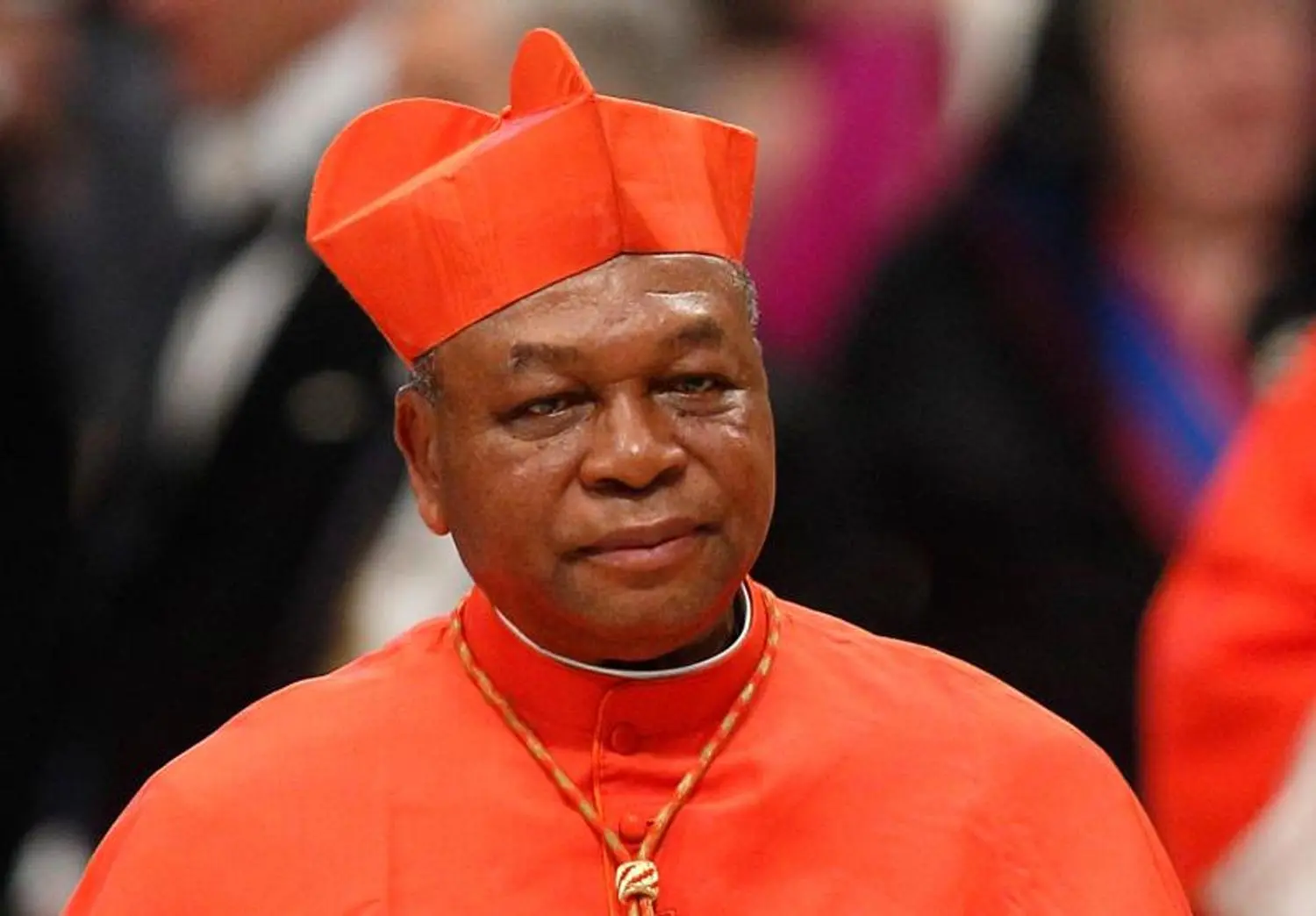
The Archbishop Emeritus of the Catholic Archdiocese of Abuja, John Cardinal Onaiyekan, has warned that many Nigerians may boycott the 2027 general elections if they believe the outcome is already predetermined in favour of the ruling All Progressives Congress (APC).
The respected Catholic cleric said public confidence in the electoral process is just as important as the actual conduct of the elections, stressing that democracy cannot thrive where citizens believe their votes will not count.
Onaiyekan spoke on Monday during a programme on Eagle 102.5 FM in Ilese-Ijebu, Ogun State, where he expressed concern over declining voter participation and the need to restore trust in Nigeria’s democratic process ahead of the next general elections.
According to him, the perception that one political party is guaranteed victory regardless of how Nigerians vote could discourage millions of eligible voters from participating in the elections.
“My fear is that if it becomes very clear to Nigerians that no matter what happens, the APC will win, then most people won’t even bother to go to the election,” he said.
The Cardinal warned that even if a government eventually wins under such circumstances, its victory would lack the broad public confidence needed to strengthen democracy and deliver effective governance.
“And even if the government, the real power wins, it will not bring a real victory actually. And it is not going to be possible to deliver good government,” he added.
Onaiyekan stressed that genuine democracy is built on free, fair and credible elections, arguing that the quality of governance in any country depends largely on the credibility of its electoral process.
According to him, poor elections often produce poor leadership, which in turn results in hardship and suffering for citizens.
“Genuine democracy is built on free and fair elections. Any democracy that cannot do free, fair, and credible election cannot come up with good governance. Elections have consequences. Bad elections lead to bad governance and bad governance leads to misery among the people,” he said.
The cleric expressed regret that Nigeria has yet to conduct what he considers a truly free and fair election since the country’s return to democratic rule in 1999.
He linked the low voter turnout recorded in recent elections to growing public disappointment with the electoral process and urged those in authority to take urgent steps to rebuild confidence before the 2027 polls.
“It is in our interest and the government who has all the powers, to please make sure that the trust of the people in the electoral process is restored, so that we can get at least 50 per cent of Nigerians voting,” he said.
Nigeria has witnessed a steady decline in voter turnout in recent election cycles despite having millions of registered voters. Political analysts have attributed the trend to several factors, including voter apathy, insecurity, logistical challenges, distrust in the electoral process and concerns over election violence.
The Independent National Electoral Commission (INEC) has repeatedly introduced reforms, including the Bimodal Voter Accreditation System (BVAS) and electronic transmission of results, aimed at improving transparency and strengthening confidence in elections.
However, concerns over election credibility have continued to dominate public discussions, with political parties and civil society organisations frequently calling for further reforms.
Reflecting on Nigeria’s democratic journey, Onaiyekan compared the current political system with the years of military rule.
He said that unlike military governments, which did not claim electoral legitimacy, democratic leaders derive their authority from the people and must therefore remain accountable to them.
“When we were under military regime, we didn’t talk about elections. Now we are with democracy, and the rulers say that they are ruling in our name. We can’t keep quiet when people claiming to be working in our name are not,” he said.
The Cardinal also drew attention to the role of security agencies during elections, saying their conduct can significantly influence the credibility of the electoral process.
While acknowledging the importance of a neutral electoral commission, he argued that INEC alone cannot guarantee credible elections if security agencies fail to act professionally.
According to him, the presence and conduct of some security personnel during elections sometimes intimidate voters instead of providing protection.
“Even if INEC is neutral, as you know, the election outcome is also affected by the activities and the performance of the security agents who claim to be securing the election, but who often end up intimidating people with sirens all over the place, which doesn’t happen in decent democracies,” he said.
He also noted that Nigeria’s electoral laws and procedures still contain weaknesses that require urgent attention.
“We are also talking about why it’s always difficult for INEC to even perform well, with all good intentions. The rules that guide these activities, there is a lot of room for improvement. We have been talking about reforming the electoral rules,” he added.
Onaiyekan called for comprehensive electoral reforms before the 2027 general elections, saying changes to the legal and institutional framework would help improve public confidence in the democratic process.
One of the key reforms he advocated concerns the appointment of the leadership of INEC.
According to him, the current arrangement, under which the President appoints the INEC chairman and national commissioners subject to Senate confirmation, creates concerns about the commission’s independence.
“We know that the government in power appoints the INEC. We have to figure a way out of that because if the government in power appoints the INEC, then it’s difficult to have a fair game. Unless you have a very strong chairman of INEC who decides to stand up against all pressures,” he said.
His comments come as political parties continue consultations and preparations for the 2027 general elections, with debates already intensifying over electoral reforms, governance and the future of Nigeria’s democracy.
Civil society organisations, election observers and political stakeholders have also renewed calls for reforms aimed at strengthening electoral institutions, improving voter confidence and ensuring that future elections reflect the true will of the people.