
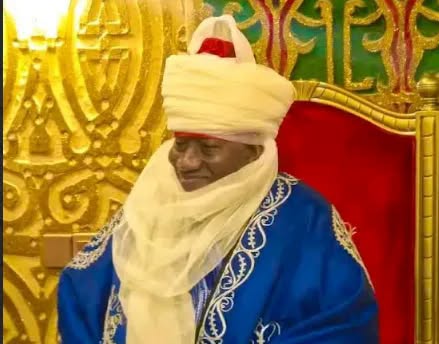
Former President Goodluck Jonathan has been installed as the Jigon Bauchi by the Bauchi Emirate Council in recognition of his contributions to democracy, peace and national unity.
The title was conferred on Jonathan on Tuesday by the Emir of Bauchi, Dr Rilwanu Sulaiman Adamu, during a colourful turbaning ceremony held at the Emir’s Palace in Bauchi.
The ceremony attracted political leaders, traditional rulers, government officials, title holders and other dignitaries from Bauchi State and beyond.
Bauchi State Governor Bala Mohammed led a high-powered delegation of government officials, political associates and other prominent figures to the palace for the event.
The former president was formally invested with the title before the gathering.
Speaking at the ceremony, Governor Mohammed thanked the Emir for honouring Jonathan, describing the former president as a respected Nigerian whose contribution to democratic governance and peaceful coexistence had extended beyond political and regional boundaries.
Mohammed said Jonathan’s leadership and commitment to national stability had earned him respect across the country.
He noted that the honour was a recognition of the former president’s efforts to strengthen democracy and promote peace during and after his time in office.
The governor also said the conferment demonstrated the importance of recognising Nigerians who had contributed to the development and unity of the country.
Jonathan, in his response, expressed appreciation to the Bauchi Emirate Council and the people of the state for the honour.
He described the title as a privilege and promised to respect the customs and traditions of the emirate.
“I deeply appreciate this honour and the confidence reposed in me by the Bauchi Emirate. I will respect the customs and traditions of the Emirate Council and uphold the values associated with this title,” Jonathan said.
The former president also acknowledged the significance of traditional institutions in promoting peace, unity and stability in Nigeria.
The Emir, while conferring the title, described Jonathan as a leader whose conduct in public office and commitment to peace remained exemplary.
The monarch said Jonathan’s public service record and efforts to promote peaceful political transition had contributed to his continued respect among Nigerians.
The title of Jigon Bauchi is one of the traditional honours within the Bauchi Emirate and is conferred on individuals considered to have made notable contributions to society.
Traditional titles remain an important part of Nigeria’s cultural system, particularly in the North, where emirate councils continue to recognise individuals whose activities are considered beneficial to their communities and the wider society.
Jonathan’s installation also reflects his continued involvement in peace and democracy initiatives since leaving office.
Jonathan served as Nigeria’s president from 2010 to 2015, first becoming acting president following the illness of then President Umaru Musa Yar’Adua before being elected president in 2011.
His administration was marked by major political and economic challenges, including the Boko Haram insurgency, economic difficulties and strong political opposition.
However, his 2015 defeat by Muhammadu Buhari and subsequent concession of the election remain among the most cited examples of a peaceful transfer of power between political parties in Nigeria’s democratic history.
Jonathan conceded defeat before the final results were formally announced, a decision widely praised for helping to reduce tension after a closely fought presidential election.
Since leaving office, he has remained active in efforts to promote peace, democracy and good governance in Nigeria and other African countries.
He has also participated in election observation and mediation efforts in different African countries through his foundation and other international initiatives.
The former president has repeatedly called for peaceful elections and respect for democratic institutions.
His continued engagement in democracy and peace-building has earned him recognition from traditional institutions, civil society groups and organisations in Nigeria and abroad.
The Bauchi honour therefore adds to a growing list of recognitions Jonathan has received for his contribution to democracy and peaceful political transitions.
Bauchi State itself has played an important role in Nigeria’s political and cultural history and remains one of the major states in the North-East.
The state has also faced security challenges in the past, particularly from the activities of Boko Haram and other criminal groups. The impact of insecurity across the North-East has increased calls for stronger cooperation between governments, traditional institutions and communities.
Traditional rulers have often played important roles in such efforts by encouraging peaceful coexistence, supporting community dialogue and helping government authorities maintain contact with local communities.
The presence of the governor and other senior officials at Jonathan’s turbaning also highlighted the close relationship between the state government and the Bauchi Emirate.
The ceremony drew a large gathering of traditional rulers, title holders, political leaders, government officials and invited guests from within and outside the state.
The gathering also provided an opportunity for political and traditional leaders to celebrate Jonathan’s contribution to Nigeria’s democratic development.
For Jonathan, the new title is expected to strengthen his relationship with the Bauchi Emirate and further recognise his role as a former national leader who has remained active in promoting peace and democracy.
The former president’s acceptance of the title also signals his willingness to work with traditional institutions in support of the values for which the honour was conferred.
The ceremony ended with the former president formally recognised as Jigon Bauchi, with the Emirate Council urging him to continue upholding the values of peace, unity and service associated with the title.