
The World Health Organisation has raised fresh concerns over the Ebola outbreak in the Democratic Republic of Congo, warning that the virus is spreading at an unprecedented pace and could cross more international borders if urgent action is not taken.
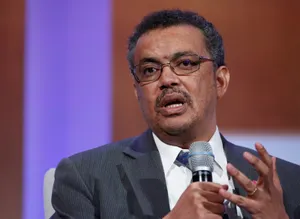
WHO Director-General, Tedros Adhanom Ghebreyesus, gave the warning on Tuesday during an emergency meeting on the outbreak, saying efforts to contain the deadly virus were struggling to keep up with the rate of transmission.
Tedros said health authorities and their partners had fallen behind the spread of the disease, making it more difficult to identify infected people, trace their contacts and prevent further transmission.
“We must be frank: the epidemic is far from being under control,” he said.
“It had a big head start, and we are still playing catch-up,” the WHO chief added.
The warning came as the DRC reported that more than 2,300 people had died from the outbreak out of nearly 5,000 recorded cases. The figures make the current outbreak the deadliest Ebola epidemic recorded in the Central African country.
The outbreak was officially declared on May 15 and is the 17th Ebola epidemic recorded in the DRC. However, health authorities believe the virus had been spreading for several weeks before it was detected and formally declared.
The delay has increased fears that there may be several undetected chains of infection in communities, making the work of health officials more difficult.
Ebola is a highly infectious disease that can cause severe illness and death. It spreads through direct contact with the blood or other body fluids of infected people or those who have died from the disease. Symptoms can include fever, weakness, vomiting, diarrhoea and, in severe cases, internal and external bleeding.
The disease has caused repeated outbreaks in parts of Africa, particularly the DRC, which has recorded more Ebola outbreaks than any other country.
The latest outbreak has particularly affected parts of northern and eastern DRC, where health workers face serious challenges in reaching communities affected by the virus.
The situation is further complicated by insecurity, weak infrastructure and the activities of armed groups in some parts of the country. These factors can prevent medical teams from reaching patients and make it difficult for authorities to establish effective surveillance systems.
Tedros said insecurity and the movement of people were among the major factors driving the spread of the disease.
He said the outbreak was “being fuelled by insecurity and displacement, and intense population movement along roads, rivers and mining routes.”
The movement of people is a major concern because individuals who have been exposed to the virus may travel to other communities before showing symptoms or being identified by health officials.
Roads, rivers and mining areas are particularly important routes of movement in parts of the DRC, allowing people to travel between communities and across administrative boundaries. Such movement could make it harder to contain the outbreak within the areas where it was first detected.
The WHO therefore warned that the risk of further transmission within the DRC and across international borders remained high.
“The risk of further national and international spread remains high,” Tedros said.
The warning has increased pressure on the DRC government, neighbouring countries and international health organisations to strengthen measures aimed at stopping the spread of the virus.
Health authorities are expected to intensify disease surveillance, testing, contact tracing and infection prevention measures. Health workers also need adequate protective equipment and training to reduce the risk of becoming infected while treating patients.
Another major part of Ebola response is community engagement. Health officials must work closely with local communities to ensure that people understand how the virus spreads, recognise symptoms early and seek medical attention quickly.
Public trust is also important because fear, misinformation and distrust of health workers can make it difficult for authorities to identify cases and trace contacts.
The DRC has experienced some of the world’s most serious Ebola outbreaks in recent decades. Its most deadly previous outbreak occurred between 2018 and 2020, when more than 3,000 cases were recorded and more than 2,000 people died.
That outbreak, which affected eastern DRC, was also complicated by insecurity and attacks on health workers and treatment centres.
The country’s repeated experience with Ebola has given health authorities valuable knowledge about responding to the disease. However, the current situation shows that medical expertise alone may not be enough when insecurity, population displacement and weak infrastructure continue to affect access to communities.
Tedros said the WHO would issue additional recommendations to the DRC and other countries as authorities step up efforts to identify cases and break chains of transmission.
The recommendations are expected to guide countries in strengthening surveillance and preparedness, particularly those that share borders or have strong travel links with the DRC.
Neighbouring countries will also need to maintain vigilance at border crossings and health facilities without unnecessarily disrupting movement and trade. Early detection remains critical because identifying infected people before they transmit the virus widely can significantly reduce the size of an outbreak.
For the DRC, however, the immediate challenge remains gaining control of transmission in affected communities.
The WHO chief’s warning shows that the outbreak is not only a health crisis but also a wider humanitarian and security challenge. Communities affected by fighting and displacement may already have limited access to healthcare, food, clean water and other basic services.
As the number of infections and deaths continues to rise, health authorities face the difficult task of reaching vulnerable populations while dealing with insecurity and the movement of people.
The WHO has therefore called for stronger cooperation among governments, health agencies, humanitarian organisations and communities.
With thousands of cases already recorded and more than 2,300 deaths reported, health officials are under growing pressure to reverse the trend.
The WHO’s renewed warning is a reminder that early detection, rapid response, effective treatment, community cooperation and international support remain central to preventing the outbreak from becoming an even wider regional health crisis.