
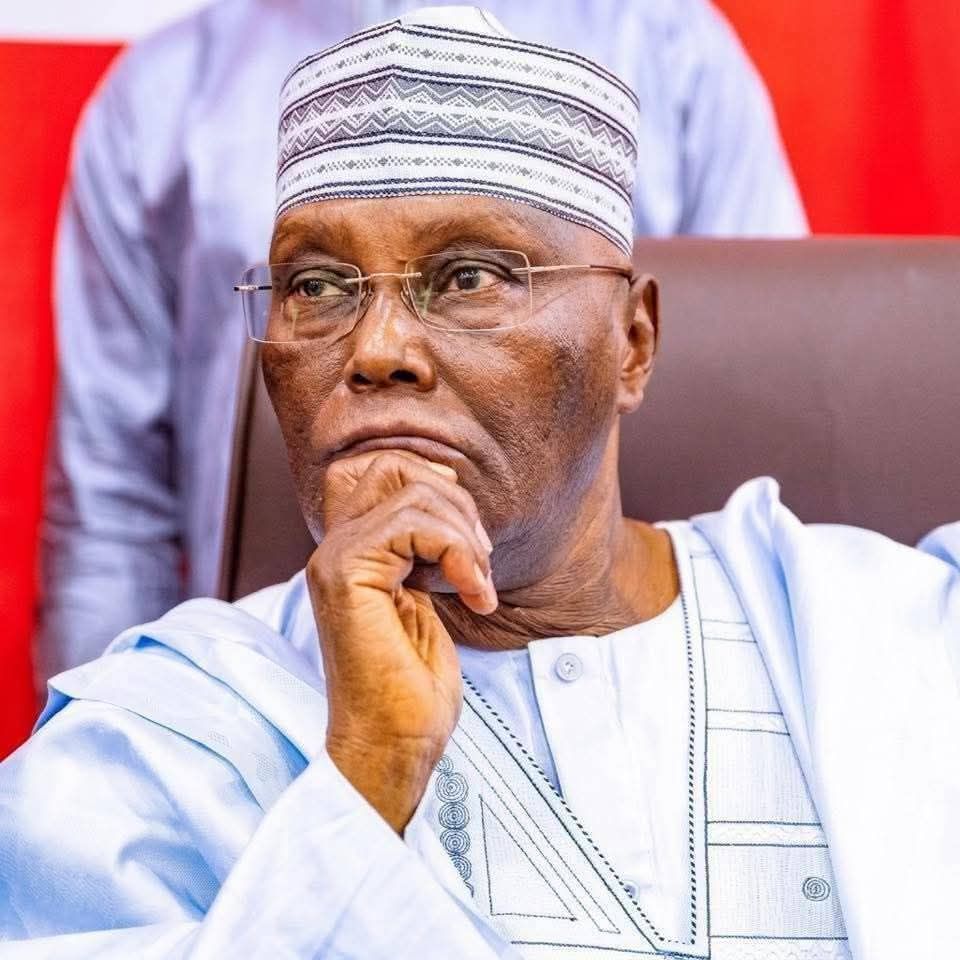
Presidential candidate of the African Democratic Congress, Atiku Abubakar, has said he will not contest another presidential election if he loses the 2027 poll.
The former Vice President made the declaration during an interview conducted in Hausa and translated by a correspondent on Wednesday.
Atiku was asked whether he would seek another opportunity to contest for the presidency if he failed to win the 2027 election.
In response, the former Vice President said he had already made up his mind to end his presidential ambition after the 2027 election.
“No, I have said it before, right from this election, I will not contest again,” Atiku said.
The declaration could make the 2027 presidential election particularly significant for the ADC candidate, who has spent several decades in Nigerian politics and has contested the presidency on several occasions.
Atiku, 79, first ran for president in 1993 during the transition programme of the military government. He later became the running mate to the late President Olusegun Obasanjo under the Peoples Democratic Party in the 1999 election.
He served as Vice President from 1999 to 2007 before leaving office and later joining the presidential race as a candidate.
Since 2007, Atiku has contested the presidency several times, including under the Action Congress of Nigeria in 2007, the Peoples Democratic Party in 2019 and 2023.
He lost the 2019 presidential election to Muhammadu Buhari and was defeated again by President Bola Tinubu in the 2023 election.
His decision to contest the 2027 election under the ADC followed the formation of a broader opposition coalition aimed at challenging the ruling All Progressives Congress.
The coalition has brought together politicians from different opposition platforms, with Atiku emerging as the presidential candidate of the ADC.
The 2027 election is therefore expected to be another major test for the former Vice President, particularly as he seeks to persuade Nigerians that he remains capable of leading the country.
While speaking during the interview, Atiku also appealed to Nigerians who have Permanent Voter Cards to participate actively in the 2027 election.
He urged registered voters not only to cast their ballots but also to remain at their polling units to ensure that their votes are properly counted.
“First of all, I appeal to those who have voter cards, for their own sake, their families, and their future, to go out and vote. That is the solution to the problems they are facing,” he said.
“After going out to vote, they should also stay, escort, and ensure that those votes are counted.”
The former Vice President’s call comes amid concerns over voter apathy and the low turnout recorded in some recent elections across the country.
Political parties and election observers have repeatedly urged Nigerians to participate in elections and protect their votes from the polling unit through the counting and collation stages.
Atiku’s comments also reflect the growing political focus on the 2027 general election, which is expected to feature a contest between the ruling APC and a number of opposition parties and alliances.
The former Vice President was also asked about concerns over his ability to govern the country because of his age and health.
Atiku dismissed the concerns, insisting that he remained healthy and fit to lead Nigeria.
“No doctor has declared that I am unfit in terms of health. I know my body, I know I am healthy, and I do not have a single defect,” he said.
His response comes amid recurring political debates over the health and age of presidential candidates in Nigeria.
Health has become a major issue in Nigerian politics, particularly because of the demanding nature of the presidency and the constitutional requirement that candidates must be qualified to hold office.
Atiku’s supporters have maintained that age should not be the main factor in determining a candidate’s suitability, arguing that experience, competence and capacity should receive greater attention.
His critics, however, have raised questions about whether older politicians can effectively handle the demands of the presidency.
Reacting to Atiku’s statement that he would not seek another presidential bid if he loses in 2027, the ADC Vanguard described the declaration as significant.
In a post on X, the group said Nigerians might not have another opportunity to consider an Atiku presidency if he failed to win the 2027 election.
“There is something deeply emotional about Atiku Abubakar saying he will not contest again if Nigerians reject him in 2027,” the group said.
It noted that Atiku’s political career had lasted several decades and included repeated presidential contests, defeats and returns to the race.
According to the group, the 2027 election could therefore represent the final stage of a political journey that has covered much of Nigeria’s democratic era.
It argued that Atiku’s experience and political reach should be considered by voters against the backdrop of the economic and security challenges facing the country.
The group further described the election as potentially Atiku’s “final chance” to be judged by voters on his record, plans and ability to lead rather than on campaign promises and political speculation.
“If 2027 truly is his last attempt, then it should not be treated like just another election,” it said.
Atiku’s declaration is likely to shape discussions within the opposition camp as preparations for the 2027 election gather momentum.
The ADC will have the task of presenting its candidate and opposition coalition as a credible alternative to the APC-led Federal Government.
The party and its allies are expected to focus their campaign on issues such as the economy, insecurity, unemployment, poverty and the cost of living.
The APC, meanwhile, is expected to defend the record of the Tinubu administration and seek a fresh mandate in 2027.
For Atiku, the coming election presents another opportunity to achieve a long-held political ambition.
However, his latest declaration means that a defeat would, by his own account, bring an end to his efforts to become Nigeria’s President.
With the election still months away, the political environment is expected to become more intense as parties settle their structures, mobilise supporters and present their candidates to voters.
For Nigerians, the focus will ultimately be on the candidates, their policies and their ability to address the country’s major challenges.
Atiku’s appeal to voters to collect their PVCs, vote and remain at polling units also places emphasis on citizens’ role in determining the outcome of the election.
If he maintains his position, the 2027 presidential election could mark the final appearance of one of Nigeria’s most persistent presidential contenders on the ballot.