
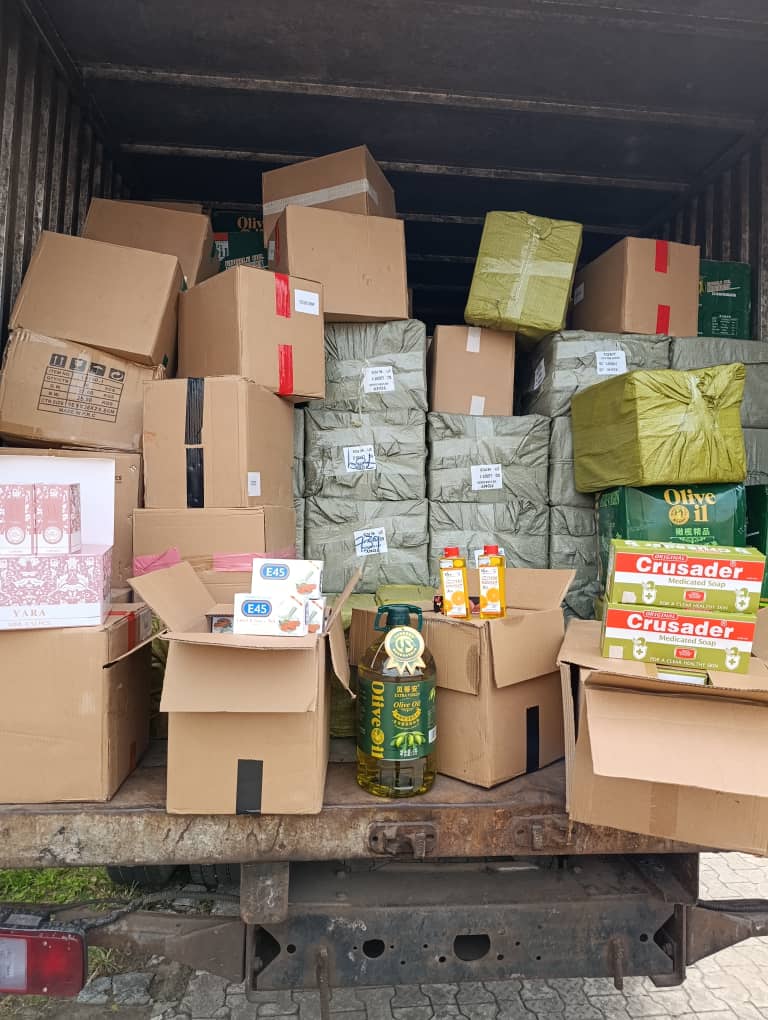
The National Agency for Food and Drug Administration and Control (NAFDAC) has uncovered a warehouse filled with banned, fake, and unregistered cosmetic products valued at more than ₦3 billion in Lagos State.
The agency said the warehouse was discovered during routine enforcement operations at the APT Trade Fair Complex in Ojo Local Government Area of Lagos. According to NAFDAC, the facility was hidden inside an uncompleted building, which was being used to store large quantities of illegal products.
In a statement posted on its official X handle on Sunday, the agency described the seizure as one of the most significant in recent times. Officials said the products recovered included large amounts of banned skin-lightening soaps and medicated cosmetic items known to pose serious health risks.
Among the items seized were 728 cartons of Crusader soap and 718 cartons of E45 soap. The agency also recovered Extract Gold whitening soaps, which have been banned by the Federal Government. In addition, assorted perfumes, body oils, and cooking oils were found in the warehouse.
NAFDAC said some of the additional products would undergo further regulatory assessment to determine their status. All the seized goods have been evacuated from the warehouse to prevent them from entering the market.
The warehouse manager has been invited for questioning as investigations continue. NAFDAC said enforcement actions are ongoing and promised that those found guilty would face the full weight of the law.
The discovery has once again highlighted the problem of counterfeit and substandard products in Nigeria’s markets. Over the years, NAFDAC has carried out several operations to remove fake drugs, cosmetics, and food products from circulation.
Skin-lightening products have remained a major concern for health authorities. Many of these items contain harmful chemicals such as mercury and high levels of hydroquinone, which can damage the skin and internal organs. Prolonged use of such substances may lead to skin infections, kidney problems, and other serious health conditions.
Public health experts have warned that the demand for lighter skin tones has fueled the illegal production and importation of banned products. Despite government bans, some traders continue to smuggle or secretly produce these items to meet market demand.
The APT Trade Fair Complex in Ojo is one of the busiest commercial centres in Lagos. It hosts thousands of traders dealing in various goods, including cosmetics, clothing, electronics, and household items. Authorities say the size and activity level in such markets sometimes make it easier for illegal operators to hide among legitimate businesses.
NAFDAC said it has increased surveillance and routine inspections in major markets across the country. The agency stressed that it remains committed to protecting public health and ensuring that only safe and approved products are sold to consumers.
“The sale and use of banned and fake products pose serious health risks to consumers,” the agency warned in its statement.
The agency also urged members of the public to remain vigilant. It called on consumers to check product labels carefully and report suspicious products or activities to the nearest NAFDAC office.
In recent years, the Federal Government has strengthened laws and penalties aimed at curbing the circulation of fake and substandard goods. However, enforcement agencies continue to face challenges such as hidden storage facilities, porous borders, and the large size of Nigeria’s informal market sector.
Consumer rights groups have welcomed the latest seizure, saying it shows that regulatory agencies are active. They have also called for greater public awareness campaigns to educate people about the dangers of using unregistered cosmetics.
Some residents in Lagos expressed concern over the scale of the seizure. “It is scary to know that products worth ₦3 billion were hidden and could have been sold to the public,” a trader in Ojo said. “We need stronger monitoring to stop this.”
As investigations continue, NAFDAC has assured Nigerians that it will sustain its crackdown on counterfeit and banned products. The agency says protecting the health and safety of citizens remains its top priority.