
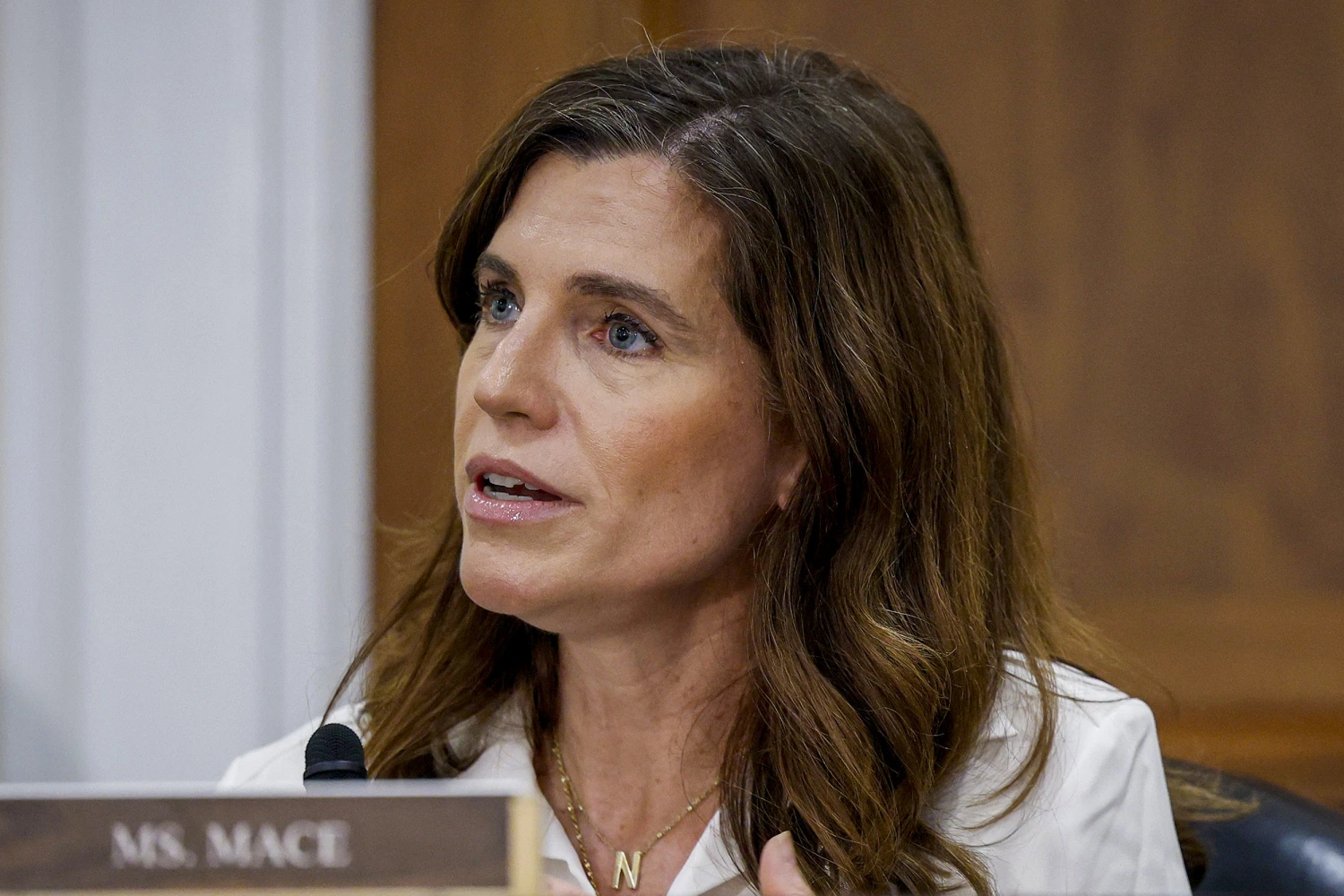
A Republican member of the United States Congress has announced plans to introduce a bill that would ban immigration from Somalia, Sudan and South Sudan, arguing that the move is necessary to protect American national security and prevent instability from entering the country.
The proposal, announced by South Carolina Representative Nancy Mace, is the latest sign of the hardline immigration policies gaining support among Republicans under President Donald Trump, whose administration has already tightened immigration rules and expanded restrictions on several countries.
Mace disclosed the planned legislation in a statement released on June 25 through her official website. She described Somalia, Sudan and South Sudan as “Third World hellholes” and claimed that people coming from the three countries pose security risks to the United States.
According to her, the proposed law is intended to protect American communities from what she described as the instability and security threats associated with the three African nations.
“Today, Congresswoman Nancy Mace announced her plans to introduce legislation to ban immigration from Somalia, Sudan and South Sudan, protecting American communities from the instability and security threats these nations bring,” the statement said.
Explaining the reason behind the proposal, Mace insisted that the safety of American citizens must come before the interests of foreign nationals.
“We will not put the interests of foreign nationals ahead of the safety and security of American citizens,” she said.
“No more importing instability. No more ignoring the warning signs. No more apologising for putting our country first. America First. Always.”
The congresswoman argued that Somalia, Sudan and South Sudan remain among the world’s most unstable countries, pointing to years of armed conflict, political crises and humanitarian emergencies that have affected millions of people.
Somalia has battled insurgency and terrorism for more than a decade, largely due to attacks by the militant group Al-Shabaab. Sudan has been engulfed in a devastating civil war since April 2023, with fighting between the Sudanese Armed Forces and the Rapid Support Forces causing thousands of deaths and displacing millions of people.
South Sudan, the world’s youngest nation, has also struggled with political instability and ethnic violence since gaining independence in 2011, despite several peace agreements aimed at ending years of conflict.
Mace warned that the United States should avoid repeating what she described as the immigration mistakes made by some European countries.
According to her, several European cities have experienced social and security problems due to immigration from countries facing conflict and instability.
“Americans have watched European cities descend into chaos. Importing people from failed and hostile states has cost lives, destroyed communities and shattered public trust in government,” she said.
“The United States will not make those mistakes. We are stopping it before it’s too late.”
The lawmaker also claimed that immigration from the three countries presents broader security and integration challenges.
“We are being systematically invaded and everyone is sitting around watching it happen. Not us. We refuse,” she added.
Her comments are consistent with the immigration policies promoted by President Donald Trump, who has made border security and immigration enforcement central issues of his administration.
During his first term in office, Trump introduced a controversial travel ban that restricted entry into the United States from several predominantly Muslim countries, including Somalia and Sudan. The policy sparked widespread legal battles and protests before eventually being upheld in a revised form by the U.S. Supreme Court.
Since returning to office, Trump has expanded immigration restrictions, stepped up deportation efforts and introduced tougher screening measures for foreign nationals seeking to enter the United States.
The administration has also announced plans to reduce illegal immigration through stricter border controls and broader limits on migrants from countries considered security risks.
Trump has repeatedly argued that the United States should not accept migrants from what he has described as “failed” or unstable countries, maintaining that such policies are necessary to protect national security and preserve American interests.
His administration has also pledged to carry out mass deportations of undocumented immigrants while strengthening enforcement against illegal border crossings.
Mace’s proposed legislation reflects those priorities and is expected to receive support from conservative lawmakers who have backed stricter immigration controls.
However, the proposal is also likely to face strong opposition from Democrats, immigrant advocacy groups and human rights organisations, which have often criticised broad immigration bans based on nationality.
Critics argue that such measures unfairly punish people fleeing war, persecution and humanitarian crises, while supporters insist that governments have a duty to place national security above all other considerations.
For now, the proposal remains only a plan.
Mace has announced her intention to introduce the bill, but it has not yet been formally presented before the U.S. Congress for debate or consideration.
If introduced, the legislation would have to pass both the House of Representatives and the Senate before it could be signed into law by President Trump.
Its progress through Congress will likely be closely watched, especially as immigration continues to dominate political debate in the United States ahead of future elections.
The proposal also comes at a time when the humanitarian situation in Sudan, Somalia and South Sudan remains a major concern for the international community, with millions of people displaced by conflict, food shortages and economic hardship.
Whether Mace’s bill gains enough support to become law remains uncertain, but it has already added to the growing debate over America’s immigration policies and the balance between national security and humanitarian responsibility.