
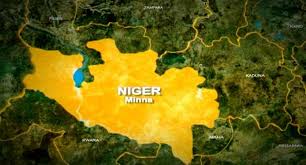
At least 14 members of the Nigerien Defence and Security Forces have been killed after terrorists launched a coordinated attack on a military position before ambushing reinforcements in the southeastern part of Niger Republic.
The deadly attack took place on Friday morning in N’Guigmi, a town in the Diffa Region near Niger’s border with Nigeria, according to security sources.
The incident is the latest sign of the growing security challenges facing Niger and other countries in the Lake Chad region, where armed groups linked to extremist organisations continue to carry out deadly attacks despite ongoing military operations.
A security source said the attackers struck at about 9:30 a.m. on Friday, July 31, when a large group of heavily armed terrorists advanced from the Sabon Carré neighbourhood, located southwest of N’Guigmi.
The gunmen reportedly targeted a National Guard position situated close to the town’s cemetery, opening fire in what appeared to be a carefully planned assault.
The attack forced security forces stationed at the location to respond, while military reinforcements were quickly mobilised to pursue the fleeing attackers.
However, the operation soon turned deadly.
According to the security source, the reinforcements fell into a well-planned ambush about one kilometre south of the National Guard post.
The terrorists, who had apparently anticipated the arrival of additional troops, attacked the responding forces from prepared positions, leading to fierce fighting and heavy casualties.
Preliminary reports showed that at least 14 members of the Nigerien Defence and Security Forces lost their lives during the attack and the subsequent ambush.
The dead included 10 soldiers of the Niger Armed Forces (Forces Armées Nigériennes, FAN), among them one officer, and four personnel of the National Guard.
The number of injured personnel was not immediately known, while there was no official information on casualties suffered by the attackers.
Authorities in Niger had yet to issue a detailed official statement on the incident as of the time of filing this report.
The attack highlights the persistent security crisis facing Niger, which has struggled for years with terrorist violence in several parts of the country.
The Diffa Region, where the attack occurred, has remained one of the country’s most troubled areas because of repeated attacks by extremist groups operating around the Lake Chad Basin.
The region shares borders with Nigeria, Chad and parts of Cameroon, making it an important but vulnerable area for cross-border movement by armed groups.
For years, militants linked to Boko Haram and its breakaway faction, the Islamic State West Africa Province (ISWAP), have carried out attacks on military formations, communities and humanitarian workers across the Lake Chad region.
The groups have also been involved in kidnappings, attacks on villages and destruction of public infrastructure, forcing thousands of people to flee their homes.
Although Niger, Nigeria, Chad and Cameroon have worked together through the Multinational Joint Task Force to combat terrorism in the region, security threats remain serious.
The latest attack also comes at a time when Niger is facing major political and security changes following the military takeover in July 2023.
Since then, the country’s military authorities have promised to strengthen security and intensify operations against terrorist groups operating across its territory.
However, extremist attacks have continued in different regions, including Diffa, Tillabéri and Tahoua, where security forces frequently come under attack.
Military analysts have often warned that terrorists are increasingly using ambush tactics to inflict maximum casualties on security personnel.
Instead of engaging in direct battles for long periods, the armed groups often stage attacks on isolated military positions before retreating and laying traps for troops sent in pursuit.
Such tactics have resulted in significant losses for security forces across the Sahel in recent years.
The attack in N’Guigmi is also likely to raise fresh concerns in neighbouring Nigeria, particularly in Borno State and other communities around Lake Chad, where Nigerian troops continue to battle Boko Haram and ISWAP fighters.
The porous borders between the two countries have long allowed armed groups to move across territories, making regional cooperation essential in the fight against terrorism.