
The Federal Government has awarded contracts for the rehabilitation of 13 police training institutions across the country, with 80 per cent of the contractors already receiving their award letters.
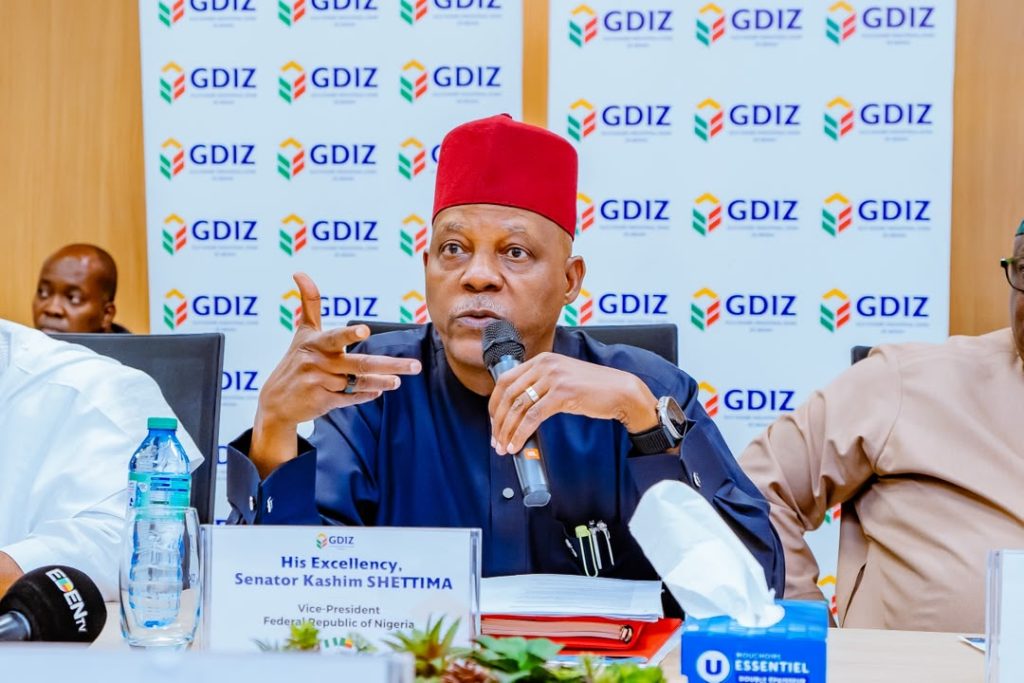
The development was disclosed on Thursday after the 160th meeting of the National Economic Council (NEC), chaired by Vice President Kashim Shettima at the State House, Abuja.
The rehabilitation is expected to prepare the institutions for the resumption and expansion of training programmes for personnel of the Nigeria Police Force amid continuing security challenges across the country.
Governor Lucky Aiyedatiwa of Ondo State disclosed the development while briefing journalists after the NEC meeting.
He said the council received an update on the rehabilitation programme and was informed that contracts had been awarded for all 13 institutions.
“This afternoon, during the National Economic Council meeting, the council called for an update on the rehabilitation of police training institutions across Nigeria, and the council was made to understand that contracts have been awarded for the rehabilitation of the 13 police training institutions, and 80 per cent of contractors have received their award letters,” Aiyedatiwa said.
According to the governor, the rehabilitation work is expected to be completed within three weeks.
He said the immediate goal was to put the institutions in good condition for the commencement of police training programmes, while efforts were being made to ensure that funds were released quickly to enable contractors to begin full rehabilitation work.
Aiyedatiwa stressed the importance of effective police training in dealing with insecurity and preparing officers for the responsibilities ahead.
“You are all aware that the insecurity in the country and our police force have to be trained further,” he said.
He added that although discussions were ongoing on state police, there was a minimum standard that police officers across the country must meet.
The governor said the rehabilitation would cover infrastructure and equipment required to provide proper training facilities for police personnel.
The project is coming at a time when Nigeria continues to face security threats, including terrorism, banditry, kidnapping, communal violence and other forms of crime.
The quality of police training has therefore become an important part of discussions around security sector reform. The Federal Government has also been considering wider reforms of policing, including proposals for state police, as part of efforts to improve security at the local level.
Against this background, the rehabilitation of the training institutions is expected to improve the capacity of the Nigeria Police Force and provide officers with better facilities for professional training.
At the NEC meeting, Shettima also urged the council to ensure that the Federal Government’s economic reforms continued until their benefits were felt by Nigerians.
The Vice President said government policies should not stop at announcements but must be followed through until they produce measurable results.
“There is no doubt that a serious government is measured by the matters it refuses to abandon. While attention may reveal a problem, continuity determines whether the problem yields to policy,” he said.
Shettima said improvements in major economic indicators would only become meaningful when ordinary Nigerians began to experience better jobs, stronger purchasing power, increased business confidence and improved living conditions.
“Macroeconomic progress must therefore continue its passage into jobs, purchasing power, business confidence and stronger subnational economies, because numbers become politically meaningful when citizens recognise themselves in their improvement,” he said.
The Vice President also warned against abandoning existing government programmes whenever new priorities emerged.
According to him, continuity is an important part of accountability because previous promises must continue to receive attention until they are fulfilled.
“Continuity is a form of accountability: yesterday’s promise still deserves a place on today’s table, and no new priority absolves us of an old responsibility,” Shettima said.
He added that President Bola Tinubu had given NEC the responsibility of ensuring that government policies were translated into outcomes that Nigerians could see and feel.
The economic discussions at the meeting came as the Minister of Finance and Coordinating Minister of the Economy, Taiwo Oyedele, announced that Nigeria had been reclassified by global index provider FTSE Russell from an unclassified market to a frontier market.
Oyedele said the new status could open Nigeria to a wider pool of institutional investors around the world.
He explained that the classification meant that Nigeria had become investable for many global institutional investors that use market classifications when deciding where to put their funds.
The minister also said the Nigerian capital market had recorded strong performance, describing it as the best-performing market in the world as of the end of July and early August.
He said the market had returned more than 60 per cent in dollar terms over the past year, even before the FTSE Russell classification.
Oyedele also presented an update on the Nigerian economy, saying real Gross Domestic Product grew by 3.89 per cent in the first quarter of 2026, compared with 3.13 per cent during the same period of the previous year.
He said full-year economic growth was projected to exceed four per cent.
The minister also reported a decline in headline inflation, which stood at 15.43 per cent at the end of July, compared with 24.94 per cent a year earlier.
Food inflation also declined but remained high at 20.31 per cent, compared with 26.2 per cent in the same period last year.
According to Oyedele, Nigeria’s external reserves had risen to $51.96 billion, representing the highest level since January 2009 and a 38 per cent increase year-on-year.
He said the naira had also appreciated by 13.5 per cent year-on-year by the end of the first half of 2026, with the exchange rate stabilising below N1,400 to the dollar.
Federation Account net revenues increased from N15.2 trillion in 2024 to N21.9 trillion in 2025, representing a 44 per cent rise, while the figure was expected to increase by at least 50 per cent in 2026.
Nigeria’s trade surplus also nearly doubled, rising from N17.7 trillion in 2025 to N34.7 trillion by the first quarter of 2026.
Oyedele said public debt remained below 37 per cent of GDP, standing at about N158 trillion, while the proportion of government revenue spent on debt servicing had declined from nearly 100 per cent in 2022 to below 60 per cent in 2025.
He further disclosed that Fitch, Moody’s and S&P, the three major international credit rating agencies, had upgraded Nigeria’s sovereign credit rating between April 2025 and May 2026.
He described the coordinated upgrades as significant, noting that it was the first time in more than a decade that the three agencies had moved in the same direction on Nigeria’s credit rating.
The minister also said Nigeria exited the Financial Action Task Force grey list in October 2025 and the European Union’s anti-money laundering deficiency list in January 2026.
Despite the reported improvements, Oyedele said the government needed to remain cautious because some economic gains could be reversed if reforms were not sustained.
He identified agriculture, energy, manufacturing, mining and the digital economy as priority sectors for faster growth.
He also warned of risks including geopolitical conflicts, commodity price shocks, persistent food inflation, election-related fiscal pressure and negative pre-election claims not supported by data.
The NEC consequently directed a review of fiscal and monetary measures aimed at reducing high lending rates affecting businesses.
Oyedele said the progress recorded in inflation, foreign reserves, exchange rate stability and credit ratings was the result of consistent policies but warned that the gains would not be permanent without continued implementation.
The meeting therefore combined security and economic issues, with the rehabilitation of police training institutions expected to strengthen the country’s security response while the economic reforms are being positioned by the Federal Government as a path towards stronger growth and investment.
For the police, the immediate focus will be on completing the three-week rehabilitation exercise and restoring the affected institutions to conditions suitable for effective training.