
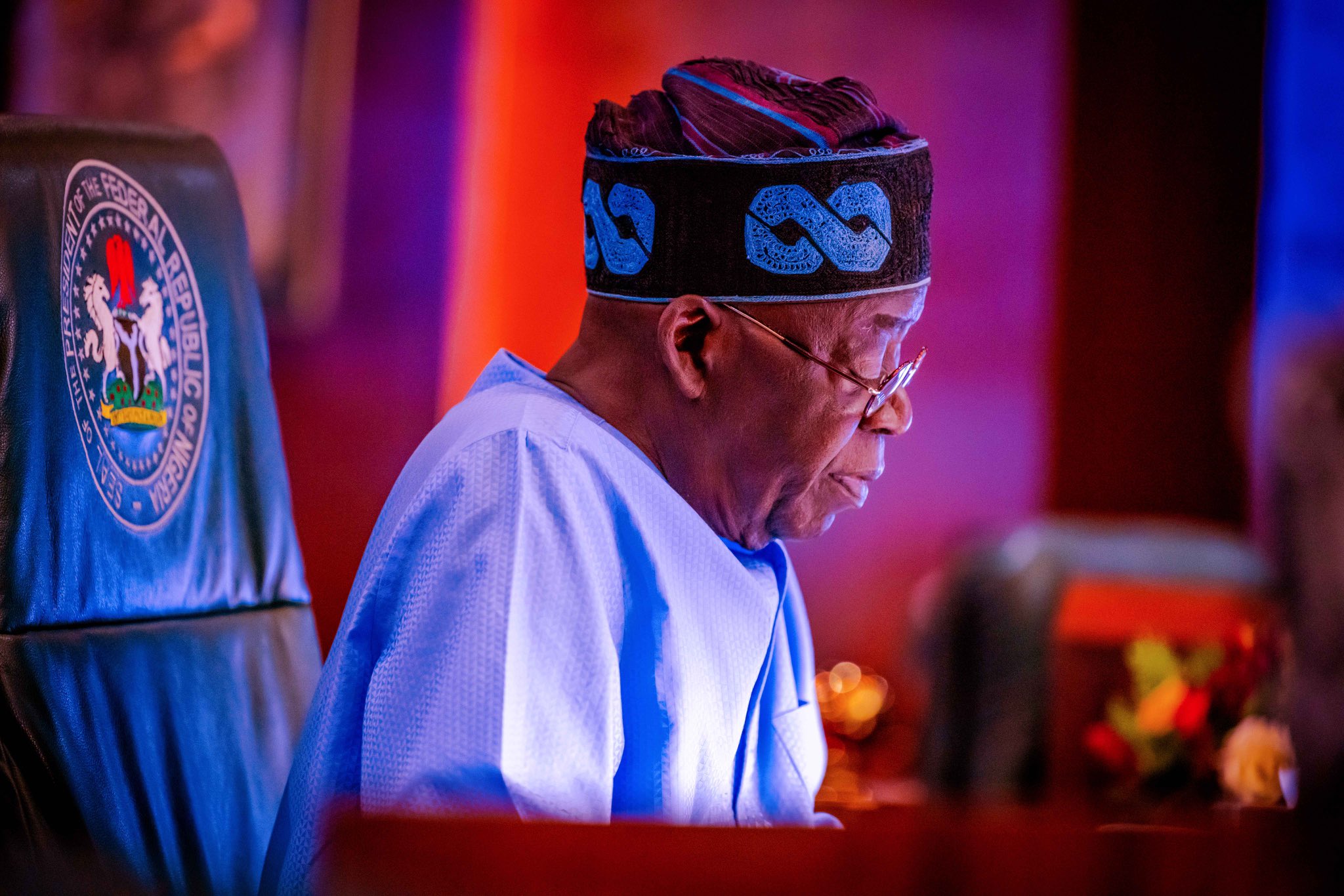
President Bola Ahmed Tinubu has outlined his administration’s ambitious goal to dramatically reduce Nigeria’s inflation rate from its current peak of 34.6% to a more manageable 15% by the end of 2025. This reduction, he promises, will ease the financial burden on Nigerian households, bringing much-needed relief to citizens struggling under rising living costs.
“As the New Year dawns, it brings many hopes, aspirations, and prospects for better days. By the grace of God, 2025 will be a year of great promise in which we will fulfil our collective desires,” Tinubu said, expressing optimism about the country’s economic future despite the formidable challenges faced in the preceding year.
Economic Landscape: A Mixed Bag of Progress and Strain
Tinubu’s speech painted a picture of economic recovery amidst a turbulent global landscape. “Though 2024 posed numerous challenges to our citizens and households, I am confident that the New Year will bring brighter days,” he declared. The President emphasized that despite the negative external pressures, Nigeria had achieved significant economic strides that could set the stage for further improvement.
In 2024, Nigeria recorded foreign trade surpluses for three consecutive quarters, marking a significant departure from the recurring trade deficits that have traditionally plagued the nation. Alongside this, fuel prices—always a contentious issue—have gradually decreased, a shift that many Nigerians have already felt in their pockets. President Tinubu also highlighted the strengthening of the naira against the US dollar and the country’s rising foreign reserves as key indicators of stability in the midst of adversity.
“The stock market’s record growth has generated trillions of naira in wealth, and the surge in foreign investment reflects renewed confidence in our economy,” Tinubu said, pointing to these achievements as evidence that Nigeria was steadily on the path to economic recovery.
The Battle Against Inflation: A Priority for the Year Ahead
Despite these positive indicators, the looming issue of Nigeria’s soaring inflation remains a primary concern. At 34.6%, the inflation rate is one of the highest in Africa, causing significant hardship for ordinary Nigerians who grapple with increased prices for food, fuel, and other essential goods.
Acknowledging this pressing issue, President Tinubu committed to tackling inflation head-on, with a target to reduce it to 15% by 2025. “In 2025, we are resolute in our ambition to reduce inflation to 15%, providing relief to our people,” he affirmed, pledging that all necessary efforts would be made to stabilize prices and curb the cost of living.
A Comprehensive Economic Strategy
The president’s address did not focus solely on inflation but also shed light on the broader economic reforms his administration intends to pursue. These reforms, which include improving trade relations, attracting foreign investment, and boosting domestic production, aim to create a more robust and sustainable economic environment. The decline in fuel prices, while appreciated by Nigerians, is only one piece of the puzzle. A holistic approach is necessary to stabilize and strengthen the Nigerian economy over the long term.
Analysts have praised Tinubu’s plan for its ambition, though they have cautioned that the road ahead may not be easy. “Reducing inflation by nearly 20% in one year is an incredibly challenging task,” said Dr. Sola Afolabi, an economist at the University of Lagos. “However, with careful policy implementation, structural reforms, and international support, it is possible to make significant progress.”
The government has also vowed to strengthen its anti-corruption efforts, aiming to create an environment where economic growth is not undermined by inefficiency or mismanagement. Tinubu’s administration has pledged to ensure transparency in public financial management as part of its broader commitment to restoring public trust in the Nigerian economy.
Public Reaction: Optimism Mixed with Caution
While many Nigerians have expressed optimism over Tinubu’s proposed reforms, some remain skeptical. Inflation has become a daily reality for millions, and many wonder whether the government can meet such an ambitious target in just one year. However, some political leaders, including Senate Leader Godswill Akpabio, have lauded Tinubu’s economic policies, which they believe will stimulate growth and attract international confidence.
“It is time for Nigeria to become a hub of economic growth in Africa. The President’s vision for 2025 is exactly what the country needs—decisive leadership and a clear roadmap for the future,” Akpabio said, echoing the sentiment of those who believe in Tinubu’s economic vision.
In contrast, opposition parties have called for more concrete steps, with some accusing the administration of relying too heavily on optimistic speeches without outlining specific actions. “Promises are good, but Nigerians want to see results,” said Aliyu Ibrahim, a spokesman for the People’s Democratic Party (PDP). “The government must do more to explain how they will reduce inflation in such a short time.”